
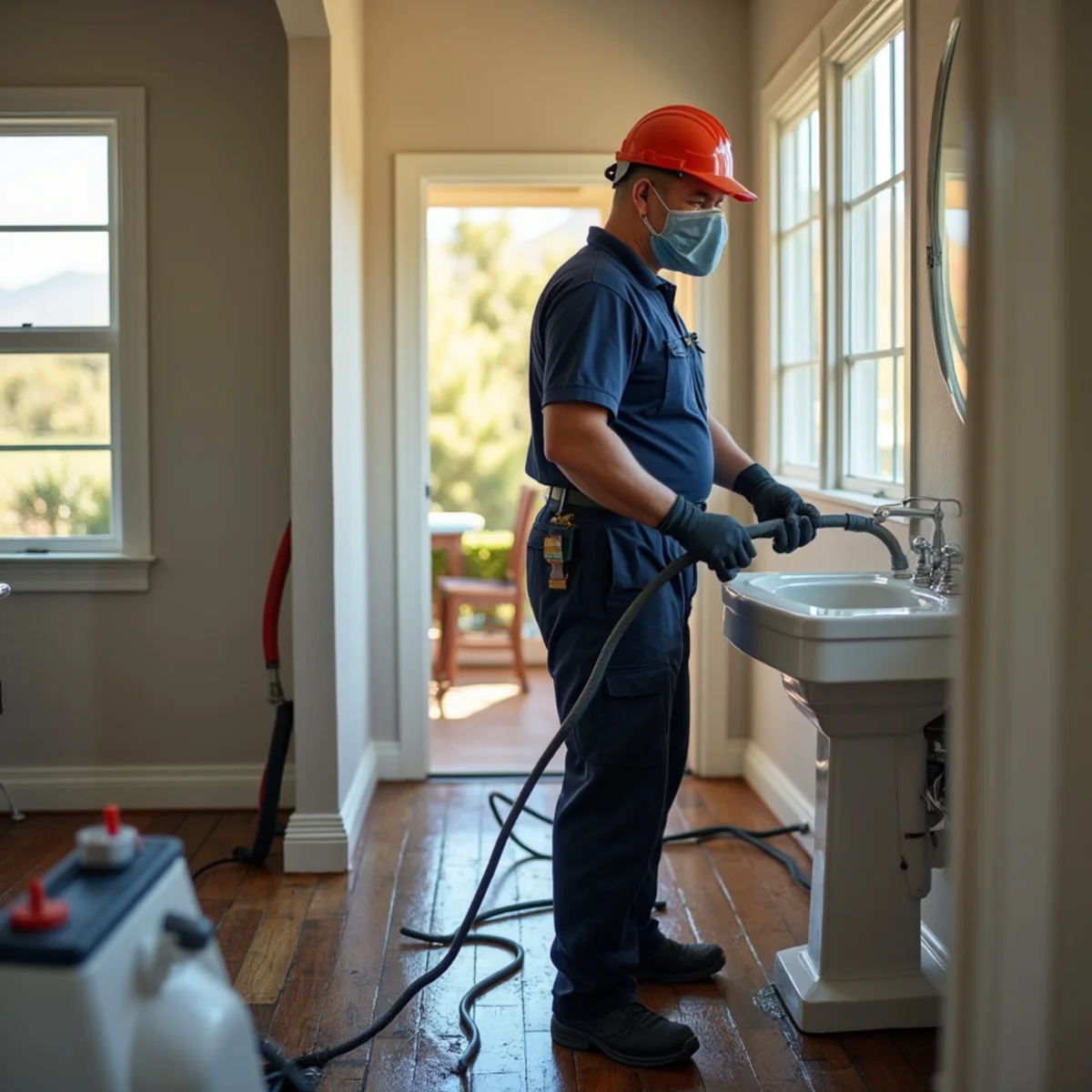
24/7 Emergency Service
Sewage Cleanup & Backup Removal in San Ramon, CA
Do not clean this yourself. Evacuate the area and call us.
- 24/7 emergency crews — nights, weekends and holidays
- 60-minute emergency response across San Ramon
- Free on-site estimate
- We bill your insurance directly
24/7 Emergency Service
Answered live, any hour
60-Minute Response
Across all of San Ramon
IICRC Certified
Works to the S500 standard
Insurance Billed Direct
Daily moisture logs
A sewage backup is the most hazardous water damage event a home can have, and it is the one people are most likely to try to handle themselves. Category 3 water carries bacteria, viruses and parasites — the pathogens responsible for gastrointestinal illness, skin and wound infections, and respiratory irritation. Children, older adults, anyone immunocompromised and household pets are at meaningfully higher risk, and the exposure route is not just contact: disturbing contaminated material aerosolizes it.
The cleanup standard reflects that. Sewage work is done under containment with negative air, in full personal protective equipment, following the safety guidance published by OSHA and the CDC for handling sewage-contaminated environments. Porous materials that took contaminated water are removed and disposed of rather than cleaned, because there is no reliable way to verify decontamination inside an absorbent material.
In San Ramon the causes are consistent. Tree roots find their way into older sewer laterals in the 1970s neighborhoods — Broadmoor, Crow Canyon, Iron Horse and Montevideo all have mature canopy over first-generation lines. Wipes and grease build blockages regardless of neighborhood age. And during heavy winter rain, stormwater infiltration can load the sanitary system enough to push backups into the lowest fixture in the house, which is usually a downstairs shower or tub.
Request help with sewage cleanup
Tell us what happened. We respond within one business hour — or call now for a 24/7 emergency dispatch.
Know the signs
Signs of a Sewage Backup
Water coming up through a shower, tub or floor drain
The classic sign of a main line blockage. The lowest fixture in the house is where a backed-up lateral relieves itself, which is why it is usually a downstairs bathroom.
Multiple fixtures draining slowly at the same time
One slow drain is a fixture problem. Several at once — especially toilets and tubs together — points at the main line rather than the branch.
Gurgling from a toilet when you run a sink or washing machine
Air being displaced through a partially blocked line. This is the most reliable early warning you will get.
A sewer odor indoors or near a cleanout
Sewer gas escaping means the line is not venting or draining normally. It is also a sign a backup has already occurred somewhere you have not looked.
Toilet overflow that does not stop with the flapper
If water keeps rising after you have shut the fixture valve, the problem is downstream of the toilet and more water is coming.
A patch of unusually lush or soggy lawn over the lateral run
A cracked or root-invaded lateral leaks nutrients into the soil. Grass over the break grows conspicuously well, then the ground stays wet.
Our process
How Sewage Cleanup Is Done Properly
 1
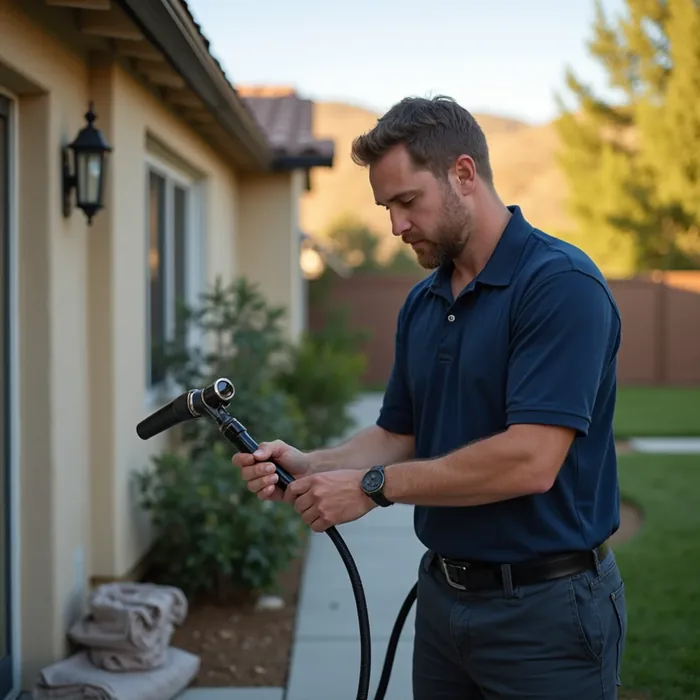
1Evacuate and isolate the area
On arrivalOccupants and pets out of the affected zone first. We isolate HVAC so the system does not distribute contaminated air through the rest of the house — a step that is routinely missed and causes cross-contamination.
 2
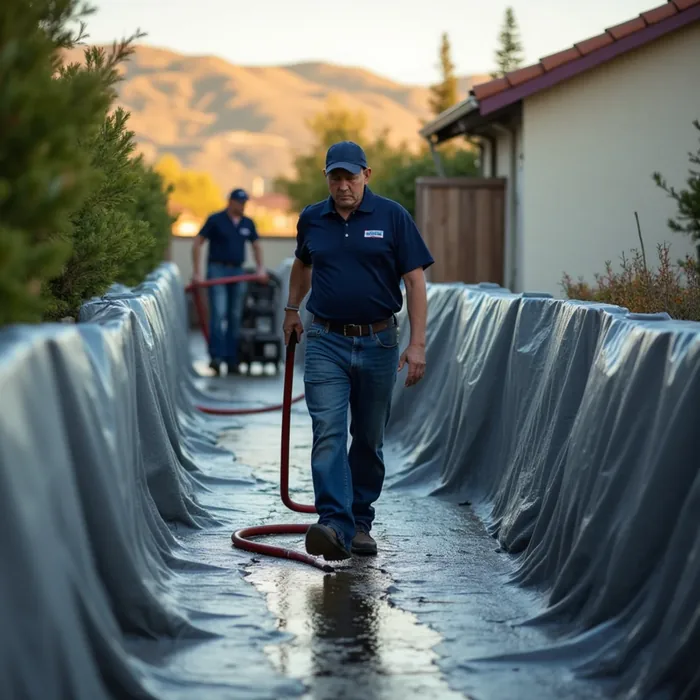
2Containment and negative air
30–60 minutesPoly barriers seal the work zone and negative air machines with HEPA filtration keep airflow moving inward, so aerosolized contaminants cannot migrate to clean areas.
 3
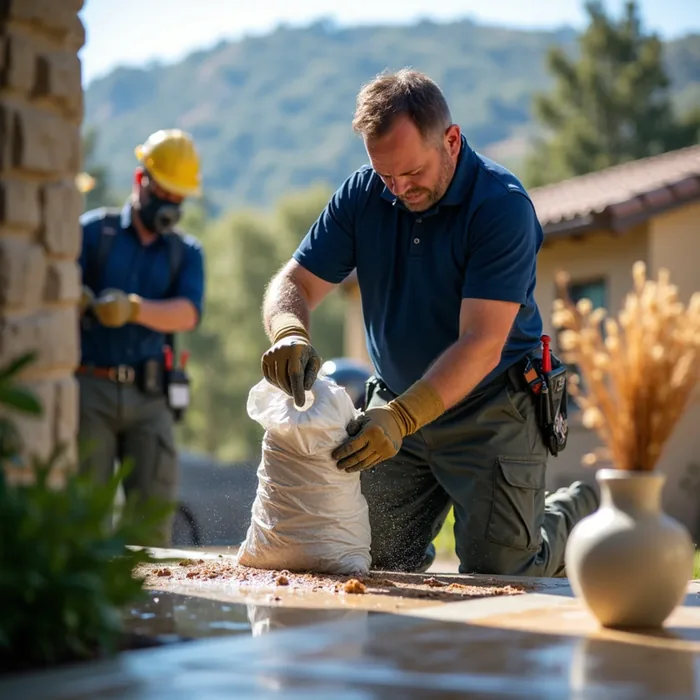
3Contained extraction and solids removal
1–4 hoursCrews in full PPE — suits, gloves, boots and respiratory protection — extract contaminated water and remove solids, bagging waste for regulated disposal.
- 4
Removal of porous materials
2–6 hoursCarpet, pad, drywall to an appropriate height, insulation, and affected cabinetry come out. This is not negotiable on Category 3 — absorbent materials cannot be verified clean.
- 5
Cleaning and disinfection
3–8 hoursEvery remaining surface in the contaminated zone is cleaned, then treated with an appropriate EPA-registered antimicrobial. Cleaning comes before disinfecting — a disinfectant applied over soil does not work.
- 6
Deodorization and air scrubbing
1–3 daysHEPA air scrubbers run throughout the job and afterward. Odor is treated at the source rather than masked, which sometimes means sealing structural surfaces after cleaning.
- 7
Structural drying and clearance
3–5 daysOnce decontamination is complete, the structure is dried and verified like any other loss, and the area is returned to service with documentation for your claim.
What you actually get
What Sewage Cleanup Includes
Evacuation and HVAC isolation
Occupants and pets out of the affected zone, and the HVAC shut down so the system does not distribute contaminated air through the rest of the property. That step is routinely missed and causes cross-contamination.
Sealed containment with negative air
Poly barriers and HEPA-filtered negative air machines keeping airflow moving inward, so aerosolised contaminants cannot reach clean areas.
Full PPE extraction and solids removal
Crews in suits, gloves, boots and respiratory protection, with waste bagged for regulated disposal.
Removal of all porous materials in the zone
Carpet, pad, drywall to an appropriate height, insulation and affected cabinetry. Absorbent materials cannot be verified clean, so they leave regardless of appearance.
Clean first, then disinfect
Every remaining surface cleaned to remove soil, then treated with an EPA-registered antimicrobial for the labelled contact time.
Odour treated at source
HEPA scrubbers throughout, and where odour has penetrated framing or subfloor those surfaces are sealed after cleaning rather than perfumed.
Drying and documentation
Structural drying only after decontamination is complete, verified against a dry standard and documented for your claim.
Why San Ramon Water Damage Pros
Why This Is Not a Job to Take On Yourself
We follow OSHA and CDC guidance, not house rules
Sewage handling, PPE and containment follow published safety guidance. That is what a competent Category 3 job is measured against.
Aerosolisation is the risk people miss
Mopping, wiping and vacuuming put contaminated droplets into the breathing zone of whoever is doing the work. Contact is not the only exposure route.
We know the San Ramon causes
Root intrusion into clay-tile laterals under the mature canopy in Broadmoor, Crow Canyon, Montevideo and the Iron Horse corridor — plus wipes, grease and storm loading.
We document origin for the claim
Where the blockage sat relative to the property line can decide whether a public agency shares responsibility. We photograph before touching anything.
Need sewage cleanup in San Ramon right now?
We answer live 24 hours a day and dispatch immediately. The first hour decides how much of your property we can save.
- Free on-site estimate
- We bill your insurance directly
- IICRC-certified technicians
Why You Should Not Clean Sewage Yourself
We understand the impulse — it feels like a mopping job, and waiting feels like letting it get worse. But the health math is genuinely bad. Sewage carries E. coli, salmonella, hepatitis A, giardia and cryptosporidium among others, and the practical risk is not limited to touching it. Wiping, mopping and vacuuming all aerosolize contaminated droplets into the breathing zone of whoever is doing the work.
The second problem is that household cleanup cannot address what matters. Bleach on a surface does nothing about contaminated water that has already wicked into drywall, run under a vinyl floor, soaked into carpet pad or entered a wall cavity. Those materials keep the contamination and, within a couple of days, start growing on it. Nearly every "we cleaned it ourselves and now there is a smell" call we get is this exact sequence.
- Keep people and pets out of the affected area entirely, including adjacent rooms sharing airflow.
- Do not run the HVAC system — it will distribute contaminated air through the house.
- Do not flush toilets or run water into the affected line; you will add volume to the backup.
- Shut off the water supply if the backup is fed by a fixture that keeps running.
- Photograph the affected areas from the doorway for your claim, then close the door and wait for the crew.
Sewage Backups and Insurance in California
Sewer and drain backup is usually excluded from the base homeowners policy and covered only by a specific endorsement — often sold as "water backup" or "sewer backup" coverage — which many homeowners do not realize they lack until they need it. Where it exists, endorsement limits are frequently capped well below the policy’s main dwelling limit, in the five-to-twenty-five-thousand range, which matters because a Category 3 loss across a finished lower level can exceed that quickly.
If the backup originated in the public main rather than your private lateral, there may also be a claim against the responsible agency. That determination depends on where the blockage sat relative to the property line, which is exactly the kind of detail that gets lost if the scene is cleaned before it is documented. We photograph the loss thoroughly before touching anything and note the observed origin in the file.
Honest pricing
What Sewage Cleanup Costs Depend On
Affected area and how far the water traveled
Contamination spreading from a bathroom into a hallway and adjacent bedroom triples the containment and demolition scope.
Volume of porous material to remove and dispose of
Carpet, pad, drywall, insulation and cabinetry all leave as regulated waste, with hauling and disposal costs attached.
Containment and negative air requirements
Barriers, HEPA filtration and negative air machines run for the duration of the job and are non-optional on contaminated losses.
Finished versus unfinished space
A backup onto a garage slab is a fraction of the cost of the same event across finished flooring, drywall and built-in cabinetry.
Odor severity and structural sealing
Deep odor penetration sometimes requires sealing framing and subfloor after cleaning, which adds a phase before reconstruction.
Where we provide this service
Sewage Cleanup across San Ramon and the Tri-Valley
FAQ
Sewage Cleanup questions we get asked
Treat it as one. Category 3 water carries bacteria, viruses and parasites capable of causing gastrointestinal illness, skin infections and respiratory problems, and it becomes airborne when disturbed. Get people and pets out of the affected area, keep the HVAC off, and call for professional cleanup rather than attempting it yourself.
Because drywall is porous. Contaminated water wicks upward inside the gypsum and paper facing well above the visible line, and there is no way to verify that an absorbent material has been decontaminated. On Category 3 losses, porous materials in the affected zone are removed and disposed of as a matter of standard, not caution.
Only if your policy carries a water or sewer backup endorsement — it is normally excluded from base California homeowners coverage. Where the endorsement exists, limits are often capped well below the dwelling limit. We document the origin and full scope so that whatever coverage applies is claimed properly.
By removing the source, not covering it. Contaminated porous materials leave, remaining surfaces are cleaned and then disinfected, and HEPA air scrubbers run throughout to capture airborne particulate. Where odor has penetrated framing or subfloor, we seal those surfaces after cleaning before reconstruction begins.
Three things dominate. Tree roots invading older clay-tile sewer laterals in the 1970s neighborhoods with mature canopy — Broadmoor, Crow Canyon, Montevideo and the Iron Horse corridor. Blockages from wipes and cooking grease, which affect every neighborhood regardless of age. And stormwater infiltration during heavy winter rain loading the sanitary system.
You might also need
Related services
Flood Cleanup
Storm and creek flooding handled as the contaminated loss it is — contained extraction, disposal, sanitizing and full structural drying.
Learn moreMold Remediation
Containment-first remediation that removes growth and fixes the moisture source — because mold that comes back was never really removed.
Learn more24/7 Emergency Water Removal
A real person answers at 3 a.m., a truck rolls immediately, and we talk you through the shutoff while it does.
Learn moreGet sewage cleanup handled properly
Free on-site estimate, written scope before any reconstruction, and direct insurance billing with documentation your adjuster can actually use.
- Free on-site estimate
- We bill your insurance directly
- IICRC-certified technicians