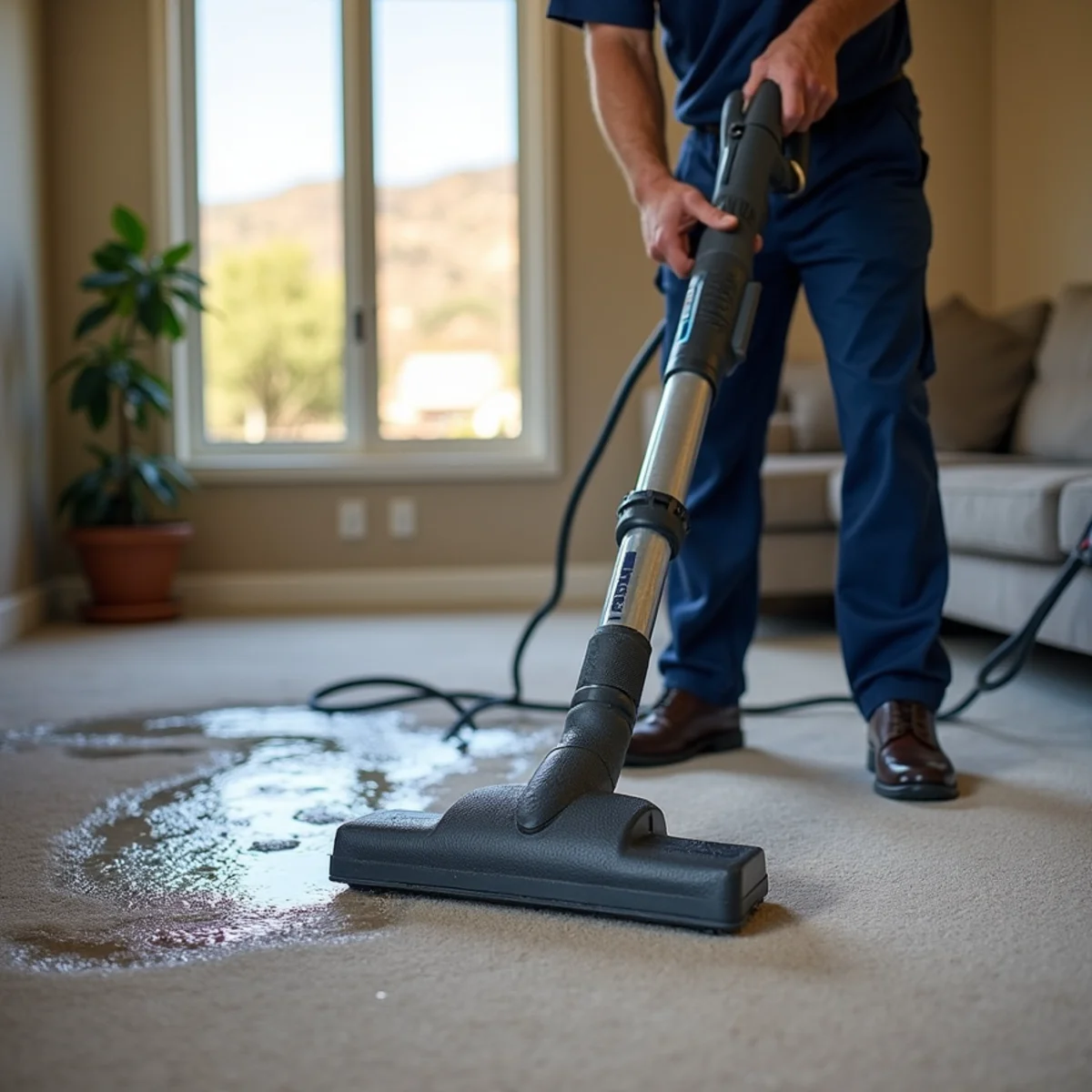
Sewage Backing Up Into the Shower: Causes, Health Risks, and Safe Cleanup
It comes up in the shower because the shower is the lowest opening on a blocked line. That tells you the problem is the main, not the fixture.
Written by the San Ramon Water Damage Pros crew — IICRC-certified technicians working to the ANSI/IICRC S500 standard on water losses across San Ramon and the Tri-Valley. Guidance here reflects how we actually run jobs, not general advice.
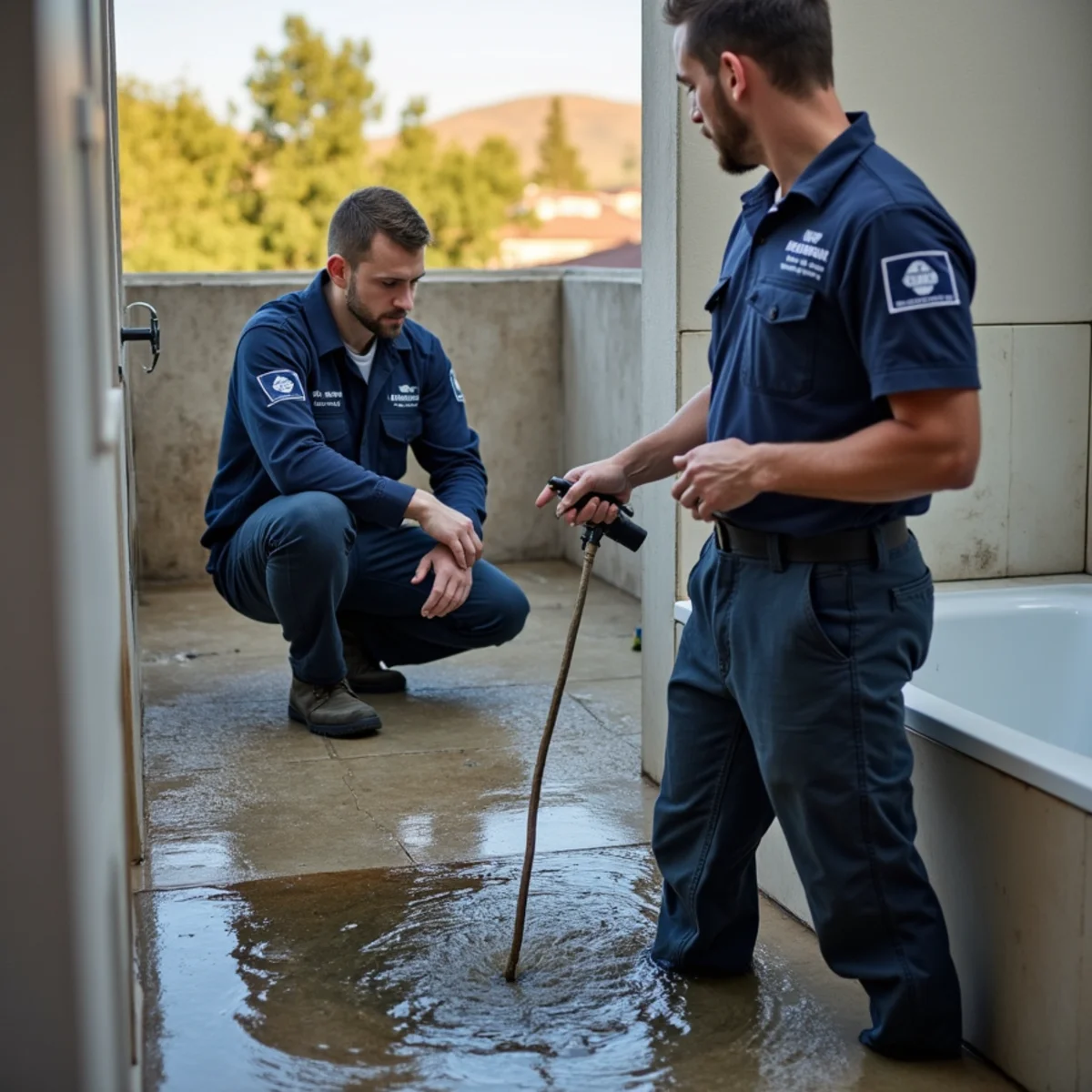
Sewage appearing in a shower or tub is alarming and it is also diagnostic. It is not a shower problem — the shower is simply the lowest opening on a line that is blocked further downstream, and blocked drainage relieves itself at the lowest available point.
That is why a downstairs shower or tub is nearly always where it shows up. It also tells you something important: the blockage is in the main line or the sewer lateral, not in the branch serving that fixture.
Water damage happening right now?
We answer live 24 hours a day and commit to a 60-minute response across San Ramon.
+1 (201) 277-9344Do These Things Immediately
- Stop using water anywhere in the house. Every flush, every sink, every laundry cycle adds volume to a line that cannot carry it.
- Get people and pets out of the affected bathroom and any adjacent room sharing airflow.
- Turn the HVAC off — running it distributes contaminated air through the whole house.
- Do not attempt to plunge it. The blockage is downstream and you will not reach it, but you will splash contaminated water.
- Photograph the affected areas from the doorway for your claim, then close the door.
- Call for professional Category 3 cleanup, and call a plumber to clear the line.
Why It Happens Here
In San Ramon three causes account for nearly all of these, and one dominates in the older neighborhoods.
Tree roots into original clay-tile sewer laterals is the leading cause in the 1970s housing stock. Clay tile was laid in short sections with joints between them, and those joints weep enough moisture and nutrients to attract roots reliably in a dry Californian summer. Once inside, a root thickens into a mass that catches paper and solids. This clusters in Broadmoor, Crow Canyon, Montevideo and along the Iron Horse corridor where fifty-year-old trees sit over fifty-year-old pipe.
The second cause is blockage from wipes — including those marketed as flushable, which do not break down — plus cooking grease congealing in the line. The third is stormwater infiltration during heavy winter rain loading the sanitary system past its capacity, which is why these calls spike during atmospheric river events.
The Health Risks Are Real
Category 3 water carries bacteria, viruses and parasites — E. coli, salmonella, hepatitis A, giardia and cryptosporidium among others. Exposure causes gastrointestinal illness, skin and wound infections, and respiratory irritation, and children, older adults, anyone immunocompromised and pets are at meaningfully higher risk.
The route people underestimate is airborne. Mopping, wiping and vacuuming all aerosolize contaminated droplets directly into the breathing zone of whoever is doing the work. This is the specific reason that "I will just clean it up quickly" is worse than leaving it alone until a crew arrives with containment and respiratory protection.
What Safe Cleanup Involves
 1
1Containment and negative air
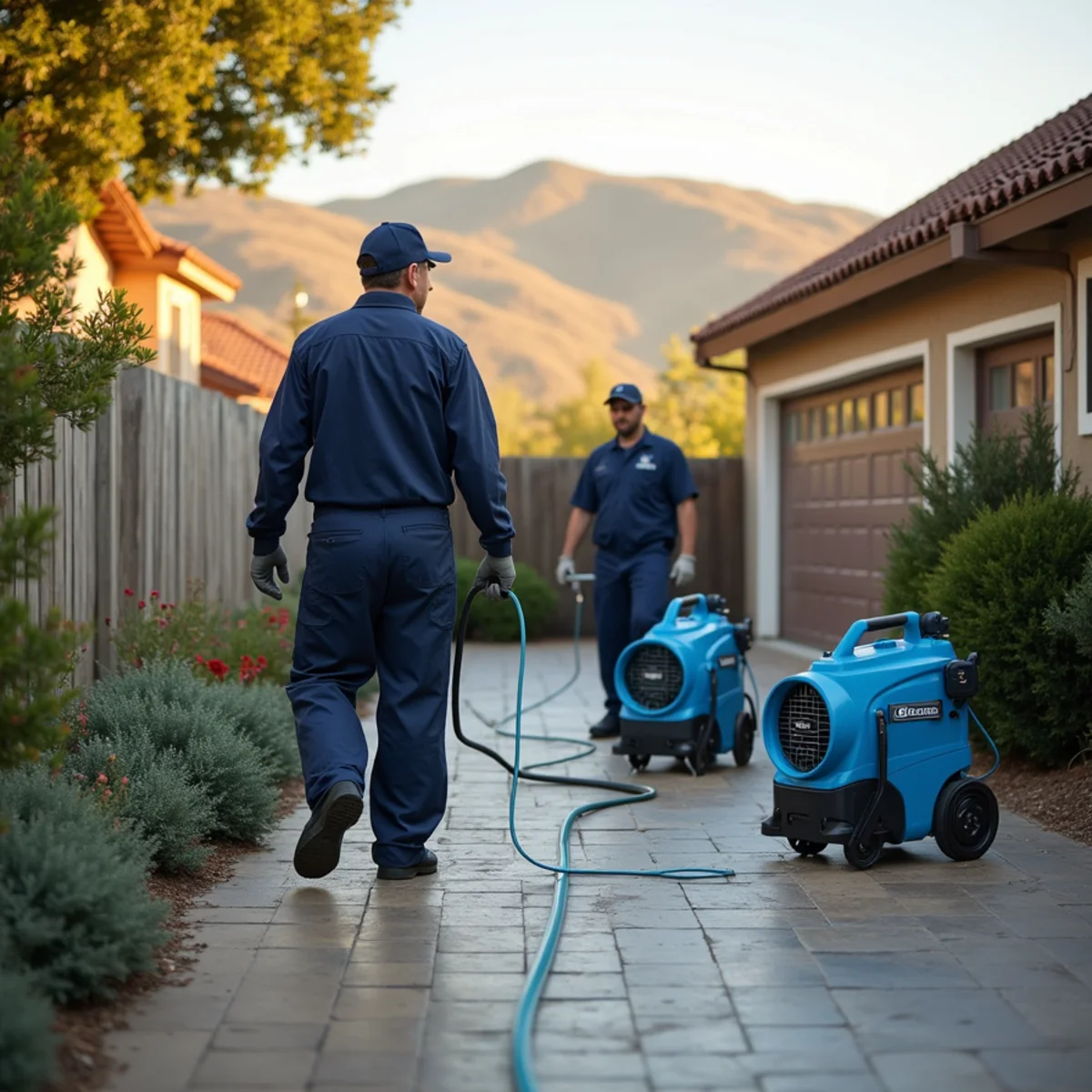
Poly barriers seal the work zone, HVAC is isolated, and negative air machines with HEPA filtration keep airflow moving inward so nothing migrates to clean areas.
 2
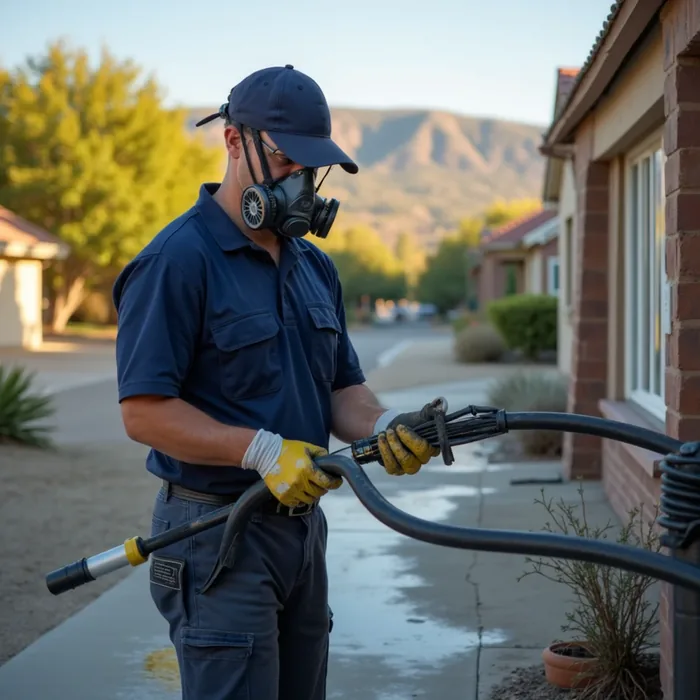
2Contained extraction in full PPE
Suits, gloves, boots and respiratory protection. Contaminated water and solids are extracted and bagged for regulated disposal.
 3
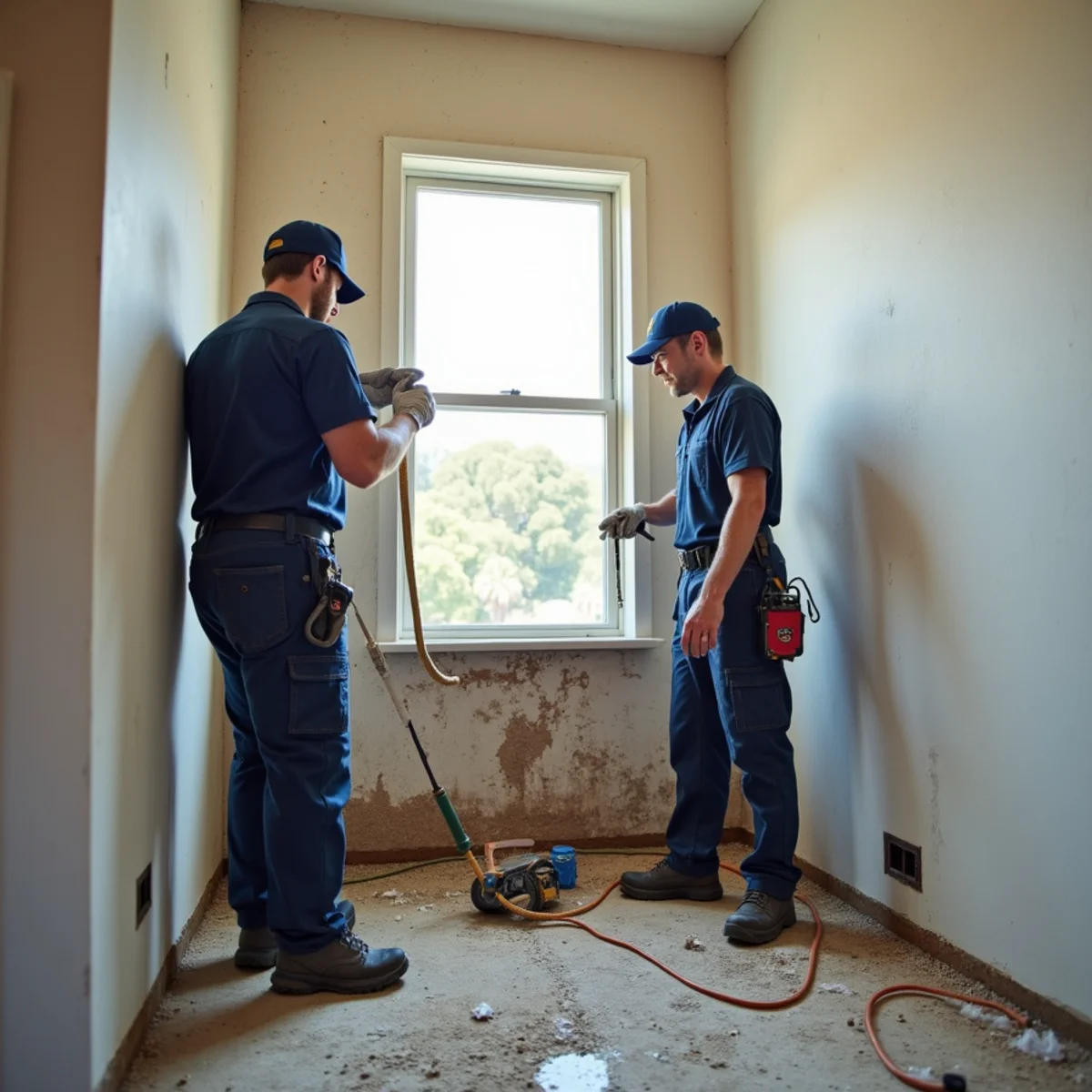
3Removal of porous materials
Carpet, pad, drywall to an appropriate height, insulation and affected cabinetry come out. Absorbent materials cannot be verified clean, so they are disposed of rather than treated.
 4
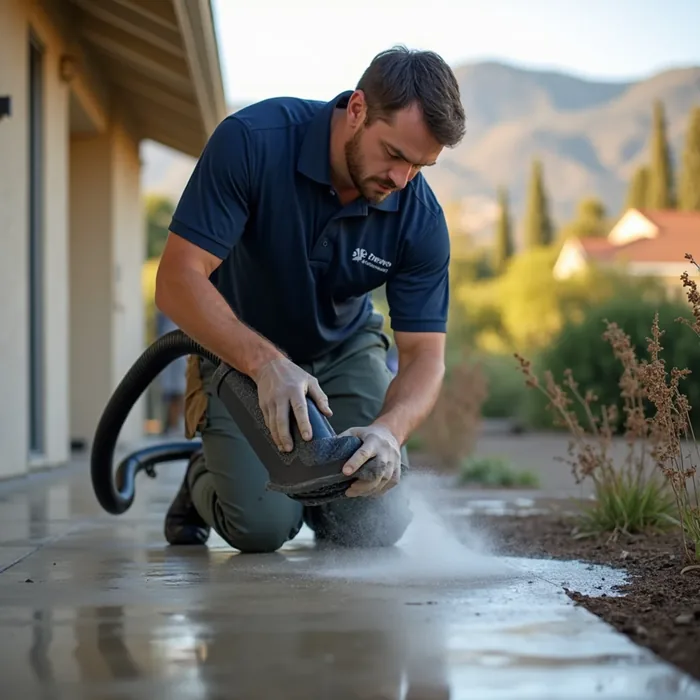
4Clean, then disinfect
In that order. Every remaining surface is cleaned to remove soil first, then treated with an appropriate EPA-registered antimicrobial for the required contact time. Disinfectant applied over soil does not work.
 5
5HEPA scrubbing and odour control
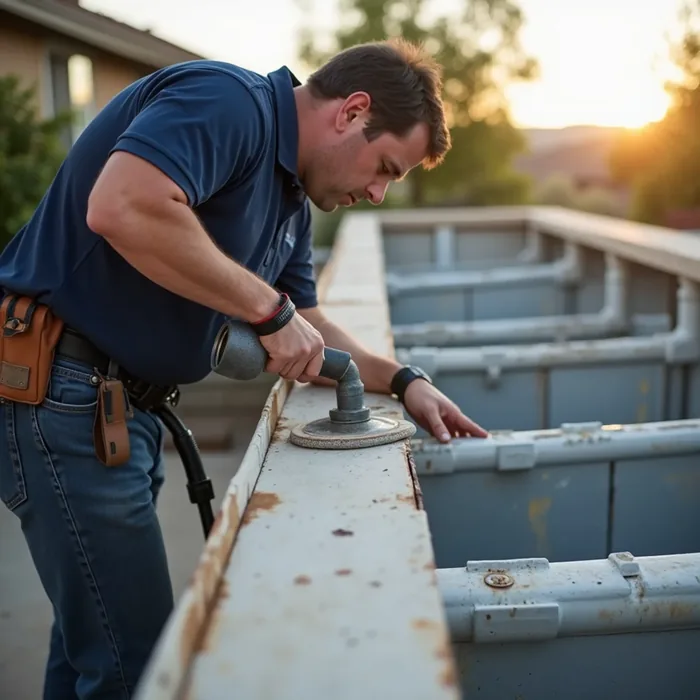
Air scrubbers run throughout and afterward. Where odour has penetrated framing or subfloor, those surfaces are sealed after cleaning.
 6
6Structural drying and documentation
Only once decontamination is complete does drying begin, verified against a dry standard and documented for your claim.
Keeping It From Happening Again
- Act on gurgling toilets and multiple slow drains — that is the warning, days or weeks ahead.
- Have the lateral camera-inspected if the home is 1970s or older and has never been checked.
- Periodic hydro-jetting and root cutting on a known root-affected line.
- Consider relining or replacing an aging lateral, which removes the joints roots enter through.
- A backwater valve prevents flow reversing into the house from the main — worth serious consideration with a finished lower level.
- Never flush wipes, and keep cooking grease out of the drain.
What the Fixture Tells You About the Blockage
Which fixture backs up, and in what order, is genuinely diagnostic. Plumbing drains to the lowest available opening, so the pattern points at roughly where the obstruction sits before anyone puts a camera in the line.
- Ground-floor shower or tub only: the blockage is downstream of everything, typically in the main line or the lateral to the street.
- Shower backs up when the toilet is flushed: the two share a branch and the obstruction is below the point where they join.
- A single fixture slow while everything else runs normally: a local clog in that fixture's trap or branch, not a main line problem.
- Every fixture in the house slow at once: main line or lateral, and this is the pattern that precedes a full backup.
- Toilet bubbling when the washing machine drains: air being displaced past an obstruction, which is one of the earliest warnings you get.
- Water rising in a floor drain: the lowest opening in the system is taking the overflow, which means the main is substantially blocked.
- Backups that clear and return within days: partial obstruction, usually roots, that clears enough to flow and then re-blocks.
Frequently asked questions
Because the shower drain sits lower than the toilet rim. A blocked line relieves itself at the lowest available opening, which in most homes is a downstairs shower or tub. That location is a useful clue — it tells you the blockage is in the main or the lateral rather than in one fixture.
We would strongly advise against it at any volume. Category 3 water carries pathogens, and mopping or vacuuming aerosolizes them into your breathing zone. Household cleanup also cannot reach water that has already wicked into drywall, under flooring or into carpet pad, which is where the problem continues.
Decontamination is typically one to two days depending on the area affected, followed by three to five days of structural drying. Reconstruction of removed materials comes after that and depends on scope.
Yes. A backup that clears itself means the obstruction is partial rather than gone, and it will re-block — usually under heavier demand and usually at a worse moment. The clearing is a reprieve rather than a resolution. This is the point at which a camera inspection is genuinely worth the money, because you can schedule the repair rather than being forced into an emergency one.
The shower base and any hard, non-porous surfaces can be cleaned and treated rather than removed. What needs attention is everything porous the water reached: the flooring outside the shower, the base of the drywall, and any subfloor beneath a permeable covering. The shower is usually the least of the job — it is the room around it that carries the scope.
The short version
Stop using water, get everyone out of the area, leave the HVAC off, and call. The shower is telling you the main line is blocked.
We run Category 3 sewage work across San Ramon 24 hours a day with proper containment, disposal, disinfection and documentation.