Toilet Overflowing? How to Stop It — and When It's Actually a Sewage Emergency
Two moves stop the water in about ten seconds. The harder question is whether what you are looking at is a clogged toilet or a sewer line telling you something.
Written by the San Ramon Water Damage Pros crew — IICRC-certified technicians working to the ANSI/IICRC S500 standard on water losses across San Ramon and the Tri-Valley. Guidance here reflects how we actually run jobs, not general advice.
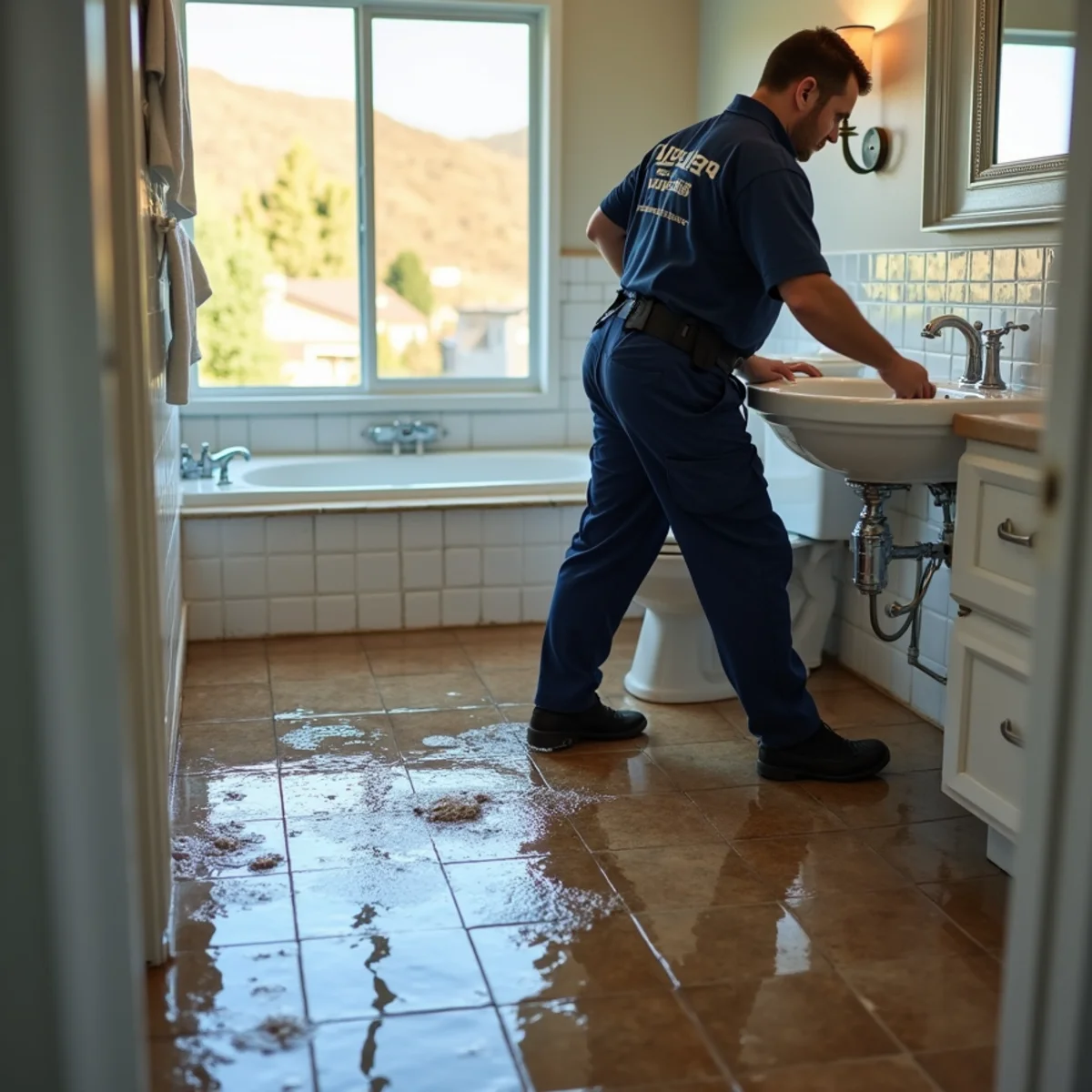
The bowl is rising and you have a few seconds. Here is the sequence: take the tank lid off, reach in and push the flapper down — that flat rubber disc at the bottom of the tank — to stop water leaving the tank. Then reach behind the toilet and close the shutoff valve on the wall, turning it clockwise.
That stops the water in about ten seconds and it works nearly every time. The more important question comes next: is this a clogged toilet, or is it your sewer line telling you something?
Water damage happening right now?
We answer live 24 hours a day and commit to a 60-minute response across San Ramon.
+1 (201) 277-9344How to Tell a Clog From a Backup
A clogged toilet is a local problem — something is stuck in the trap or the branch line serving that one fixture. Annoying, but confined. A sewer backup means the main line leaving your house is blocked, and everything the household sends down is looking for somewhere to go. Those two situations need completely different responses.
The distinguishing test is simple. Flush a different toilet, or run a sink or the washing machine, and watch what happens elsewhere in the house. If water rises in a tub or shower when you use an unrelated fixture, that is the main line, not this toilet.
It is probably just a clog if...
- Only this one toilet is affected and every other drain works normally.
- The water is clean or only lightly soiled.
- A plunger resolves it.
- Nothing gurgles anywhere else when you run water.
It is a sewer backup if...
- Water comes up in a tub, shower or floor drain when you flush or run a different fixture.
- Several fixtures are draining slowly at the same time.
- A toilet gurgles when the washing machine drains — that is air displacing past a blockage.
- There is a sewer odor indoors or around the exterior cleanout.
- What is coming up is dark, contains solids, or smells strongly of sewage.
If It Is a Backup, Stop and Treat It as Contaminated
Sewage is Category 3 water — the most hazardous classification there is. It carries bacteria, viruses and parasites including E. coli, salmonella, hepatitis A, giardia and cryptosporidium, and the exposure route is not limited to contact. Mopping, wiping and vacuuming all aerosolize contaminated droplets directly into the breathing zone of whoever is doing the work.
Children, older adults, anyone immunocompromised and household pets face meaningfully higher risk. This is genuinely a case where the instinct to clean it up yourself makes things worse.
- Get people and pets out of the affected area, including adjacent rooms that share airflow.
- Turn the HVAC system off — running it distributes contaminated air through the whole house.
- Stop using water anywhere in the house. Every flush and every load of laundry adds volume to the backup.
- Do not mop, wipe or shop-vac it.
- Photograph the affected areas from the doorway for your claim, then close the door.
- Call for professional Category 3 cleanup.
Why Sewer Backups Happen in San Ramon
Three causes account for nearly all of them here. The first and most common in the older neighborhoods is tree roots. Original clay-tile sewer laterals were laid in short sections with joints between them, and those joints weep enough moisture and nutrients to attract roots reliably. Once a root enters, it thickens inside the pipe and forms a mass that catches everything passing.
This clusters exactly where you would expect: Broadmoor, Crow Canyon, Montevideo and the Iron Horse corridor, where fifty-year-old trees sit over fifty-year-old laterals.
The second cause is blockages from things that should not be flushed — wipes marketed as flushable are the leading offender, followed by cooking grease congealing in the line. The third is stormwater infiltration during heavy winter rain loading the sanitary system beyond capacity.
The Warnings You Get Before a Full Backup
Sewer lines rarely fail without notice. The signals below typically appear days or weeks ahead, and acting on them costs a fraction of what Category 3 cleanup across a finished floor costs.
- Gurgling from a toilet when you run a sink or the washing machine — the most reliable early warning there is.
- Two or more drains slowing at the same time, especially toilets and tubs together.
- A sewer odor indoors or near the exterior cleanout.
- Water backing up in a lower fixture when an upper one drains.
- An unusually lush or soggy patch of lawn over the lateral run.
What Proper Sewage Cleanup Involves
Category 3 work is done under containment with negative air and HEPA filtration, by crews in full PPE, following the safety guidance published by OSHA and the CDC. Porous materials that took contaminated water — carpet, pad, drywall to an appropriate height, insulation, cabinet toe-kicks — are removed and disposed of rather than cleaned, because there is no reliable way to verify decontamination inside an absorbent material.
After removal, remaining surfaces are cleaned and then disinfected in that order, because a disinfectant applied over soil does not work. HEPA air scrubbers run throughout, and only then does structural drying begin.
What Not to Do With a Sewage Overflow
Sewage is the one category of water damage where doing the wrong thing actively harms you rather than just costing money. Category 3 water carries bacteria and other pathogens, and treating it like a spill is how people end up ill.
- Cleaning it up yourself with household products. Bleach on a porous surface disinfects what it touches and does nothing about what soaked in underneath. This work needs protective equipment and containment, not a mop.
- Continuing to use water elsewhere in the house. Every flush, shower and load of laundry adds to what is coming up. All water use stops until the line is cleared.
- Running fans in the affected room. Air movement in contaminated space aerosolises what is in the water and distributes it through the rest of the building.
- Letting anyone walk from that room into the rest of the house. Contamination transfers on shoes and paws, and children and pets should be out of the area entirely until it is cleaned.
- Trying to salvage soaked carpet or pad. Under the S500 standard, porous materials that have taken Category 3 water are removed rather than cleaned. Carpet pad is never salvageable in this situation.
- Assuming the drywall is fine because it looks fine. Sewage wicks upward inside the wall, and the standard cut line is well above the visible water mark for exactly that reason.
Frequently asked questions
Lift the tank lid and push the flapper down to stop water leaving the tank, then close the shutoff valve on the wall behind the toilet by turning it clockwise. That takes about ten seconds and works nearly every time.
It depends on the source. Clean water overflowing from the tank side is Category 1. Water containing waste is Category 3 — contaminated with bacteria, viruses and parasites — and needs professional handling with containment and PPE rather than a mop.
Only if you carry a specific water or sewer backup endorsement. It is normally excluded from base California homeowners policies, and where the endorsement exists the limit is often capped well below the dwelling limit. Worth confirming with your agent before you need it.
More than the visibly wet part, but rarely the whole floor. We map the actual extent with meters rather than working from the water line, then remove porous material to a margin beyond it. Hard, non-porous surfaces like tile and sealed concrete can usually be cleaned and treated rather than removed, which often saves a large share of the floor.
Once the blockage is cleared, the plumbing works immediately — but the room should stay out of use until removal, cleaning and treatment are done, which is typically one to three days for a contained overflow. We will tell you plainly which fixtures are safe to use in the meantime rather than asking you to avoid water entirely for the duration.
The short version
Flapper down, valve closed — that stops the water. Then check whether other fixtures are affected, because that answer decides whether you need a plunger or a hazmat-capable crew.
If it is a backup, do not clean it yourself. We run Category 3 sewage work across San Ramon 24 hours a day with proper containment, disposal and disinfection.