
24/7 Emergency Service
Mold Remediation in San Ramon, CA
Find the water first. Killing mold without drying the source just delays it.
- 24/7 emergency crews — nights, weekends and holidays
- 60-minute emergency response across San Ramon
- Free on-site estimate
- We bill your insurance directly
24/7 Emergency Service
Answered live, any hour
60-Minute Response
Across all of San Ramon
IICRC Certified
Works to the S500 standard
Insurance Billed Direct
Daily moisture logs
Mold is not a mystery and it is not a moral failing. It is a moisture problem with a biological symptom. Spores are present in every building in the Tri-Valley all the time; what turns them into a colony is water sitting on an organic material long enough — often as little as 24 to 48 hours in the warm, dark conditions inside a wall cavity or under a floor.
That is why credible remediation always starts with the water, not the mold. Any company that proposes to spray, fog or "treat" visible growth without first identifying and eliminating the moisture source is selling you a cosmetic result. The growth will return, usually in the same spot, usually within a season, and the second remediation costs more than the first because the material behind it has degraded further.
Our approach follows the sequence that actually works: find and stop the water, contain the work area so removal does not spread spores through the house, physically remove contaminated materials, HEPA-clean the remaining surfaces and the air, then dry the assembly and verify it. In San Ramon we most often trace growth back to slow appliance and supply-line leaks behind cabinets, previous water losses that were never dried to a standard, roof and flashing leaks after Diablo wind season, and crawl spaces with standing water or a failed vapor barrier.
Request help with mold remediation
Tell us what happened. We respond within one business hour — or call now for a 24/7 emergency dispatch.
Know the signs
Signs You Have a Mold Problem
A persistent musty or earthy odor
That smell is microbial volatile organic compounds — gas produced by active growth. An odor with no visible source means the colony is behind a finish surface.
Discoloration on drywall, trim or ceiling
Black, green, grey or brown staining, often in a soft-edged patch rather than a sharp line. Colour does not identify the species and it does not determine the scope of the work.
Symptoms that improve when you leave the house
Congestion, eye irritation, coughing or headaches that ease at work or on vacation and return at home are worth taking seriously as an indoor air quality signal.
A previous water loss that was never properly dried
By far the most common history behind the mold jobs we run. If nobody took moisture readings or showed you a drying log, the structure may never have reached a dry standard.
Warping, bubbling or soft spots in a wall or floor
Material deformation means sustained moisture. Growth is very often already established in the cavity behind it.
Condensation on windows or high indoor humidity
Persistently elevated indoor RH — common in homes with crawl space moisture — creates the conditions for growth on cool surfaces without any leak at all.
Our process
Our Mold Remediation Process
 1
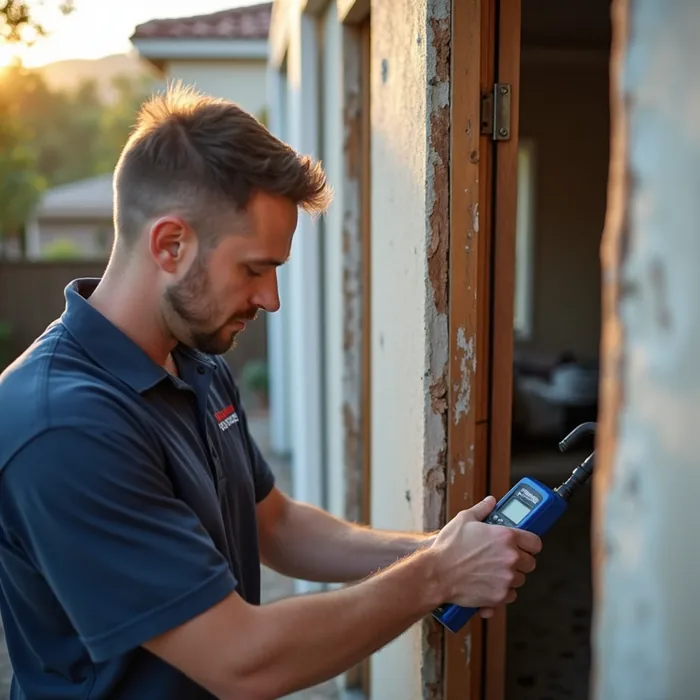
1Inspection and moisture source identification
1–2 hoursWe inspect visually, use thermal imaging and moisture meters to find the wet assembly, and determine where the water is coming from. Nothing else proceeds until this is answered.
 2
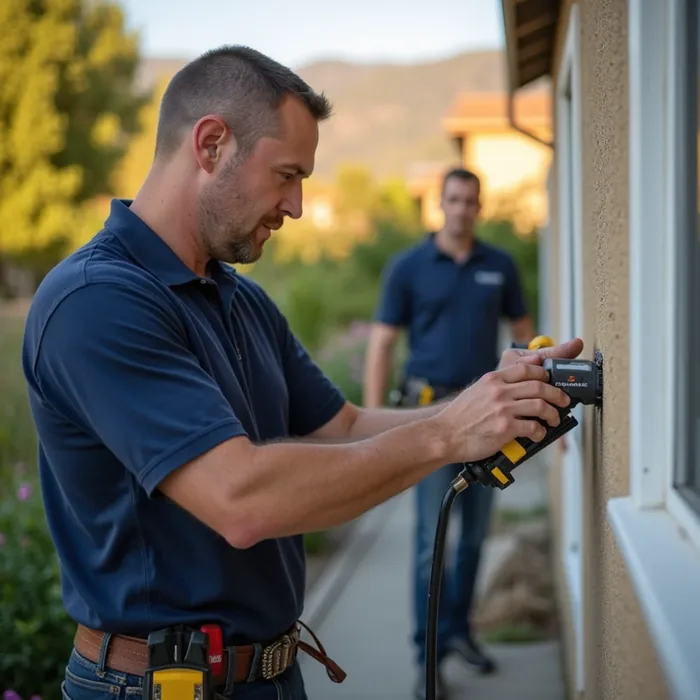
2Assessment and scope definition
Same visitWe define the affected area and the containment boundary. Where independent verification is appropriate — larger jobs, health concerns, real estate transactions — we recommend a third-party industrial hygienist so testing and remediation are not done by the same party.
 3
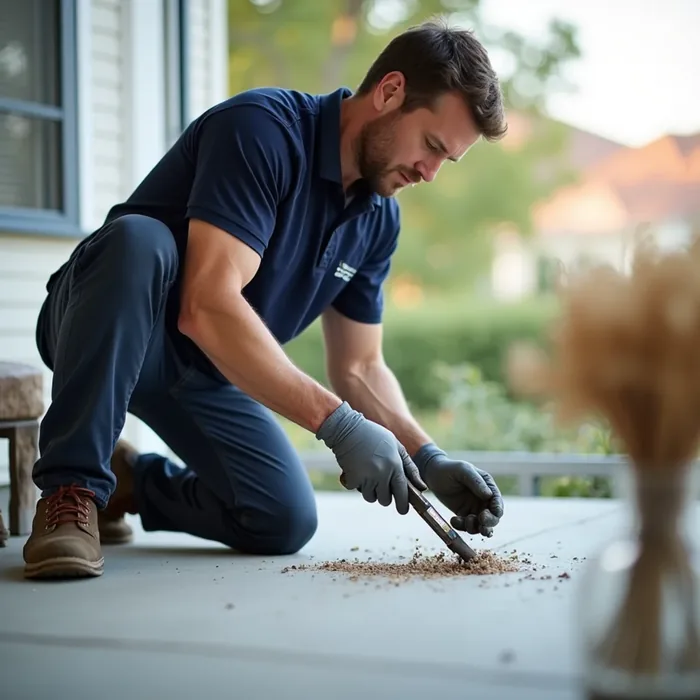
3Containment and negative air
1–3 hoursSealed poly barriers around the work zone, HVAC isolated, and negative air machines with HEPA filtration keeping airflow moving into the containment so spores disturbed during removal cannot escape.
- 4
Removal of affected materials
4 hours to 2 daysContaminated porous materials — drywall, insulation, carpet, pad, affected wood trim — are cut out and bagged inside containment. Semi-porous framing is typically cleaned rather than removed.
- 5
HEPA cleaning and antimicrobial treatment
1 dayRemaining surfaces are HEPA-vacuumed and wiped, then treated. Air scrubbers run throughout to reduce airborne spore load in the work area.
- 6
Fix the moisture source and dry the assembly
2–5 daysThe leak is repaired or coordinated, and the assembly is dried to a verified standard. Skipping this step is the reason mold comes back.
- 7
Post-remediation verification and rebuild
Varies with scopeVisual clearance, moisture verification, and third-party clearance testing where the scope warrants it. Then reconstruction of what was removed.
What you actually get
What Mold Remediation Includes
Moisture source identification first
Visual inspection, thermal imaging and meters to find the wet assembly and determine where the water is coming from. Nothing else proceeds until that is answered.
Defined containment boundary
Sealed poly barriers, HVAC isolated, and HEPA-filtered negative air so spores disturbed during removal cannot escape the work zone.
Removal of affected porous materials
Contaminated drywall, insulation, carpet, pad and affected trim cut out and bagged inside containment. Semi-porous framing is normally cleaned rather than removed.
HEPA cleaning and antimicrobial treatment
Remaining surfaces HEPA-vacuumed and wiped, then treated, with air scrubbers running throughout to reduce airborne spore load.
The moisture source actually fixed
The leak repaired or coordinated and the assembly dried to a verified standard. Skipping this is the single reason mould comes back.
Verification and rebuild
Visual clearance, moisture verification, third-party clearance testing where the scope warrants it, then reconstruction of what was removed.
Where independent verification is appropriate we recommend a third-party industrial hygienist, so the company doing the removal is not also grading its own work.
Why San Ramon Water Damage Pros
Why Our Remediation Does Not Come Back
We find the water before we quote
Any company proposing to spray or fog visible growth without identifying the moisture source is selling a cosmetic result.
Containment before disturbance
Scrubbing growth without containment releases far more spores than leaving it alone. Barriers and negative air go up first.
No bleach theatre on porous materials
Bleach is largely water; on drywall or wood it wets the substrate while the colony sits below the surface. Physical removal is what works.
We follow EPA guidance on remediation
Scope decisions follow published guidance rather than whatever produces the largest invoice, and we will tell you when testing is not worth your money.
Need mold remediation in San Ramon right now?
We answer live 24 hours a day and dispatch immediately. The first hour decides how much of your property we can save.
- Free on-site estimate
- We bill your insurance directly
- IICRC-certified technicians
"Black Mold" — What Is Actually True
Stachybotrys chartarum is the species people mean by "black mold," and the internet has made it considerably more dramatic than the evidence supports. Here is the practical position: several mold genera appear black, colour is not a reliable identifier, and — importantly — the remediation procedure does not change based on species. Containment, physical removal, HEPA cleaning and moisture correction is the answer for all of it.
What does change with species is nothing you can act on differently, which is why routine species testing before remediation is usually a waste of money. Testing has real value in two situations: establishing a baseline when someone in the household has a documented health concern, and independent clearance verification after remediation on a larger job. In both cases the testing should come from someone who is not the company doing the removal.
- Any visible growth over roughly 10 square feet warrants professional containment.
- Do not disturb growth before containment is up — scrubbing it releases far more spores than leaving it alone.
- Bleach is not a mold remediation product on porous materials; it wets the substrate and the growth returns.
- Species identification rarely changes the scope of work. Moisture source identification always does.
Where Mold Grows in San Ramon Homes
The locations are predictable enough that we look in the same places on nearly every inspection. Slow leaks under kitchen and bathroom sinks lead the list because the cabinet hides the evidence until the base has swollen. Behind and beneath dishwashers and refrigerators with ice-maker lines is a close second.
Beyond appliances, San Ramon has two structural patterns worth knowing. Crawl spaces with standing water or a torn vapor barrier keep the humidity elevated in the living space above and support growth on floor framing. And in the hillside neighborhoods — Bollinger Hills, Sycamore Heights, Round Hill and San Ramon Hills — wind-driven rain during Diablo wind season finds flashing and window seal failures on the exposed elevation, producing growth inside the wall on that side of the house.
- Under sinks and behind cabinet toe-kicks, from slow supply and drain leaks.
- Behind dishwashers, refrigerators and washing machines.
- In wall cavities below a previous water loss that was never verified dry.
- Attic sheathing under a roof or flashing leak, and around bath fan terminations that vent into the attic.
- Crawl space framing above standing water or a failed vapor barrier.
- Around window and door flashing on the weather-exposed elevation of hillside homes.
Honest pricing
What Mold Remediation Costs Depend On
Size of the affected area
A single cabinet base is a different job from a full wall assembly across two rooms. Containment size scales the whole operation.
Accessibility of the growth
Growth on an open wall is straightforward. Growth inside a closed cavity, in a crawl space, or on attic sheathing requires access work before remediation even starts.
Whether the moisture source is still active
An unrepaired leak has to be fixed as part of the job. A slab leak or a roof failure behind the growth adds its own scope.
Materials involved
Drywall and insulation are inexpensive to replace. Custom cabinetry, hardwood flooring and specialty finishes are not.
Clearance testing
Third-party post-remediation verification is an added cost and, on larger jobs or health-driven ones, is worth every dollar of it.
Worth knowing: Be skeptical of any bid that treats mold without addressing where the water came from. That is the single most reliable sign the work will not hold.
Where we provide this service
Mold Remediation across San Ramon and the Tri-Valley
FAQ
Mold Remediation questions we get asked
Growth can begin within 24 to 48 hours in warm, damp, dark conditions — which describes the inside of a wall cavity almost perfectly. That window is exactly why professional extraction and verified drying matter so much: dry the materials inside it and the growth never starts.
Usually not. The remediation procedure does not change based on species, so testing before the work rarely changes anything. Testing earns its cost in two cases: establishing a baseline when someone in the home has a documented health concern, and independent clearance after a larger job. In both cases use a third party rather than the remediation contractor.
It depends on the cause. Mold resulting from a sudden covered loss — a burst pipe that was addressed promptly — is often covered, frequently with a specific mold sublimit. Mold from long-term seepage, deferred maintenance or a leak that went unaddressed is typically excluded. Documenting the origin and timeline is what determines which bucket your claim lands in.
Not on porous materials. Bleach is largely water, and applying it to drywall or wood wets the substrate while the active growth sits below the surface where the chlorine does not reach. You get a bleached surface and a colony that returns. Physical removal under containment plus fixing the moisture source is what actually works.
A small contained job — a single cabinet base or a section of one wall — is often one to two days plus drying. Larger jobs across multiple rooms, or work in a crawl space or attic, run several days to a week before reconstruction. Repairing the moisture source can add time if it involves a slab leak or roof work.
You might also need
Related services
Structural Drying & Dehumidification
Engineered drying with commercial air movers and dehumidifiers, verified daily against a measured dry standard — not a guess.
Learn moreLeak Detection & Repair Coordination
Acoustic, thermal and pressure testing that locates the leak before anyone opens a wall or a slab.
Learn moreFlooded Basement & Crawl Space Cleanup
The space nobody looks at until the smell reaches the living room. Pump-out, vapor barrier, and a proper drying chamber.
Learn moreGet mold remediation handled properly
Free on-site estimate, written scope before any reconstruction, and direct insurance billing with documentation your adjuster can actually use.
- Free on-site estimate
- We bill your insurance directly
- IICRC-certified technicians