
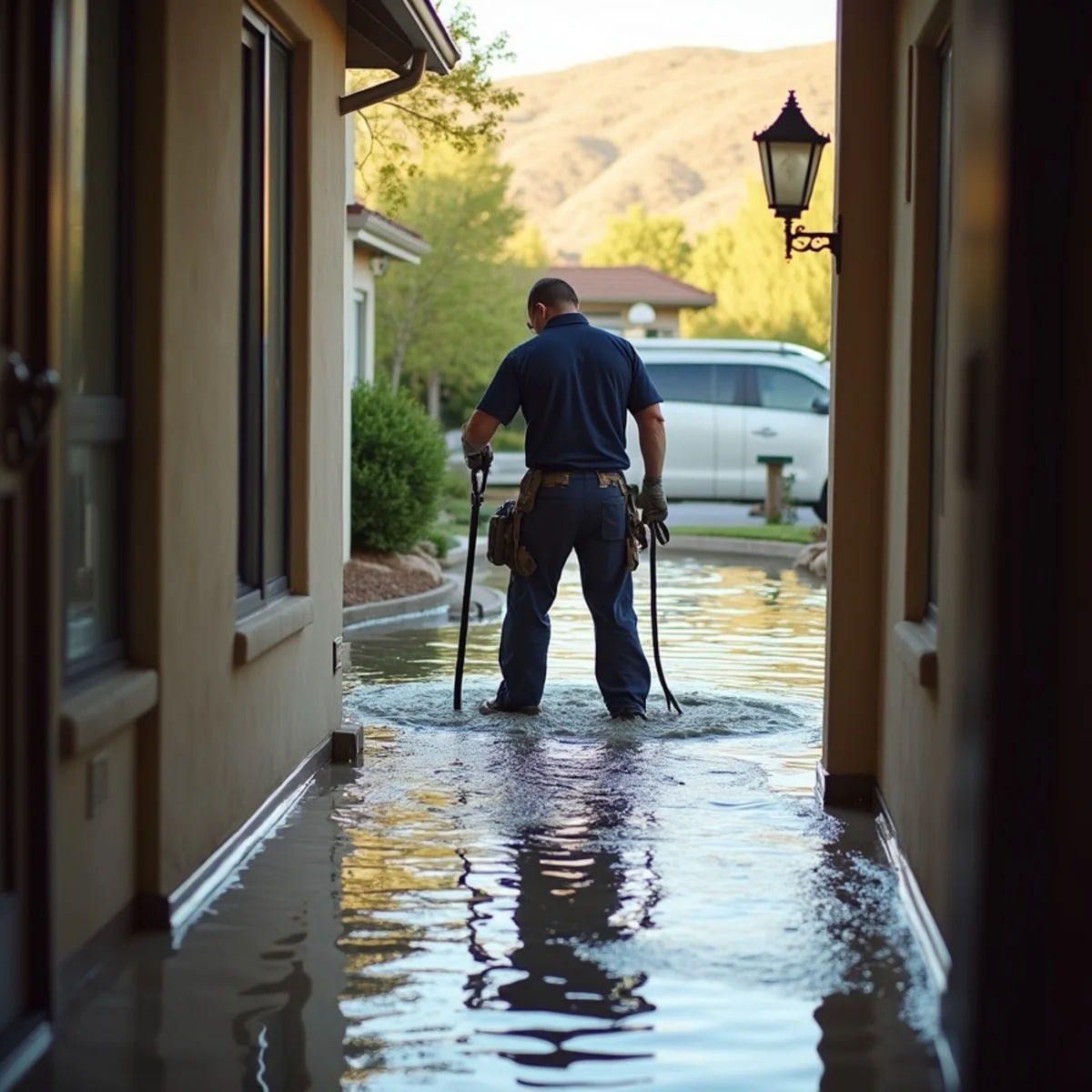
24/7 Emergency Service
Flood Cleanup Services in San Ramon, CA
Ground water is never clean water. We treat it accordingly.
- 24/7 emergency crews — nights, weekends and holidays
- 60-minute emergency response across San Ramon
- Free on-site estimate
- We bill your insurance directly
24/7 Emergency Service
Answered live, any hour
60-Minute Response
Across all of San Ramon
IICRC Certified
Works to the S500 standard
Insurance Billed Direct
Daily moisture logs
Flooding in San Ramon is a seasonal, geographic problem. Roughly 20 inches of rain falls here in an average year and nearly all of it arrives between November and March, often delivered in a handful of atmospheric river events that drop weeks of rainfall in a day or two. When that happens, the storm drain network, San Ramon Creek and Bollinger Creek, and the retention basins that protect the central corridor are all working at once — and the homes that get wet are the ones where grading, a clogged gutter or a low threshold gave the water an easier path indoors.
The critical thing to understand about flood water is that it is not the same as a burst pipe. Water that has crossed the ground picks up whatever was on the ground: fertilizer and pesticide from landscaping, petroleum residue from driveways and streets, and — when the sanitary system is loaded during heavy rain — sewage. That makes storm flooding a Category 3 loss by definition, which changes the entire scope of the cleanup.
We handle flood work as contaminated water from the first minute: containment, PPE, contained extraction, disposal of porous materials that cannot be decontaminated, antimicrobial treatment, HEPA air scrubbing, and only then structural drying. It is more involved than a clean-water job, and doing it as though it were a clean-water job is how people end up with mold in a wall six weeks later.
Request help with flood cleanup
Tell us what happened. We respond within one business hour — or call now for a 24/7 emergency dispatch.
Know the signs
What Storm Flooding Looks Like in a San Ramon Property
Water coming in at a door threshold or garage slab
The most common entry point by far. Saturated ground sheds water toward the house, and the garage slab or a low sliding-door track is the lowest opening it finds.
Water seeping through the base of a wall on a slope
On hillside lots in Bollinger Hills, Sycamore Heights and Round Hill, saturated soil uphill pushes water laterally against the foundation until it finds a way through.
Overflowing gutters sheeting down an exterior wall
A gutter clogged with oak and sycamore leaf litter stops working exactly when it matters. Water then runs down the wall and finds window flashing and siding penetrations.
Yard drains and area drains backing up
When the surface drainage system surcharges, water that should be leaving the property pools against it instead — often right at the lowest slab elevation.
Standing water in a crawl space after a storm
Crawl spaces collect what the soil sheds. Homeowners frequently do not find it until the musty smell shows up upstairs weeks later.
Creek-adjacent properties seeing rising water
Homes near San Ramon Creek and Bollinger Creek and in low sections of Norris Canyon and Crow Canyon carry the most direct exposure during peak flow.
Our process
Our Flood Cleanup Process
 1
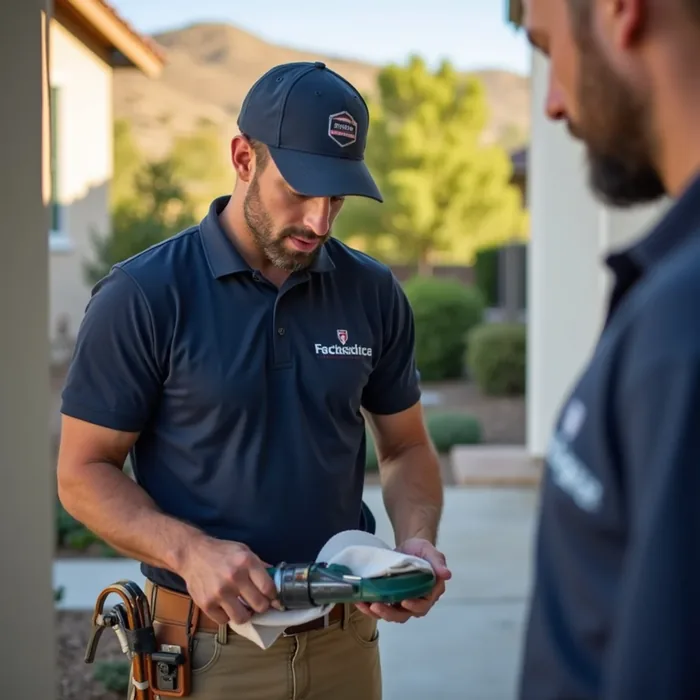
1Safety assessment and utility isolation
On arrivalFlood water and electricity are the immediate danger. We confirm power is isolated to affected areas, check for gas appliance exposure, and evaluate structural safety before entering.
 2
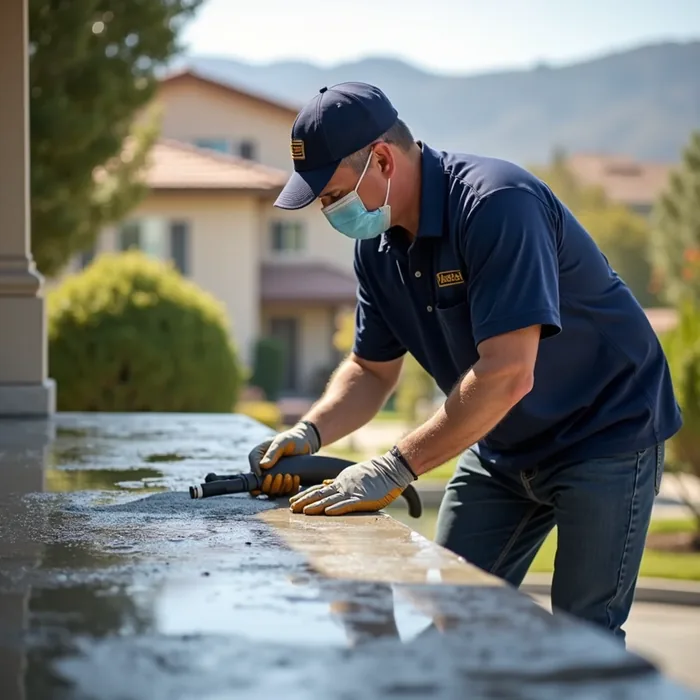
2Category 3 containment setup
30–60 minutesPoly containment, negative air where appropriate, and controlled entry so contaminated material and aerosols do not migrate into clean parts of the house.
 3
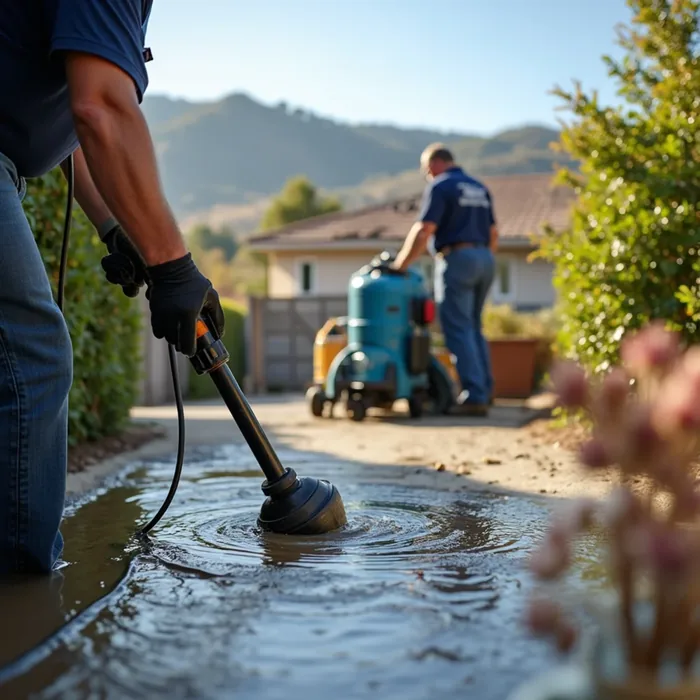
3Contained extraction and pump-out
2–5 hoursSubmersible pumps for depth, extraction units for the rest, with contaminated water disposed of appropriately rather than run onto the property.
- 4
Removal of unsalvageable materials
3–8 hoursCarpet, pad, wet insulation, and drywall to a line above the water mark come out. On Category 3 losses, porous materials in the contaminated zone are not cleanable and are disposed of.
- 5
Cleaning, sanitizing and deodorizing
1–2 daysRemaining structure is cleaned and treated with an appropriate antimicrobial. HEPA air scrubbers run throughout to capture airborne particulate and control odor.
- 6
Structural drying and verification
3–7 daysWith contamination removed, the building is dried as an engineered chamber and verified against a dry standard, exactly as on a clean-water loss.
What you actually get
What Flood Cleanup Includes
Safety and utility assessment
Power isolation to affected areas, gas appliance exposure checked and structural condition evaluated before anyone enters. Flood water and electricity is the immediate danger.
Category 3 containment setup
Poly containment and negative air where appropriate, so contaminated material and aerosols do not migrate into clean parts of the property.
Contained extraction and pump-out
Submersible pumps for depth and extraction units for the rest, with contaminated water disposed of properly rather than run onto the property.
Removal of unsalvageable materials
Carpet, pad, wet insulation and drywall to a line above the water mark. On Category 3, porous materials in the contaminated zone are not cleanable and are disposed of.
Cleaning, then disinfection
In that order — a disinfectant applied over soil does not work. Remaining structure is cleaned and treated with an appropriate antimicrobial.
HEPA air scrubbing throughout
Airborne particulate captured during the work and afterward, with odour treated at source rather than masked.
Structural drying and verification
Once contamination is removed, the building is dried as an engineered chamber and verified against a dry standard like any other loss.
Why San Ramon Water Damage Pros
Why Flood Work Needs a Local Crew
We know where San Ramon actually floods
The San Ramon Creek and Bollinger Creek corridors, low sections of Norris Canyon and Crow Canyon, and hillside runoff paths. We are not learning your drainage on the day.
We treat ground water as Category 3 from minute one
Water that crossed the ground carries soil, landscaping chemicals, street runoff and, during heavy rain, sewage. Handling it as clean water is how mould appears in a wall six weeks later.
We document the entry path
How water got in decides whether your homeowners policy or a separate flood policy responds. We photograph that before anything is touched, because it is worth real money.
Still here next season
Locally based on San Ramon Valley Blvd, licensed in California and verifiable at CSLB — not a storm-chaser working a wide territory for a fortnight.
Need flood cleanup in San Ramon right now?
We answer live 24 hours a day and dispatch immediately. The first hour decides how much of your property we can save.
- Free on-site estimate
- We bill your insurance directly
- IICRC-certified technicians
The Insurance Problem Nobody Warns You About
This is the single most painful conversation we have after a storm. A standard California homeowners policy covers sudden and accidental water originating inside the home. It specifically excludes flood — surface water, rising creek water, and groundwater entering through the foundation. That coverage comes from a separate flood policy, through the NFIP or a private carrier, and it typically has a 30-day waiting period, which means it cannot be bought once the forecast turns.
San Ramon is not a high-flood-risk city on paper, and that lulls people. First Street Foundation data indicates roughly 964 properties here — about 3.7% of the city — carry at least minor flood risk over a 30-year horizon. That is a small share of the city and a very large number of households, and homes near the creek corridors or on hillside runoff paths are heavily overrepresented in it.
One nuance worth knowing: if storm water backs up through a sewer line rather than entering across the ground, a sewer backup endorsement on your homeowners policy may respond even though flood coverage would not. Documenting exactly how water entered the building matters financially, which is another reason not to start cleanup before photographing everything.
- Covered by homeowners: a roof leak letting rain in, a burst pipe, an appliance failure.
- Not covered by homeowners: creek overflow, surface water at a threshold, groundwater through a slab.
- Possibly covered with an endorsement: sewer or drain backup driven by storm loading.
- Mortgage lenders may require flood insurance on properties mapped near San Ramon Creek or Bollinger Creek.
What Gets Thrown Away After a Flood — and Why
The disposal decisions on a flood job frustrate homeowners, and they should be explained rather than just executed. The rule is about porosity, not appearance. Materials with open structure absorb contaminated water into places that cannot be reliably cleaned or verified, so they are removed regardless of how intact they look.
- Always removed: carpet pad, fiberglass and cellulose insulation, particleboard and MDF, mattresses and upholstered furniture that took flood water.
- Usually removed: carpet, drywall to a line above the water mark, laminate flooring, wood cabinetry toe-kicks and bottom shelves.
- Often salvageable after cleaning: solid wood furniture, sealed concrete and tile, framing lumber, metal and glass, hard-surface contents.
- Case by case: hardwood flooring, depending on how long it was submerged and whether the subfloor beneath it can be decontaminated.
Honest pricing
What Flood Cleanup Costs Depend On
Depth and duration of standing water
Depth sets the demolition line on walls; duration determines how far contamination has penetrated into materials and framing.
Volume of material requiring disposal
Category 3 losses generate real disposal volume, and hauling and tipping fees are a genuine line item.
Containment and air filtration
Poly containment, negative air machines and HEPA scrubbers are required on contaminated work and run for the duration.
Crawl space involvement
Water under the house means pump-out, vapor barrier replacement and a separate drying chamber in a confined space.
Reconstruction scope
Flood cuts on drywall, new insulation, flooring and trim across multiple rooms make the rebuild the largest part of most flood claims.
Where we provide this service
Flood Cleanup across San Ramon and the Tri-Valley
FAQ
Flood Cleanup questions we get asked
No. Contra Costa County Flood Control maintains the engineered channels, storm drains and detention basins that carry storm flow through developed areas, and the city clears creeks and drains ahead of each rainy season. But everything on the private side of the property line — grading, gutters, downspout discharge, yard drains and anything that got inside the building — is the owner's responsibility. In our experience it is almost always one of those private elements that failed, not the public system.
Treat it as contaminated. Water that has crossed the ground carries landscaping chemicals, street runoff and, during heavy rain when the sanitary system is loaded, sewage. It is classified as Category 3 water, which means PPE, containment and professional handling — not a mop and a household cleaner.
Generally no. Standard California homeowners policies exclude flood — rising creek water, surface water and groundwater entering the structure. That requires separate flood insurance through the NFIP or a private carrier, and those policies usually carry a 30-day waiting period. We can still help you document the loss properly for whatever coverage does apply.
Exposure concentrates along the San Ramon Creek and Bollinger Creek corridors, in low-lying sections of Norris Canyon and Crow Canyon, and on hillside lots where saturated soil sheds runoff toward the foundation. Garage slabs and low door thresholds are the most common entry points citywide.
Immediately. Contaminated water gets worse with every hour it sits, microbial growth can begin within 24 to 48 hours, and the volume of material that has to be removed grows as contamination wicks further up walls. Starting the same day materially reduces both the scope and the cost.
You might also need
Related services
Storm Damage Cleanup
Emergency tarping and board-up first, extraction and drying second — because the storm is usually still going.
Learn moreSewage Cleanup & Backup Removal
Category 3 contamination handled properly — containment, PPE, disposal, disinfection and odor control, not a mop and bleach.
Learn moreFlooded Basement & Crawl Space Cleanup
The space nobody looks at until the smell reaches the living room. Pump-out, vapor barrier, and a proper drying chamber.
Learn moreGet flood cleanup handled properly
Free on-site estimate, written scope before any reconstruction, and direct insurance billing with documentation your adjuster can actually use.
- Free on-site estimate
- We bill your insurance directly
- IICRC-certified technicians