
24/7 Emergency Service
Storm Damage Cleanup & Restoration in San Ramon, CA
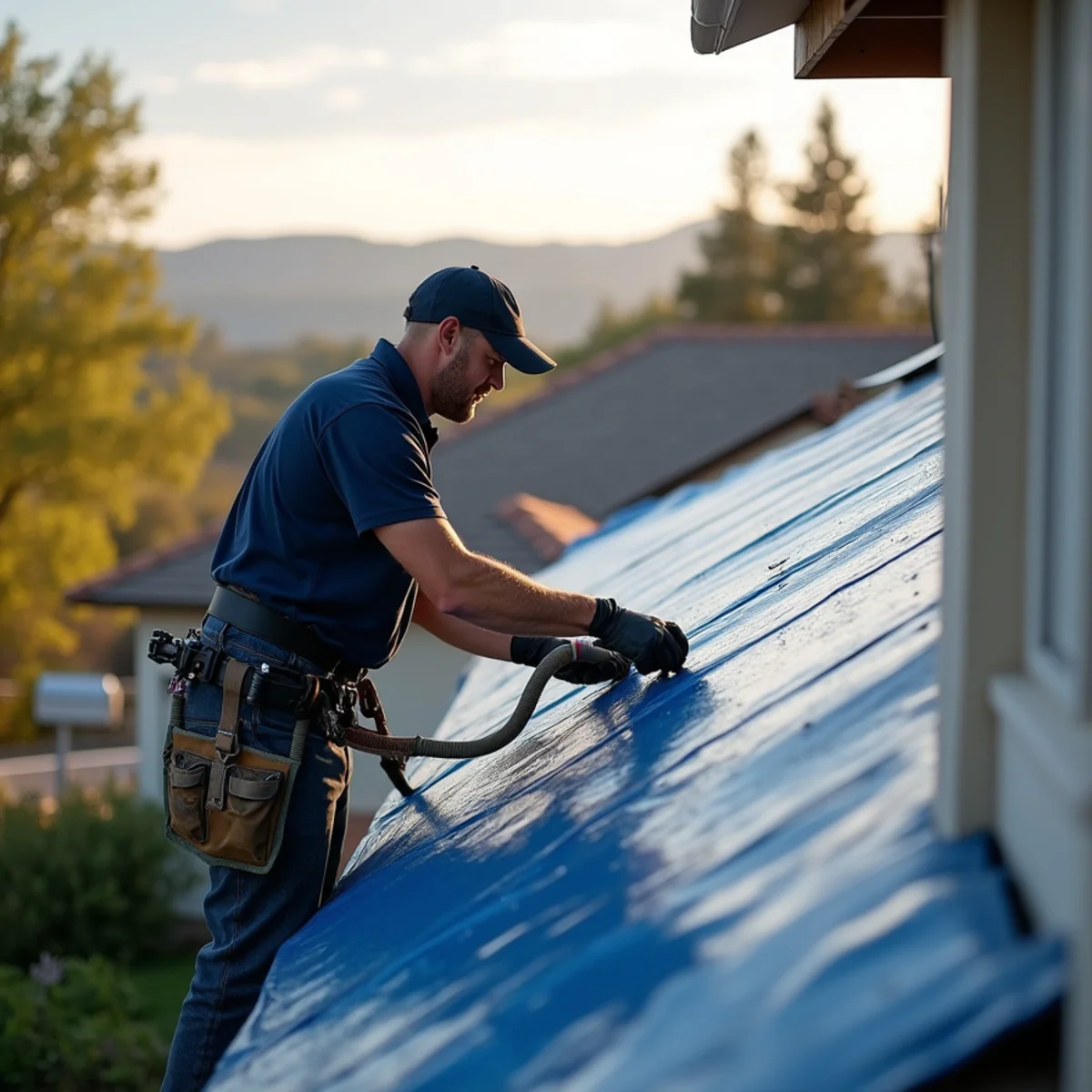
We tarp in the rain. Waiting for the weather to clear costs more.
- 24/7 emergency crews — nights, weekends and holidays
- 60-minute emergency response across San Ramon
- Free on-site estimate
- We bill your insurance directly
24/7 Emergency Service
Answered live, any hour
60-Minute Response
Across all of San Ramon
IICRC Certified
Works to the S500 standard
Insurance Billed Direct
Daily moisture logs
San Ramon gets about 20 inches of rain in an average year, and almost all of it falls between November and March. What matters is not the annual total but the delivery: a large share of it arrives in a handful of atmospheric river events that drop weeks of rainfall over a day or two, often with sustained wind behind it. That is a very different load on a building than steady drizzle, and it finds every weakness at once — the flashing that was marginal, the gutter that was half full, the grading that was almost adequate.
The other half of the local storm picture is Diablo wind season, roughly October through March, when dry offshore winds accelerate down the lee side of Mount Diablo. The ridgeline neighborhoods take the brunt of it: San Ramon Hills, Bollinger Hills, Sycamore Heights and the canyon-adjacent pockets. Wind lifts and loosens shingles, works flashing free around chimneys and vents, and brings down limbs onto roofs. The damage often does not announce itself until the next rain arrives and finds the opening.
Storm work has a strict order of operations. Stop the water coming in — emergency tarping, board-up, diversion — then extract what is already inside, then dry. Crews that skip straight to extraction while the roof is still open are drying a building that is still being filled, and we do not do that.
Request help with storm damage cleanup
Tell us what happened. We respond within one business hour — or call now for a 24/7 emergency dispatch.
Know the signs
Storm Damage That Needs Immediate Attention
Active water coming through the ceiling or roof
The roof envelope is open and the storm is not finished. Emergency tarping first, always — extraction into an open building is wasted work.
Missing shingles or visibly lifted roofing
Common after Diablo wind events. The opening may not leak in the wind but will absolutely leak in the next rain band.
A tree limb down on the roof or against the house
Both an immediate structural concern and a puncture risk. Do not attempt removal yourself in wet or windy conditions.
Water at a door threshold or in the garage
Surface water entering at the lowest opening. Treat it as contaminated ground water, not clean rain.
A broken window or a failed skylight seal
Needs board-up or covering immediately, both to stop water and to secure the building.
Gutters overflowing and sheeting down the wall
A clogged gutter during a heavy band puts a continuous curtain of water against the siding and window flashing — a very effective way to get water inside a wall.
Water in the crawl space after the storm passes
Saturated soil keeps releasing water for days after the rain stops. Check under the house once conditions allow.
Our process
How We Handle Storm Damage
 1
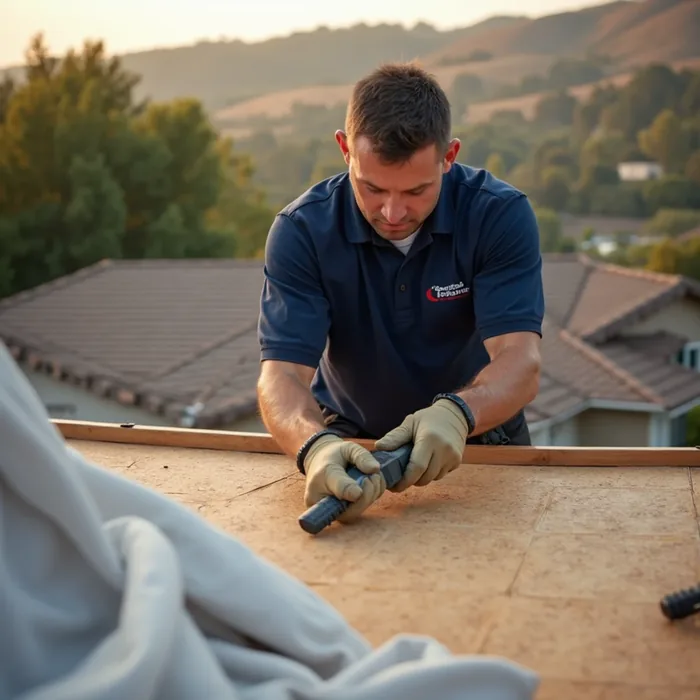
1Emergency tarping and board-up
First 1–3 hoursWe secure the building envelope first — roof tarps, window board-up, temporary diversion — so no further water enters while the rest of the work happens. This step is done in the weather, not after it.
 2
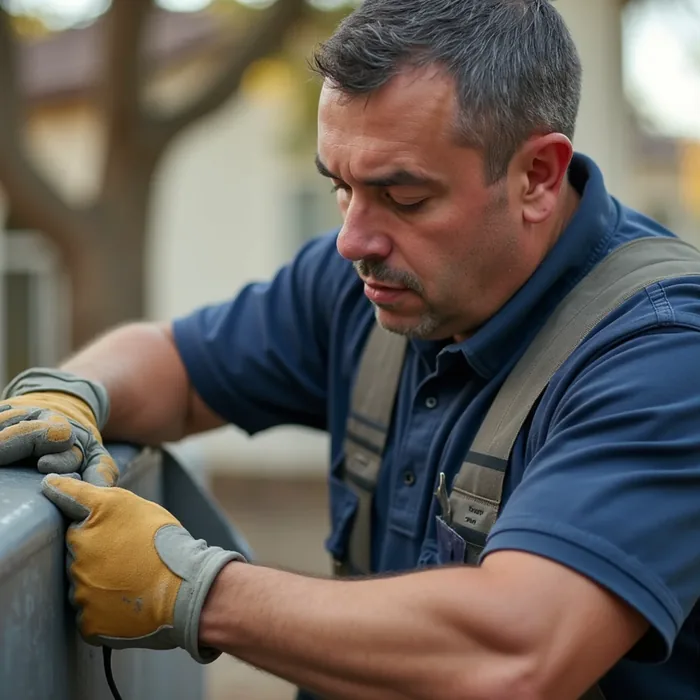
2Assess the full path of intrusion
1–2 hoursWater that entered at the roof rarely stays there. We track it through the attic, down wall cavities and into ceilings and floors below, mapping the actual wet perimeter rather than the visible one.
 3
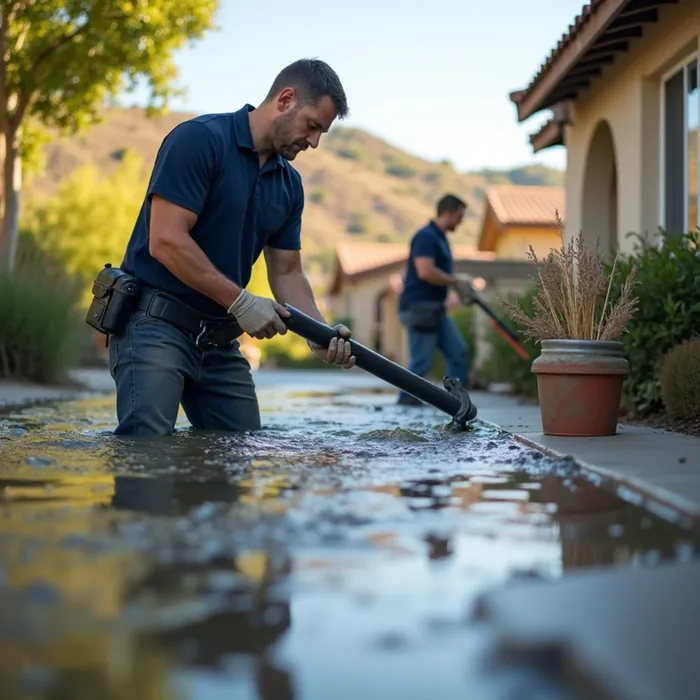
3Extract standing water
2–5 hoursInterior extraction on all affected levels. Storm water that crossed the ground is treated as Category 3; clean rain through a roof opening is handled as Category 1 unless it has contacted contaminated material.
- 4
Remove unsalvageable materials
3–8 hoursSaturated attic insulation, wet ceiling drywall, and flooring and pad that took ground water. Ceilings that are holding water are relieved deliberately rather than left to fail.
- 5
Dry the structure
3–7 daysEngineered drying across every affected level, with attention to attic and cavity spaces that trap moisture and get missed on storm jobs.
- 6
Document and coordinate permanent repairs
VariesFull photographic documentation for the claim, then coordination of permanent roofing, flashing, window and siding repairs once the structure is dry.
What you actually get
What Storm Damage Response Includes
Emergency tarping and board-up
The building envelope secured first — roof tarps, window board-up, temporary diversion — in whatever weather is happening. Extraction into an open building is wasted work.
The full intrusion path mapped
Water entering at the roof rarely stays there. We track it through the attic, down wall cavities and into ceilings and floors below.
Interior extraction on every affected level
Ground water treated as Category 3; clean rain through a roof opening handled as Category 1 unless it has contacted contaminated material.
Saturated attic insulation removed
Wet blown and batt insulation bagged and taken out. It does not dry back to usable condition and it holds moisture against the framing for months.
Loaded ceilings relieved deliberately
A bulging ceiling is holding water and can fail as a full sheet. We release it under control with containment below rather than waiting.
Documentation for the wind claim
Photographs establishing the storm-created opening, because wind is a covered peril and age is not.
Permanent repairs coordinated
Roofing, flashing, window and siding repair scheduled once the structure is dry.
Why San Ramon Water Damage Pros
Why We Tarp in the Rain
We work in active weather
Every additional hour of intrusion grows the interior scope faster than tarping costs. We secure the envelope while it is still raining.
We know the Diablo wind pattern
Wind lifts shingles and loosens flashing in October without leaking that day. The water arrives with the January atmospheric river, and connecting those two events is worth real money on your claim.
Ridgeline exposure understood
San Ramon Hills, Bollinger Hills, Sycamore Heights, Hidden Valley and the Bollinger Canyon edge take the strongest wind loading in the city and generate most of these calls.
Here before and after the storm
Locally based and CSLB-verifiable, not an out-of-town operation working the region for a fortnight after a weather event.
Need storm damage cleanup in San Ramon right now?
We answer live 24 hours a day and dispatch immediately. The first hour decides how much of your property we can save.
- Free on-site estimate
- We bill your insurance directly
- IICRC-certified technicians
Diablo Winds and Why the Damage Shows Up Later
Diablo winds are the Bay Area’s offshore wind event — dry air accelerating down the western slope of Mount Diablo, typically between October and March, sometimes gusting hard enough to prompt National Weather Service advisories. Because the air is dry, these events rarely cause water damage on the day they happen. What they do is mechanical: lifting shingle tabs and breaking their seal, working flashing loose at chimneys, vents and skylights, opening ridge cap and gable ends, and dropping limbs.
The result is a building that is now compromised but shows no symptom. Then the next atmospheric river arrives — sometimes weeks later — and the roof that seemed fine puts water into the attic. This lag is why we tell people in the ridgeline neighborhoods to inspect after wind events rather than after rain events. Finding a lifted shingle in dry weather costs almost nothing; finding it because the ceiling stained costs a ceiling.
- Highest exposure: San Ramon Hills, Bollinger Hills, Sycamore Heights, Hidden Valley and the Bollinger Canyon edge.
- Check after wind, not just after rain — the damage and the leak are separate events.
- Look for lifted or missing shingle tabs, displaced ridge cap, and flashing that has pulled away.
- Clear gutters after the wind drops leaves and debris but before the next rain band arrives.
- Photograph any visible damage immediately; it establishes the date of loss for your claim.
Atmospheric Rivers: What Actually Fails
During a major event, the failures we respond to are remarkably consistent, and almost none of them involve dramatic structural damage. They are drainage failures — systems that work fine under normal rain and are simply overwhelmed by the volume and duration of an atmospheric river.
- Gutters and downspouts clogged with leaf litter, overflowing against the wall and into window flashing.
- Yard and area drains silted up, so surface water pools at the lowest slab elevation instead of leaving the lot.
- Grading that slopes toward the house, sending saturated-soil runoff into the crawl space or garage.
- Roof flashing and penetration seals that leak only under wind-driven rain at a particular angle.
- Sump pumps failing when the power drops, which is exactly when they are most needed.
- Skylight and window seals that were marginal and give up under sustained pressure.
Honest pricing
What Storm Damage Cleanup Costs Depend On
Emergency mitigation scope
Tarping, board-up and temporary diversion are billed by area and difficulty. A steep two-story roof in active weather is a different job from a single-story tarp.
Number of levels affected
Roof intrusion that reached the attic, the upper ceiling and the ground floor means three drying chambers rather than one.
Water category
Clean rain through a roof opening versus ground water at a threshold are different classifications with different handling requirements.
Attic insulation replacement
Saturated blown or batt insulation must be removed and replaced — a real cost that surprises many homeowners on roof-leak claims.
Permanent envelope repairs
Roofing, flashing, windows and siding are their own scope. We coordinate them but they sit separately from mitigation on the claim.
Where we provide this service
Storm Damage Cleanup across San Ramon and the Tri-Valley
FAQ
Storm Damage Cleanup questions we get asked
Yes, and this is the cheapest call you will ever make to us. Diablo winds lift shingle tabs and break their seal without producing a leak that day, because the air is dry. The roof is compromised but shows no symptom until the next atmospheric river finds it — sometimes weeks later. Getting it tarped or repaired in dry weather costs a fraction of what the interior damage will, and photographing the wind damage now establishes your date of loss while it is clearly attributable to the storm.
Usually yes for wind-driven damage and for rain entering through a storm-created opening — a lifted roof, a broken window. What is generally excluded is flood: surface water and rising creek water entering the structure, which requires separate flood coverage. Also excluded is damage attributed to deferred maintenance, which is why photographing the storm damage promptly matters.
Yes, and that is normally the right call. Waiting for the weather to clear means hours or days of additional water entering the building, which grows the interior scope far faster than the tarping cost. Emergency tarping is the first thing we do on a storm call.
It is common and worth documenting carefully. Diablo wind events lift and unseal shingles without causing an immediate leak; the water arrives with the next storm. Note the date of the wind event, photograph the roof damage, and report both to your carrier — the wind is the cause of loss, even though the water came later.
Move everything out from under it and put down containers. If the drywall is bulging, that pocket is holding water and can fail as a sheet — stay out from under it entirely rather than trying to relieve it yourself. Photograph everything, then call. We tarp the source and handle the ceiling safely.
You might also need
Related services
Roof Leak Water Damage Restoration
Tarp the opening, dry the attic and the ceilings below, and replace the insulation that quietly lost its R-value.
Learn moreFlood Cleanup
Storm and creek flooding handled as the contaminated loss it is — contained extraction, disposal, sanitizing and full structural drying.
Learn moreCeiling Water Damage Repair
Find the source, dry the cavity, then repair — patching a stained ceiling without doing the first two is why it comes back.
Learn moreGet storm damage cleanup handled properly
Free on-site estimate, written scope before any reconstruction, and direct insurance billing with documentation your adjuster can actually use.
- Free on-site estimate
- We bill your insurance directly
- IICRC-certified technicians