Sewage Backup Cleanup Costs — and Whether Your Insurance Will Actually Pay
Category 3 work is the most expensive restoration per square foot there is — and the coverage most homeowners assume they have is usually an endorsement they never bought.
Written by the San Ramon Water Damage Pros crew — IICRC-certified technicians working to the ANSI/IICRC S500 standard on water losses across San Ramon and the Tri-Valley. Guidance here reflects how we actually run jobs, not general advice.
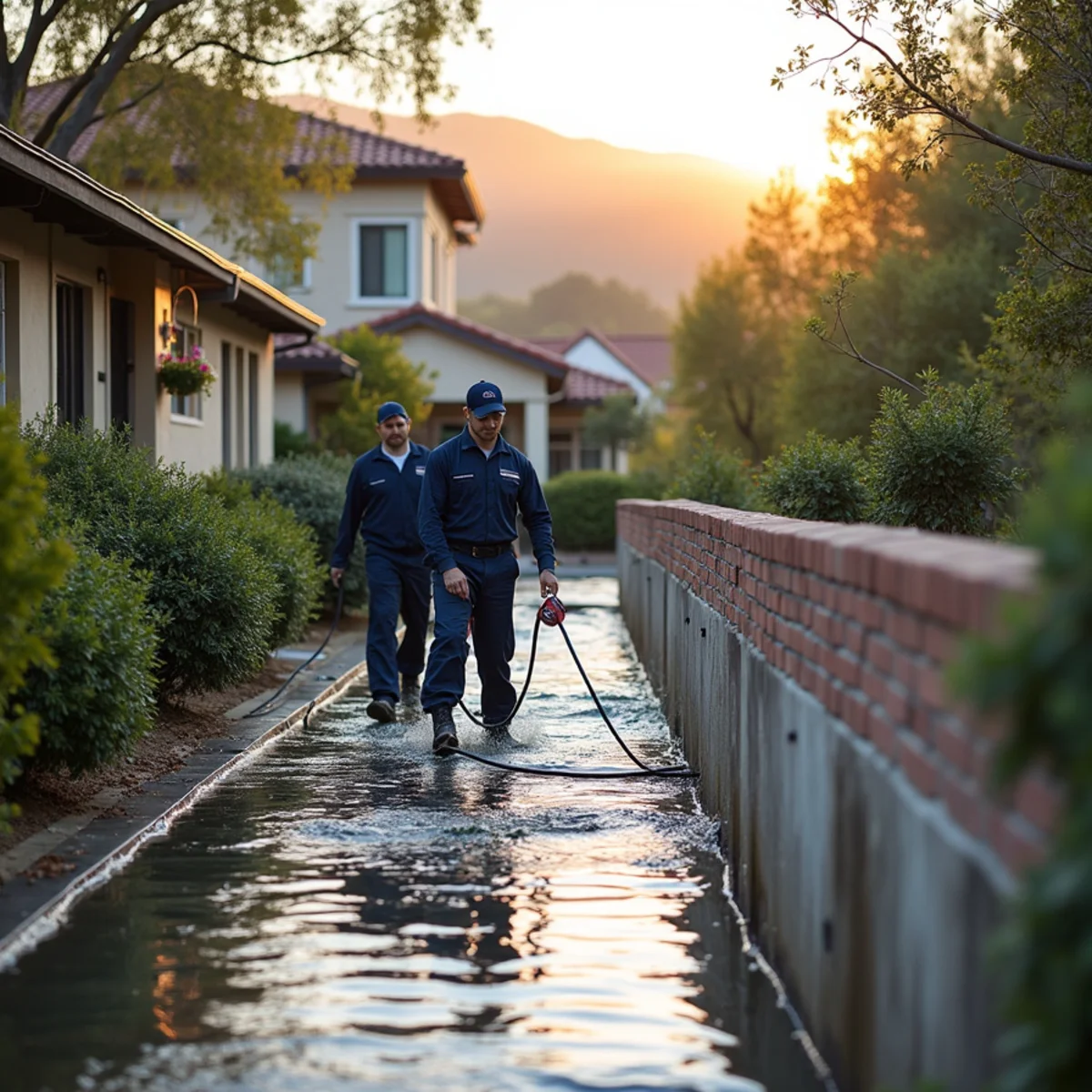
Two unpleasant surprises tend to arrive together after a sewage backup. The first is that Category 3 cleanup costs substantially more per square foot than any other water damage work. The second is that a standard California homeowners policy excludes it.
Both are worth understanding before you need to, because the endorsement that fixes the second problem is inexpensive and the window to buy it is any day except the day you need it.
Water damage happening right now?
We answer live 24 hours a day and commit to a 60-minute response across San Ramon.
+1 (201) 277-9344Why Category 3 Costs More
The higher rate is structural to the work rather than opportunistic. Contaminated water requires a completely different scope from clean water of the same volume.
- Containment and negative air with HEPA filtration, set up before any work begins and running for the duration.
- Full PPE for every technician — suits, gloves, boots, respiratory protection — replaced as they are contaminated.
- Removal and disposal of all porous materials in the affected zone regardless of condition: carpet, pad, drywall to an appropriate height, insulation, cabinet toe-kicks and bases.
- Regulated waste handling, hauling and disposal fees.
- A two-stage cleaning process — clean first, then disinfect, because a disinfectant applied over soil does not work.
- HEPA air scrubbing throughout the job and after it.
- Structural drying after all of the above, which is where a clean-water job would have started.
What Drives Your Specific Number
- How far the water traveled. A backup contained to a bathroom is a fraction of one that reached a hallway and two bedrooms — containment and demolition scale together.
- Finished versus unfinished space. Onto a garage slab is dramatically cheaper than across finished flooring, drywall and built-in cabinetry.
- Volume of porous material to remove and dispose of.
- Whether it reached a crawl space, which adds confined-space work at the slowest rate we bill.
- Odor severity. Deep penetration sometimes requires sealing framing and subfloor after cleaning, adding a phase before reconstruction.
- Reconstruction scope, which on a finished lower level is usually the largest share of the total.
The Coverage Gap Most Homeowners Do Not Know They Have
Sewer and drain backup is excluded from the base dwelling coverage on essentially every standard California homeowners policy. Coverage comes from an add-on — usually called water backup, sewer backup, or sump overflow coverage — that has to be specifically purchased.
It is inexpensive, typically a modest annual amount. The catch is the limit: endorsements are frequently capped well below the dwelling limit, often somewhere in the five-to-twenty-five-thousand range. A Category 3 loss across a finished lower level with cabinetry and flooring can exceed that, and homeowners who assumed the endorsement meant full coverage discover the cap at the worst moment.
Two things to do today: confirm whether you have the endorsement at all, and if you do, check the limit and consider raising it. In the older San Ramon neighborhoods where root intrusion into clay-tile laterals is common — Broadmoor, Crow Canyon, Montevideo, the Iron Horse corridor — this is not a hypothetical risk.
When Someone Else Might Be Responsible
If the blockage was in the public main rather than in your private lateral, there may be a claim against the responsible agency. That determination hinges on where the blockage sat relative to the property line — which is exactly the sort of detail that vanishes if the scene is cleaned before it is documented.
Practically: photograph everything before any cleanup, note which fixtures backed up and in what order, and ask the plumber or the agency to document where the blockage was found. If a camera inspection is done, get a copy of the footage.
Be realistic about the process. Claims against public agencies involve their own procedures and timelines, and they are rarely quick. Mitigate immediately regardless — waiting to establish responsibility just makes the loss larger while producing no advantage.
What Actually Causes This in San Ramon
- Tree root intrusion into original clay-tile sewer laterals — by far the leading cause in the 1970s neighborhoods with mature canopy.
- Blockages from wipes marketed as flushable, plus cooking grease congealing in the line.
- Stormwater infiltration during heavy winter rain loading the sanitary system past capacity.
- Collapsed or offset laterals, often where expansive clay soil movement has shifted a section.
- Blockages in the public main, which back up into the lowest connected fixtures on the line.
Reducing the Risk
- Act on early warnings: gurgling toilets when you run a sink or washer, several drains slowing at once, a sewer odor near the cleanout.
- Have the lateral camera-inspected if the home is 1970s or older and has never been checked. It is inexpensive and it tells you exactly what you are dealing with.
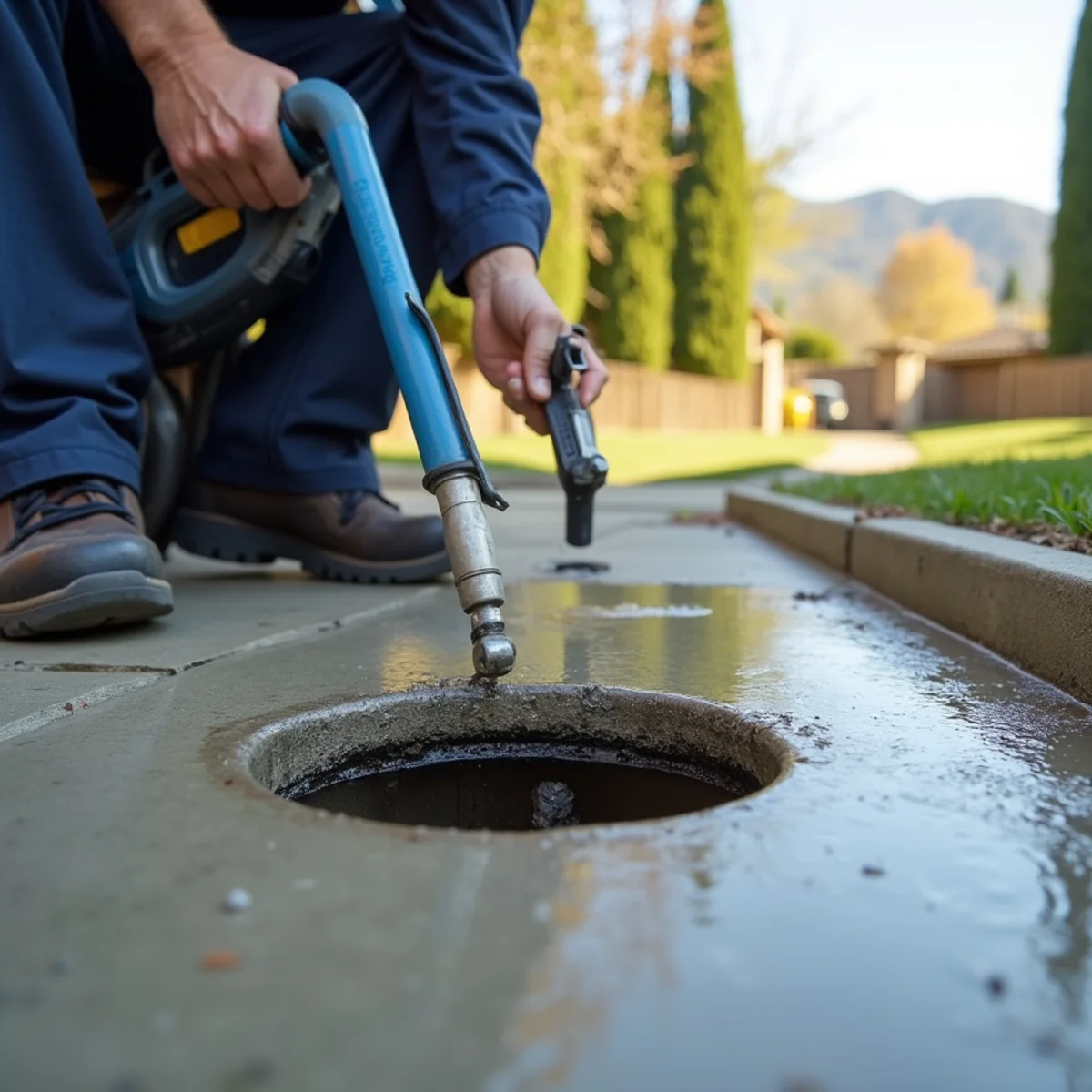
- Periodic hydro-jetting and root cutting on a known root-affected line, rather than waiting for the blockage.
- Consider relining or replacing an aging lateral — it removes the joints roots enter through, permanently.
- Install a backwater valve, which prevents flow reversing into the house from the main. Worth serious consideration on a home with a finished lower level.
- Buy the endorsement, and check the limit.
What Day One of a Sewage Job Actually Involves
Knowing the sequence makes it possible to read a quote critically. Anything missing from the list below is either being skipped or being added later as a supplement, and both are worth asking about before work starts.
- Source control first — Nothing else happens while the line is still backing up. That means the blockage is cleared or the system pumped, and all water use in the building stops until it is. Every additional flush adds to the scope.
- Containment and negative air — Poly barriers seal the affected area and negative air machines keep contaminated air inside it. This is not optional on Category 3 and it is the step most often absent from a low quote.
- Extraction and gross removal — Standing contaminated water is extracted, and solids and heavily soiled material are removed. Crews work in appropriate protective equipment throughout, which is a cost line as well as a safety measure.
- Removal of porous materials — Carpet and pad, affected drywall cut well above the visible water line, insulation and any particleboard the water reached. Under the S500 standard these are removed rather than cleaned, because they cannot be reliably decontaminated.
- Cleaning and antimicrobial treatment — Remaining hard surfaces, framing and subfloor are cleaned and treated. This happens after removal rather than instead of it — treatment applied over contaminated porous material achieves very little.
- Drying to a measured target — Only once the space is decontaminated does drying start, with daily readings against a dry standard taken from an unaffected part of the same building.
- Verification before rebuild — Documented readings and, where warranted, clearance testing before anything is closed back up. Rebuilding over material that is still wet or still contaminated is how this job gets done twice.
Frequently asked questions
Not under the base policy — it is excluded from essentially every standard California homeowners policy. Coverage requires a specific water or sewer backup endorsement, which is inexpensive but frequently capped well below the dwelling limit. Check both whether you have it and what the limit is.
Because it is a fundamentally different scope. Containment, negative air, full PPE, disposal of every porous material in the affected zone regardless of condition, regulated waste handling, a two-stage clean-then-disinfect process and HEPA scrubbing — all before drying even begins.
We would strongly advise against it at any size. Category 3 water carries bacteria, viruses and parasites, and mopping or vacuuming aerosolizes contaminated droplets into your breathing zone. Household cleanup also cannot address water that has already wicked into drywall, under flooring or into carpet pad — which is where the problem continues.
Because drywall wicks water upward inside the wall well beyond the visible line, and with Category 3 water the contamination travels with it. Cutting to a standard margin above the highest moisture reading rather than to the water mark is what keeps contaminated material from being closed back into the wall. It looks excessive and it is the reason the job does not have to be redone.
We handle the cleanup, decontamination and restoration; the line itself is plumbing work and goes to a licensed plumber. We coordinate directly with them so drying starts as soon as the source is controlled rather than days later. Any company telling you it does both should be able to show you the licence for both, and you are entitled to ask.
The short version
Category 3 is the most expensive restoration work per square foot, and the coverage for it is an endorsement most people have never checked for. Both facts are worth acting on before you need them.
We run sewage cleanup across San Ramon 24 hours a day with proper containment, disposal and disinfection — and we document the origin thoroughly, because on these claims it matters.