
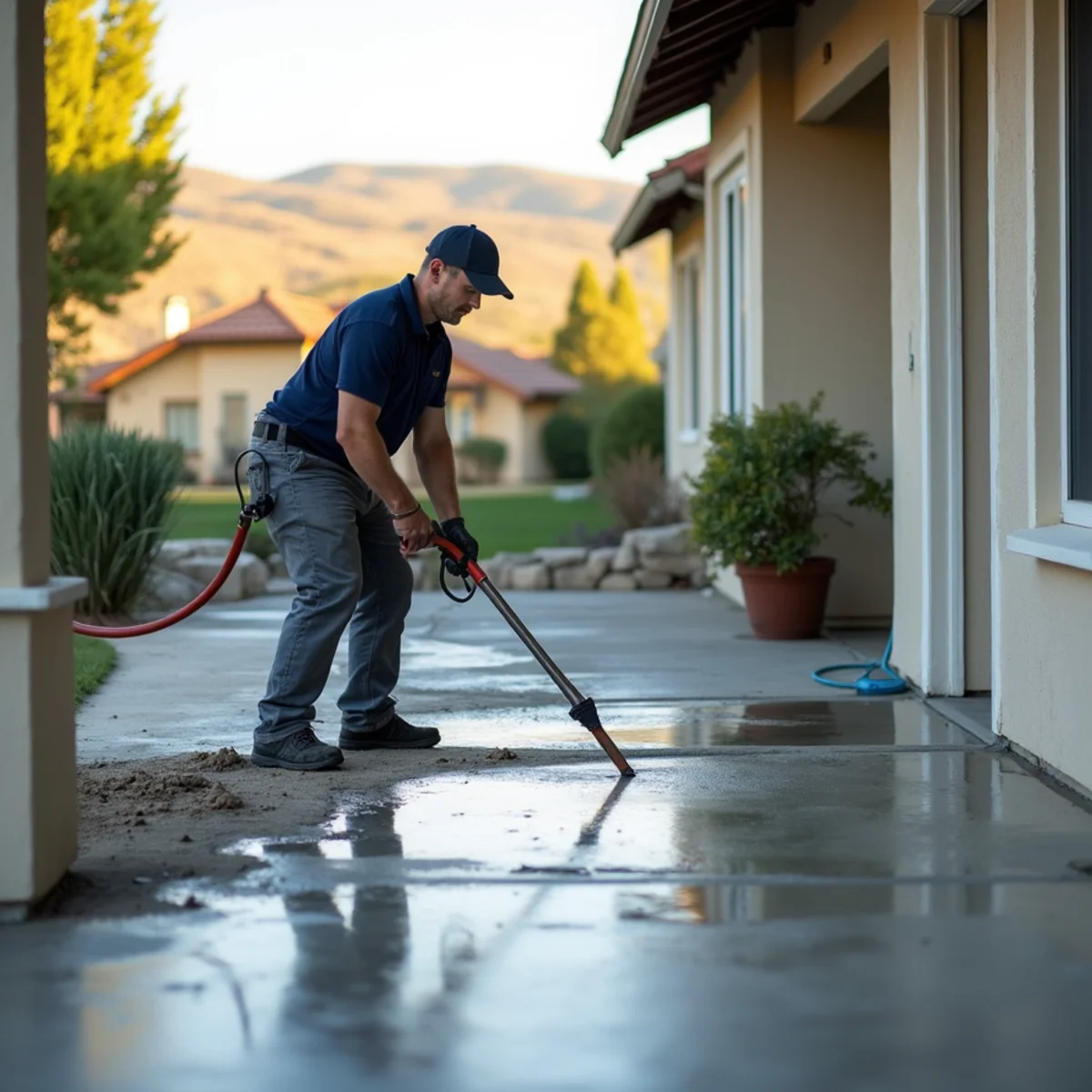
24/7 Emergency Service
Slab Leak Water Damage Restoration in San Ramon, CA
Warm floor, high water bill, running water you cannot find. That is a slab leak.
- 24/7 emergency crews — nights, weekends and holidays
- 60-minute emergency response across San Ramon
- Free on-site estimate
- We bill your insurance directly
24/7 Emergency Service
Answered live, any hour
60-Minute Response
Across all of San Ramon
IICRC Certified
Works to the S500 standard
Insurance Billed Direct
Daily moisture logs
Slab leaks are San Ramon’s signature water damage problem, and the reason is structural to how and when this city was built. A large share of the housing stock — Central San Ramon, Broadmoor, Old Ranch, West San Ramon, Ponderosa and the surrounding 1970s and early-80s tracts — is slab-on-grade construction, with copper supply lines running through or beneath the concrete. Those lines are now forty to fifty years into service, in some of the hardest water in the Bay Area, on some of the most active clay soil.
Three mechanisms drive the failures. Hard EBMUD water at 16 to 18 grains per gallon produces pitting corrosion that eats copper from the inside until the wall thins through. Expansive clay soil — the montmorillonite-rich material this valley sits on — swells through the wet season and shrinks through the dry one, cycling mechanical stress into a pipe held rigidly in concrete. And the Calaveras Fault system delivers periodic seismic movement that finishes off lines already compromised by the first two.
What makes slab leaks expensive is not the pipe. It is the duration. A leak under a slab has no visible symptom for weeks — it saturates the sub-slab fill, softens the soil, and quietly wicks up into wall bottom plates and flooring. By the time a homeowner notices a warm spot or an unexplained bill, there is often significant moisture in the structure above and, frequently, growth that started long before anyone knew there was a problem.
Request help with slab leak damage
Tell us what happened. We respond within one business hour — or call now for a 24/7 emergency dispatch.
Know the signs
Signs of a Slab Leak
A warm spot on the floor
The most diagnostic symptom there is. A hot-side line leaking under the slab heats the concrete above it, producing a localized warm patch you can find with bare feet.
Running water audible with everything off
Stand in a quiet house with every fixture and appliance shut. A continuous hiss or trickle coming from the floor is pressurized water escaping under the slab.
An EBMUD bill that climbed with no change in use
A slab leak runs continuously. The bill is usually the first hard evidence, and it often shows up a month or two before any physical symptom does.
Water pressure that dropped gradually
System pressure lost to a leak shows up at the fixtures, typically worsening slowly enough that the household adapts without registering it.
Cracks in flooring, tile grout or wall corners
Water softens the soil beneath the slab, and San Ramon’s expansive clay responds with differential movement. Cracking that appears alongside plumbing symptoms is a strong signal.
Damp carpet or a dark patch on a slab floor
Moisture reaching the surface, often with white mineral efflorescence at the edge of the wet area.
A musty smell near the floor or along a baseboard
Growth in carpet pad, baseboard or the bottom plate of a wall where slab moisture has been wicking upward for weeks.
Our process
How We Handle a Slab Leak
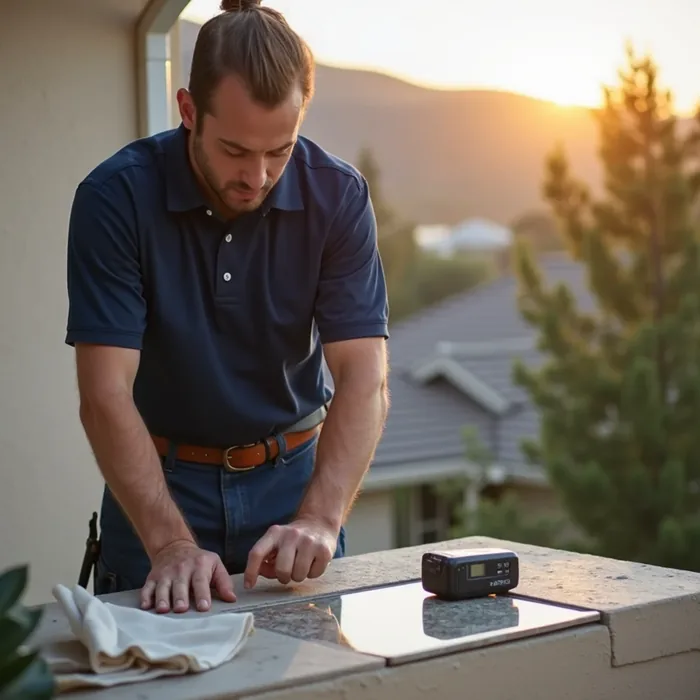 1
1Confirm and isolate
45–60 minutesMeter test with everything shut off, then pressure-isolate hot and cold sides independently to establish which system is losing water before we start locating.
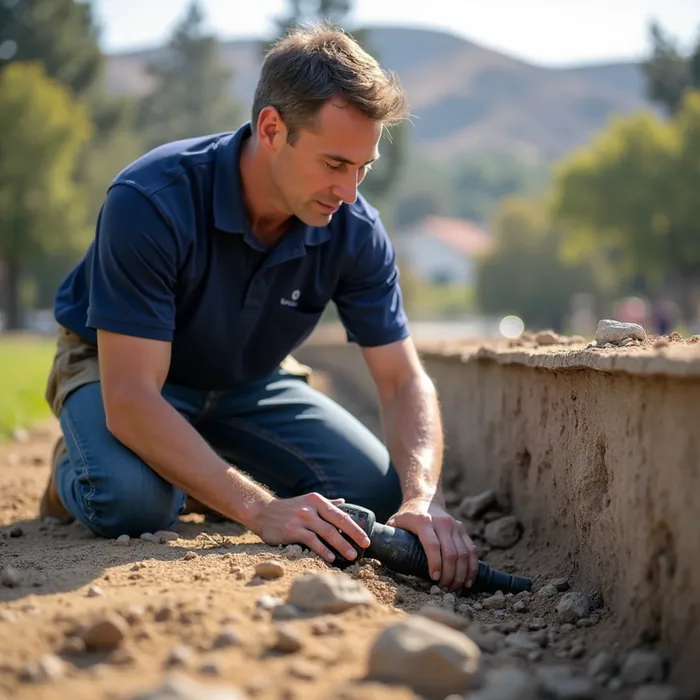 2
2Locate precisely
1–2 hoursAcoustic listening equipment through the slab, thermal imaging to read the temperature signature of a hot-side leak, and tracer gas where the slab is thick or the leak is quiet. Two independent methods agreeing is what makes a single opening possible.
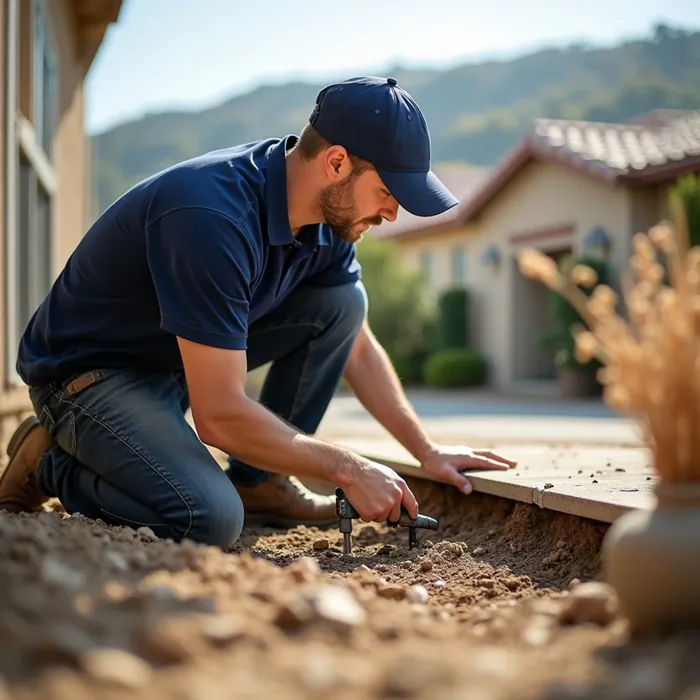 3
3Recommend the repair approach honestly
Same visitSpot repair through the slab, reroute the affected line overhead through wall and attic, or partial to whole-house repipe. Which one is right depends on the pipe’s condition and the failure history, and we will tell you which we would choose.
- 4
Coordinate the plumbing repair
1–2 daysLicensed plumbing repair coordinated and scheduled, with the opening placed to minimize both the demolition and the reconstruction.
- 5
Extract and dry — the part people skip
4–7 daysThe sub-slab area, the concrete itself, wall bottom plates and any wicked material all hold water. We dry the slab and the assemblies above it to a verified standard. A repaired pipe over an undried slab is a mold problem waiting to happen.
- 6
Remediate and rebuild
Varies with scopeAny growth that started during the weeks the leak ran is remediated under containment, then flooring, baseboard, drywall and paint are restored.
What you actually get
What Slab Leak Restoration Includes
Confirmation and system isolation
Meter test with everything shut off, then hot and cold sides pressure-isolated independently to establish which system is losing water before locating begins.
Precise non-invasive location
Acoustic listening through the slab, thermal imaging for the hot-side signature, and tracer gas where the slab is thick or the leak is quiet. Two methods agreeing is what makes a single opening possible.
An honest repair recommendation
Spot repair, overhead reroute or partial-to-whole repipe, chosen from the pipe's condition and failure history rather than from whichever is easiest to sell.
Plumbing repair coordinated
Licensed repair scheduled, with the opening placed to minimise both demolition and the reconstruction that follows.
Sub-slab and wall assembly drying
The concrete, the sub-slab area and the wall bottom plates that wicked all dried to a verified standard. This is the step most commonly skipped after a slab repair.
Remediation where growth started
Slab leaks run for weeks before discovery, so growth is common. It is removed under containment before anything is rebuilt.
Flooring and finish restored
Concrete patched, flooring replaced or reinstated, baseboard, drywall and paint returned to match.
Most California policies cover the water damage and often the cost of accessing the leak, but not the failed pipe itself. That split is worth understanding before you choose between repair options.
Why San Ramon Water Damage Pros
Why This Valley Produces So Many Slab Leaks
We work these neighborhoods constantly
Central San Ramon, Broadmoor, Old Ranch, West San Ramon and Ponderosa are 1970s–80s slab-on-grade with original under-slab copper. We usually know the construction before we arrive.
We locate before we cut
Anyone proposing exploratory demolition before locating is skipping the step that saves you money. One correctly-placed opening beats three wrong ones.
We dry the slab, not just the room
Concrete releases moisture slowly and wall bottom plates wick upward. A repaired pipe over an undried slab is a mould problem waiting to surface.
Straight repipe advice
One failure in sound pipe is a spot repair. A second within a couple of years in a 1970s home on this water means the remaining runs are in identical condition, and we will say so.
Need slab leak damage in San Ramon right now?
We answer live 24 hours a day and dispatch immediately. The first hour decides how much of your property we can save.
- Free on-site estimate
- We bill your insurance directly
- IICRC-certified technicians
Spot Repair, Reroute or Repipe — How to Decide
This is the decision that determines what you spend, and it is worth thinking about clearly rather than defaulting to the cheapest immediate option. All three are legitimate; they suit different situations.
The honest heuristic: one failure in an otherwise healthy system is a spot repair. A second failure within a couple of years, in a home from the 1970s or 80s on Tri-Valley water, is a system telling you the pipe has reached the end of its service life — and continuing to buy spot repairs at that point usually costs more in total than the repipe would have.
- Spot repair — open the slab at the leak, repair the section, patch the concrete and flooring. Lowest immediate cost, appropriate for a first failure in sound pipe. Does nothing for the rest of the line.
- Reroute — abandon the failed under-slab run and route a new line overhead through walls and attic. Avoids opening the slab, costs more than a spot repair, and permanently removes that run from the under-slab environment.
- Repipe — replace the home’s supply piping, usually overhead. The highest immediate cost and the end of the problem. Makes financial sense once failures are recurring.
- Insurance nuance worth knowing: policies typically cover the damage the water caused and often the cost of accessing the leak, but not the failed pipe itself. That balance frequently makes a reroute more attractive than it first appears.
Why This Valley Produces So Many Slab Leaks
It is a genuine convergence of local conditions rather than bad luck or bad construction. The San Ramon Valley sits on expansive clay — soil with a high proportion of montmorillonite, which absorbs water and swells substantially in the wet season, then shrinks as it dries out through the summer. That annual cycle moves foundations slightly, and a copper line encased in or running beneath concrete has nowhere to go when the concrete moves around it.
Layer on water hardness of 16 to 18 grains per gallon attacking the same pipe from the inside, and a fault system that periodically shakes the whole assembly, and you have three independent degradation mechanisms working on the same component. The neighborhoods where all three overlap with 1970s slab-on-grade construction — Central San Ramon, Broadmoor, Old Ranch, West San Ramon and Ponderosa — are where we do most of this work.
Honest pricing
What Slab Leak Restoration Costs Depend On
Repair approach chosen
Spot repair, reroute and repipe differ by an order of magnitude. The right choice depends on the condition of the rest of the system, not just this one failure.
How long the leak ran undetected
The dominant restoration variable. Weeks of saturation means more affected flooring, more wicked drywall, and often remediation on top of drying.
Flooring type over the slab
Opening and restoring under carpet is simple. Doing it under tile, natural stone or glued hardwood — with matching material that may no longer be manufactured — is not.
Extent of sub-slab and wall drying
Concrete releases moisture slowly, and wall bottom plates that have wicked need their own drying attention. Slab-adjacent drying runs longer than a typical surface loss.
Mold remediation, if growth started
Common with slab leaks precisely because they run so long before detection. Containment and removal add a phase before rebuild.
Where we provide this service
Slab Leak Damage across San Ramon and the Tri-Valley
FAQ
Slab Leak Damage questions we get asked
Weeks, routinely, and occasionally months. There is no visible drip — the water goes into the sub-slab fill, softens the soil and wicks up into wall bottom plates and flooring. Most homeowners find it through an EBMUD bill that climbed with no change in use, a warm patch on the floor from a hot-side line, or the sound of running water with every fixture shut off. That detection lag is why a meaningful share of slab leak jobs need mould remediation alongside the drying, and why the meter test is worth running the moment a bill looks wrong.
The tell-tale combination is a warm spot on the floor, the sound of running water with everything shut off, and an unexplained jump in your EBMUD bill. Confirm it yourself in fifteen minutes: shut every fixture and appliance, then watch the low-flow indicator on your water meter. Any movement means water is leaving the system.
Typically the policy covers the water damage the leak caused, and many California policies also cover the cost of accessing the leak — cutting and patching the slab. What is usually excluded is the failed pipe itself. That split is exactly why documenting the loss thoroughly matters, and why a reroute sometimes pencils out better than it first looks.
One failure in an otherwise sound system is a spot repair. A second failure within a couple of years in a 1970s or 80s home on Tri-Valley water means the piping has reached the end of its service life, and buying repeated spot repairs from that point usually costs more overall than a repipe. We will give you our honest read on which situation you are in.
The 1970s and early-80s slab-on-grade tracts: Central San Ramon, Broadmoor, Old Ranch, West San Ramon and Ponderosa lead the list, with Crow Canyon and Montevideo close behind. Those are the areas where original under-slab copper, very hard water and expansive clay soil movement all overlap.
You might also need
Related services
Leak Detection & Repair Coordination
Acoustic, thermal and pressure testing that locates the leak before anyone opens a wall or a slab.
Learn moreStructural Drying & Dehumidification
Engineered drying with commercial air movers and dehumidifiers, verified daily against a measured dry standard — not a guess.
Learn moreMold Remediation
Containment-first remediation that removes growth and fixes the moisture source — because mold that comes back was never really removed.
Learn moreGet slab leak damage handled properly
Free on-site estimate, written scope before any reconstruction, and direct insurance billing with documentation your adjuster can actually use.
- Free on-site estimate
- We bill your insurance directly
- IICRC-certified technicians