
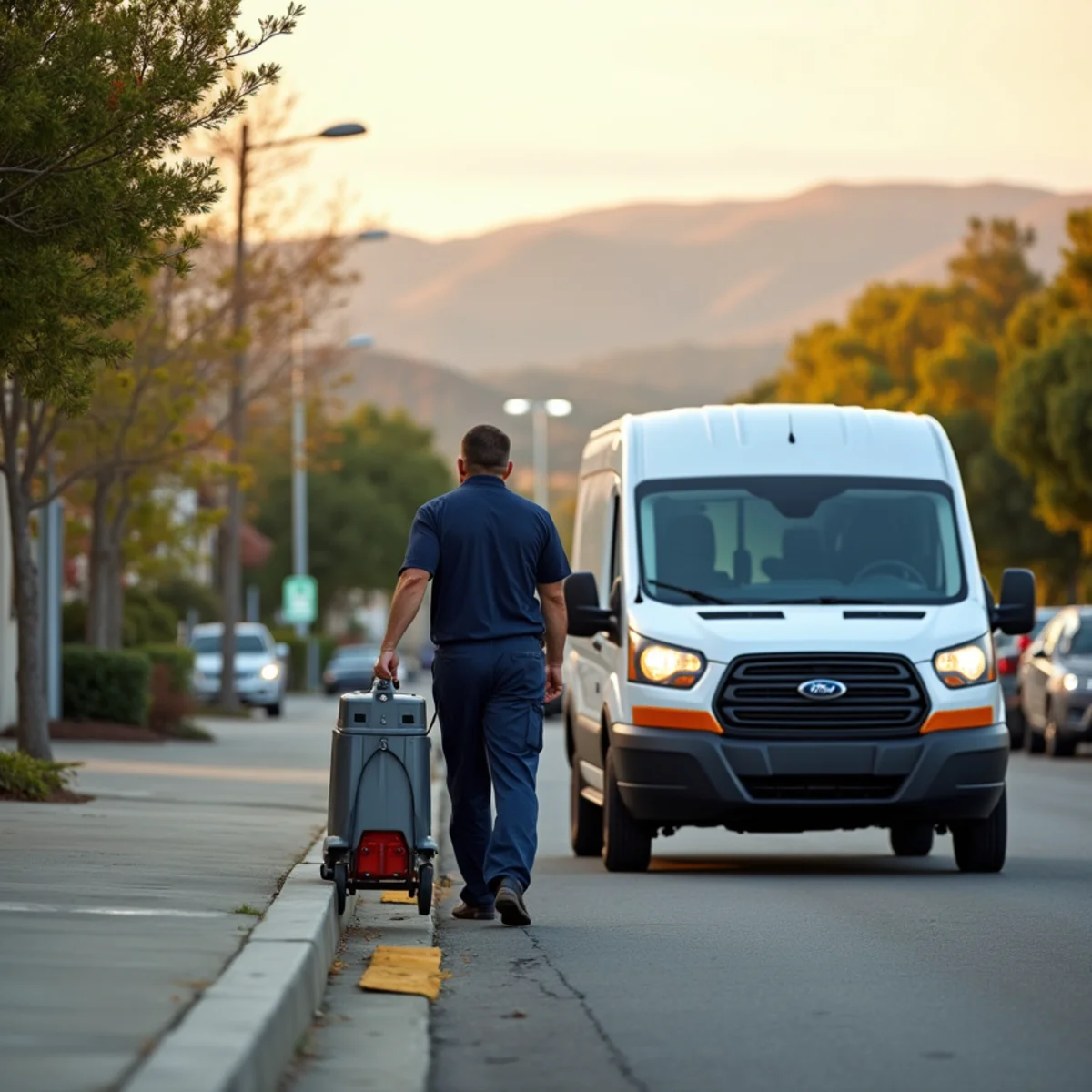
24/7 Emergency Service
Water Damage Restoration in Pleasanton, CA
Pleasanton is about 15 to 20 minutes south of our base via I-680, with the Hacienda corridor and downtown both easy runs.
- 24/7 emergency crews — nights, weekends and holidays
- Free on-site estimate
- IICRC-certified technicians
- We bill your insurance directly
24/7 Emergency Service
Answered live, any hour
60-Minute Response
Across all of San Ramon
IICRC Certified
Works to the S500 standard
Insurance Billed Direct
Daily moisture logs
Tier 1 service area
Water damage restoration in Pleasanton
Pleasanton is genuinely two cities from a restoration standpoint, and the difference is roughly 130 years of construction. Downtown around Main Street dates to the 1860s and carries the oldest building stock in the Tri-Valley — homes and commercial buildings with plumbing that has been replaced in layers over a century, often with several generations of pipe material joined together in ways nobody documented. The rest of the city is largely post-war through 2000s suburban development, plus the Hacienda Business Park corporate corridor.
That mix means we handle very different jobs here. A downtown Victorian with galvanized supply lines running through lath-and-plaster walls is a delicate, slow restoration where the finishes are irreplaceable. An office suite in Hacienda is a business-continuity project run on an after-hours schedule. And the 1980s and 90s family neighborhoods in between produce the same pinhole-and-water-heater failures as their counterparts in San Ramon.
Water damage help in Pleasanton
Tell us what happened and we will respond within one business hour — or call now for 24/7 emergency dispatch.
Local risk profile
What Fails in Pleasanton Buildings
The historic downtown core carries risks that newer construction does not. Layered plumbing retrofits create galvanic corrosion at dissimilar-metal joints. Lath-and-plaster walls hold moisture far longer than drywall and are much harder to dry without damage. And original wood floors and trim in those buildings are frequently irreplaceable, which changes the entire calculus of a drying plan — we work considerably harder to save materials there.
Out in the suburban neighborhoods and the business park, the failure profile normalizes: hard-water copper pitting, water heaters at end of life, appliance supply lines, and — on the commercial side — rooftop HVAC condensate, flat-roof membranes and fire sprinkler discharge.
- Downtown 1860s–1920s stock: galvanized and layered plumbing, lath-and-plaster walls, irreplaceable original finishes.
- Hacienda Business Park: rooftop HVAC condensate, low-slope roof membranes, sprinkler discharge and multi-tenant losses.
- 1980s–90s residential tracts: pinhole copper leaks and water heater failures on very hard water.
- Arroyo del Valle and Arroyo Mocho corridors: storm-season surface water exposure.
- Hillside neighborhoods on the south and west edges: slope drainage and groundwater seepage.
Working in Pleasanton
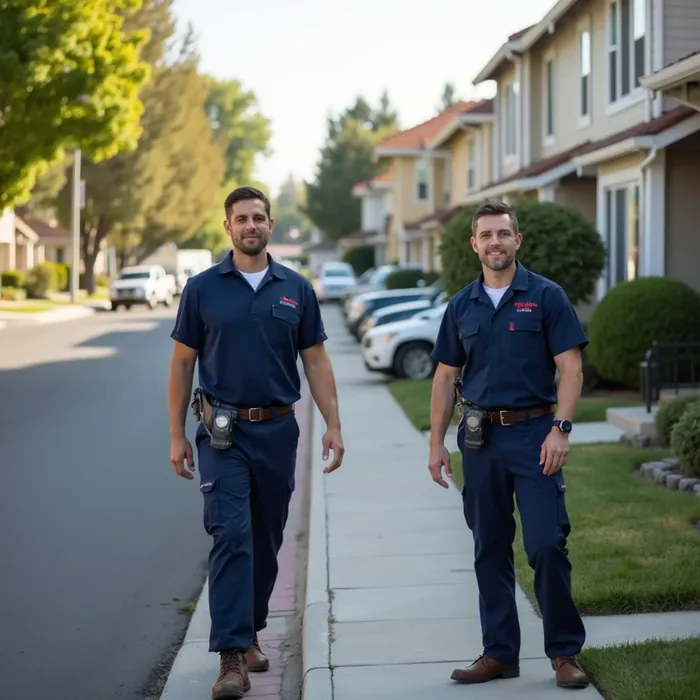
We reach Pleasanton down I-680 in about 15 to 20 minutes, and we work both sides of the city — the historic downtown blocks around Main Street and the Museum on Main, and the corporate and retail corridor around Hacienda and Stoneridge. The gated and hillside communities on the south edge, including Ruby Hill and Kottinger Ranch, bring high-value restoration work with custom materials that need careful handling.
Landmarks & corridors we work
- Historic Main Street and downtown Pleasanton
- Hacienda Business Park
- Stoneridge Shopping Center
- Alameda County Fairgrounds
- Arroyo del Valle and Arroyo Mocho
- Callippe Preserve and the western ridgeline
Why this matters: A two-speed city — an 1860s Main Street district with the oldest plumbing stock in the Tri-Valley alongside the Hacienda Business Park corporate corridor.
From the job log
Three jobs that define Pleasanton work
Upstairs residential into ground-floor retail
A supply failure in a Main Street apartment arrives in the shop ceiling below. The retail tenant needs to trade tomorrow, so we stabilise and dry the commercial space first while working the source unit alongside it, documenting scope separately for each policy.
The historic-material drying job
Lath and plaster, original timber and old-growth flooring release moisture far more slowly than modern assemblies. That means more equipment days rather than more demolition — and documenting original profiles before anything is removed, so replacements can be matched.
The after-hours business park loss
A supply line or an HVAC condensate pan fails in an office suite on a Friday evening. We schedule extraction and demolition outside trading hours and run contained drying during the day so the rest of the floor keeps operating. Downtime usually costs more than the mitigation.
Water damage in Pleasanton? Call now.
Pleasanton is about 15 to 20 minutes south of our base via I-680, with the Hacienda corridor and downtown both easy runs.
- Free on-site estimate
- We bill your insurance directly
- IICRC-certified technicians
What we do here
The services Pleasanton property owners call us for
Commercial Water Damage Restoration
Offices, retail, medical and warehouse space restored on a schedule built around your operations, not ours.
Learn moreBurst Pipe Cleanup
The fastest-moving loss there is. We stop the water, pull it out, dry the cavity and rebuild the wall.
Learn moreStructural Drying & Dehumidification
Engineered drying with commercial air movers and dehumidifiers, verified daily against a measured dry standard — not a guess.
Learn moreMold Remediation
Containment-first remediation that removes growth and fixes the moisture source — because mold that comes back was never really removed.
Learn moreTiming
An 1860s downtown and a corporate corridor, on different clocks
Pleasanton is genuinely two cities for our purposes. The Main Street district carries the oldest plumbing stock in the Tri-Valley, where failures are about material age and mixed-era retrofits rather than weather. The Hacienda corridor is commercial, and there the clock that matters is the operating schedule rather than the season.
Hard water sits underneath both. Scale shortens the life of anything that heats water, which is why water heaters and appliance valves here fail earlier than the manufacturer's estimate suggests, in houses and in commercial kitchens alike.
- 1
November to March — storm season downtown
Older buildings with original roofs, parapets and flashing take on water where the details have aged. In mixed-use blocks that means an upstairs leak arriving in a ground-floor retail ceiling, which is two occupancies and two policies from a single failure.
- 2
Year-round — hard water attrition
The steadiest source of work in the city. Scale on heater elements, in dishwashers and inside washing machine valves builds until a seal or a valve gives way. Annual heater flushing and conditioning the supply measurably lengthen the interval, and almost nobody does either.
- 3
Weekends and after hours — commercial
A failure in an unoccupied office or retail space runs unnoticed until Monday. That is why the losses in the business park are disproportionately large relative to the size of the failure, and why leak sensors in server rooms and utility closets pay for themselves quickly.
FAQ
Pleasanton water damage questions
It shortens the life of anything that heats water. Scale builds on water heater elements and inside dishwashers and washing machines, reducing efficiency and stressing valves and seals until one fails. Flushing the heater annually and softening or conditioning the supply are the two things that measurably extend the interval between failures.
Yes, and they need a different approach. Lath-and-plaster holds moisture far longer than drywall and cracks if dried too aggressively, and original wood floors and trim in those buildings are usually irreplaceable. We work harder and slower to save materials on those jobs rather than defaulting to demolition.
Yes — that is how most commercial work in the corridor should run. We schedule extraction and demolition overnight or on weekends and keep contained drying going during business hours so tenants can stay operational. We are also used to the security escort and access requirements the larger buildings have.
Typically 15 to 20 minutes from San Ramon via I-680, sometimes longer during peak commute on the 680/580 interchange. For emergency calls we dispatch immediately and give you a realistic arrival time on the phone rather than an optimistic one.
Why call us
What you get on a Pleasanton job
IICRC-certified, working to S500
Water category and damage class determined on site and recorded in writing — the same standard your adjuster reads from.
Licensed, insured, background-checked
A California CSLB licence you can verify yourself, general liability and workers’ compensation cover, and crews screened before they enter your home.
Daily moisture readings
A dry standard measured from unaffected materials in your own building, and the full drying log handed over at completion.
Insurance billed direct
Documentation built for the adjuster from the first hour, plus a written scope before any reconstruction begins.
Water moving right now? Do these three things first.
- 1. Shut off the main water valve — garage, exterior wall, or the box near the street.
- 2. Cut power to the affected circuits, only if you can reach the panel from a dry spot.
- 3. Photograph everything before you move it, including the failed pipe or fitting.
Then call — we stay on the line while the truck is already moving.
Nearby areas we also serve
Get help now
Serving Pleasanton, CA from San Ramon Valley Blvd
San Ramon Water Damage Pros
2551 San Ramon Valley Blvd
San Ramon, CA 94583
Open 24 hours a day, 7 days a week
Office: Mon–Fri, 8:00 AM – 6:00 PM
24/7 emergency dispatch
24/7 emergency crews — nights, weekends and holidays. Free on-site estimate, written scope before any rebuild, and we bill your insurance directly.
- Free on-site estimate
- We bill your insurance directly
- IICRC-certified technicians