
24/7 Emergency Service
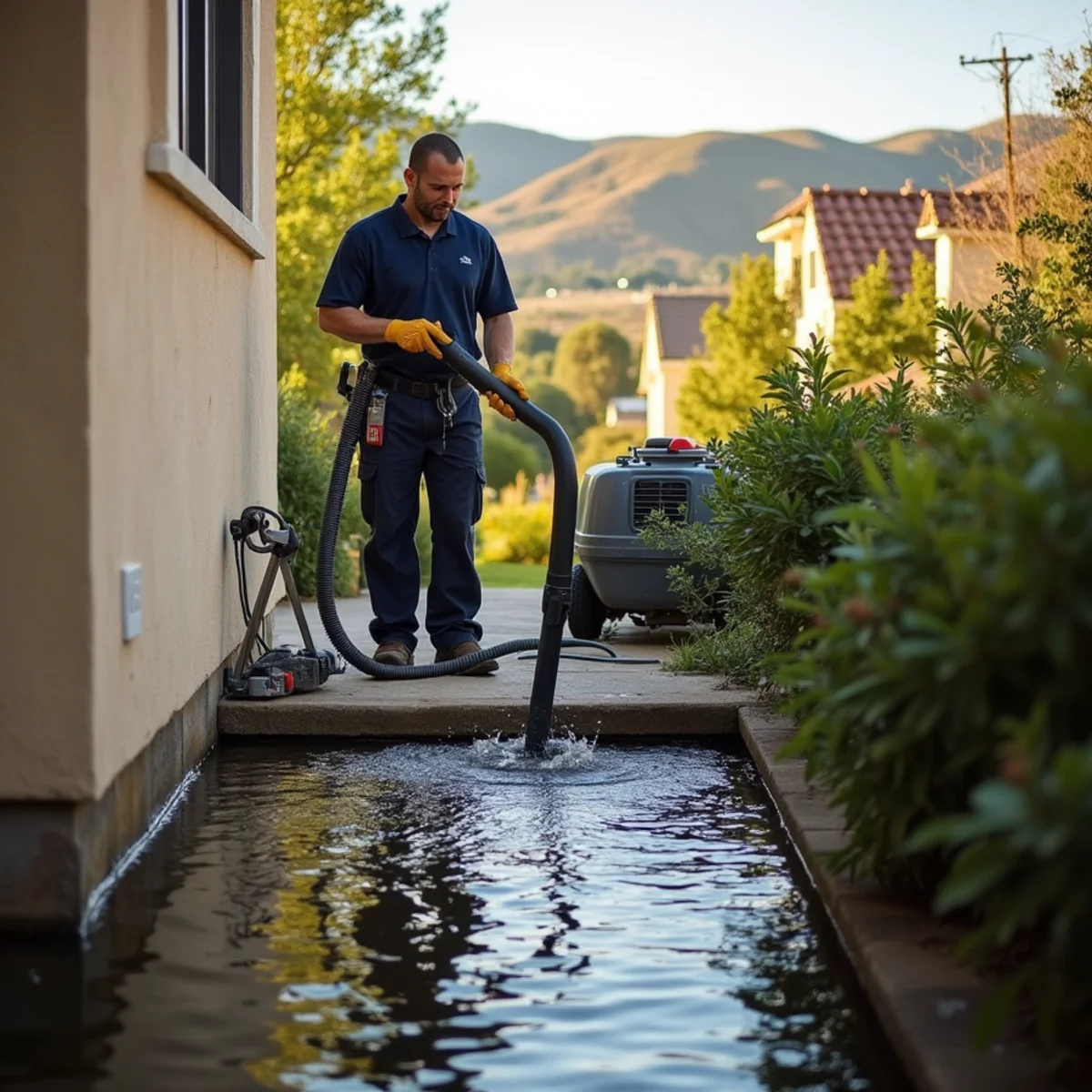
Flooded Basement & Crawl Space Cleanup in San Ramon, CA
Standing water under the house does not dry on its own.
- 24/7 emergency crews — nights, weekends and holidays
- 60-minute emergency response across San Ramon
- Free on-site estimate
- We bill your insurance directly
24/7 Emergency Service
Answered live, any hour
60-Minute Response
Across all of San Ramon
IICRC Certified
Works to the S500 standard
Insurance Billed Direct
Daily moisture logs
Full basements are uncommon in San Ramon — the housing stock is dominated by slab-on-grade and raised-foundation construction — but crawl spaces are everywhere, and so are partial lower levels in the hillside neighborhoods where lots step down the slope. What those spaces have in common is that nobody goes into them. Water can stand under a house for weeks before anyone notices, and the first symptom is usually a musty smell upstairs that the homeowner spends a month trying to trace to a room.
A wet crawl space is not a contained problem. Warm air rising through a house pulls replacement air up from below through every floor penetration, which means the humidity and the microbial load in that crawl space are continuously being delivered into the living space above it. Elevated indoor humidity, condensation on windows, a smell that comes back on warm days, and mold on floor framing all trace back to standing water or a failed vapor barrier under the house.
We treat these spaces as their own drying chamber, because they behave like one: confined, poorly ventilated, and slow to release moisture. That means pumping the water, removing saturated insulation and vapor barrier, drying the framing and soil to a verified standard, and correcting whatever let the water in — because a crawl space that flooded once will flood again in the next atmospheric river if the drainage has not changed.
Request help with basement & crawl space
Tell us what happened. We respond within one business hour — or call now for a 24/7 emergency dispatch.
Know the signs
Signs of Water Under or Below Your Home
A musty smell in the house you cannot locate
The single most common presenting symptom. If the odor is worse near floor vents or in a closet on an exterior wall, look down.
Cold, damp floors above the crawl space
Saturated soil and framing pull heat out of the floor assembly and keep it cold and clammy in a way insulation alone would not.
Insulation hanging down between floor joists
Batt insulation that has absorbed moisture gets heavy and falls out of the joist bays. It is a reliable sign the space has been wet repeatedly.
Persistently high indoor humidity
Condensation on windows, sticky air, and a hygrometer reading that stays elevated regardless of weather point to a moisture source below.
Standing water or mud visible at the crawl space access
If you can see it from the hatch, there is more of it further in. Do not crawl in to check — confined space, contaminated water, and often compromised footing.
A sump pump that runs constantly, or not at all
Continuous cycling means the pump is losing the fight against groundwater. Silence during a storm usually means it has failed, and power outages during atmospheric rivers are exactly when that happens.
Efflorescence or white staining on foundation walls
Mineral deposits left as water migrates through concrete and evaporates. It marks the path water has been taking through the foundation.
Our process
How We Clean Up a Flooded Basement or Crawl Space
 1
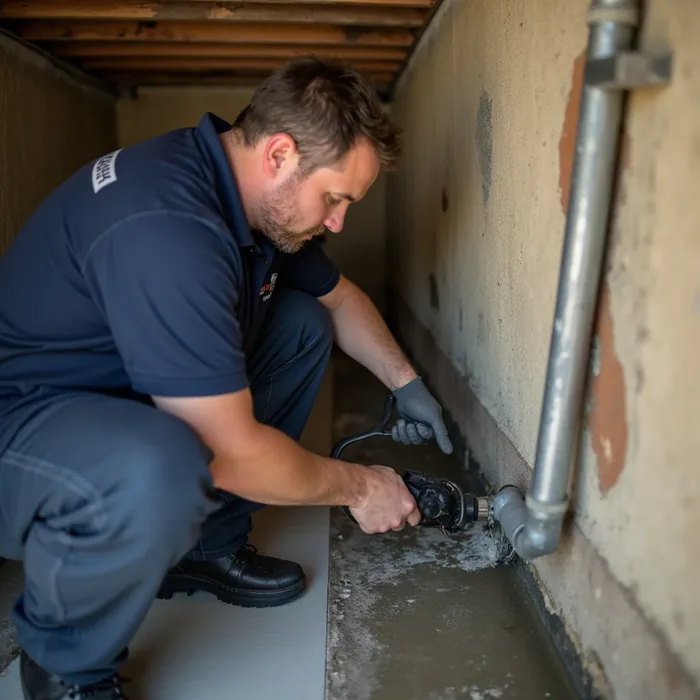
1Confined space assessment
On arrivalBefore anyone enters we evaluate air quality, structural condition and electrical hazards. Crawl spaces are confined spaces and standing water in them is nearly always Category 3.
 2
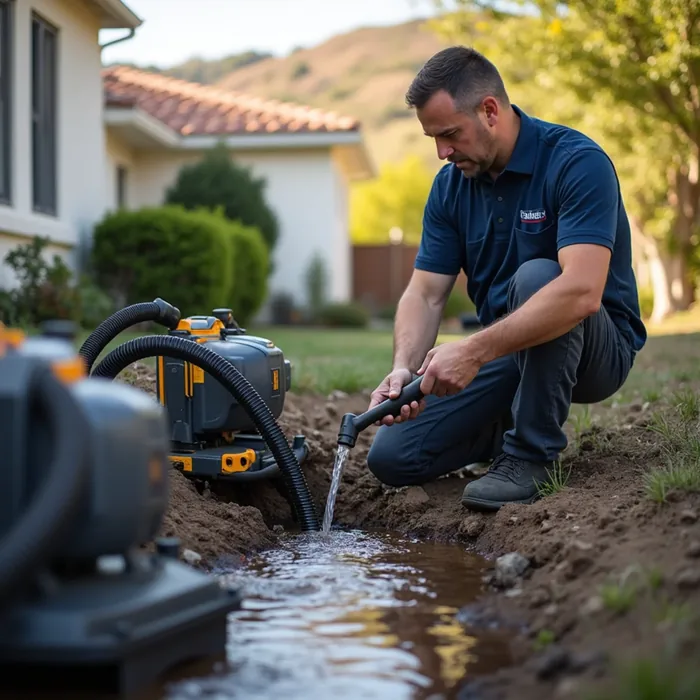
2Pump-out and bulk water removal
2–6 hoursSubmersible pumps clear the depth, followed by extraction to pull what the pumps cannot reach across an uneven soil floor.
 3
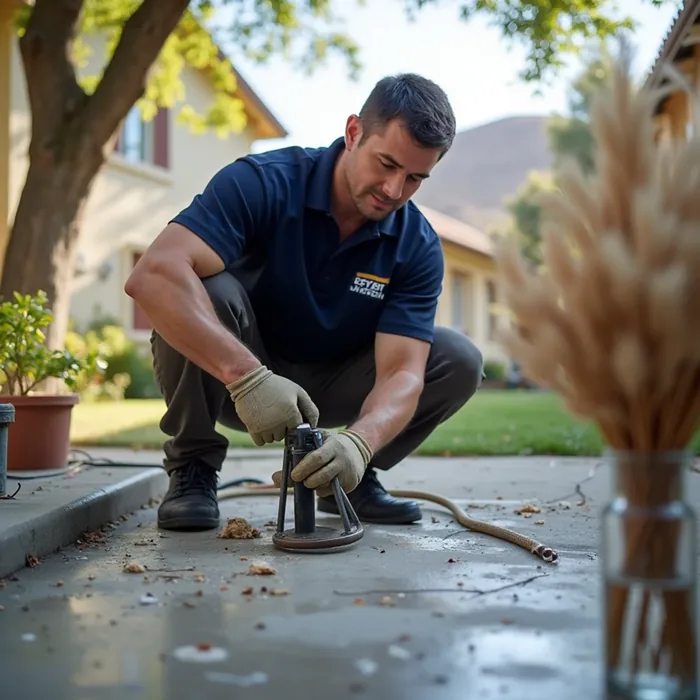
3Remove saturated materials
3–8 hoursWet vapor barrier, collapsed insulation, and any stored contents that took water come out. Under a finished lower level, wet drywall and flooring come out to an appropriate height.
- 4
Clean, sanitize and treat
1 daySoil surface and framing are cleaned and treated with an antimicrobial appropriate to the exposure, with HEPA air scrubbers running in the space.
- 5
Establish a drying chamber
3–7 daysConfined spaces do not dry passively. We seal the space, run dedicated dehumidification and directed airflow, and monitor framing moisture content daily.
- 6
Replace the vapor barrier and address drainage
1 dayNew vapor barrier goes down over dried soil, and we identify what let the water in — grading, downspout discharge, a failed sump, or a plumbing leak — so the next storm does not repeat it.
What you actually get
What Crawl Space and Lower-Level Cleanup Includes
Confined-space safety assessment
Air quality, structural condition and electrical hazards evaluated before entry. Crawl spaces are confined spaces and standing water in them is nearly always Category 3.
Pump-out and bulk removal
Submersible pumps clear the depth, followed by extraction to pull what pumps cannot reach across an uneven soil floor.
Saturated materials removed
Wet vapour barrier, collapsed insulation and stored contents that took water. Under a finished lower level, wet drywall and flooring come out to an appropriate height.
Cleaning, sanitising and HEPA scrubbing
Soil surface and framing cleaned and treated with an antimicrobial appropriate to the exposure, with air scrubbers running in the space.
A dedicated drying chamber
Confined spaces do not dry passively. The space is sealed and given its own dehumidification and directed airflow, with framing moisture logged daily.
New vapour barrier and a drainage answer
Fresh barrier over dried soil, plus identification of what let the water in — grading, downspout discharge, a failed sump or a plumbing leak.
A crawl space that flooded once will flood again in the next atmospheric river unless the drainage cause is corrected. We name it in writing rather than leaving you to guess.
Why San Ramon Water Damage Pros
Why Crawl Space Water Becomes a Whole-House Problem
We treat it as its own chamber
Confined and poorly ventilated spaces do not dry passively — passive drying takes months if it happens at all, while the moisture is pulled upward by the stack effect.
We go in, properly equipped
Full PPE, lighting and confined-space procedure. This is not a space to assess yourself from the hatch.
We fix the reason, not just the water
Grading, downspout discharge, silted area drains and sump pumps without battery backup account for most of what we pump out.
Local drainage knowledge
Hillside lots in Bollinger Hills, Sycamore Heights and Round Hill shed slope runoff toward foundations in ways flat-lot crews do not anticipate.
Need basement & crawl space in San Ramon right now?
We answer live 24 hours a day and dispatch immediately. The first hour decides how much of your property we can save.
- Free on-site estimate
- We bill your insurance directly
- IICRC-certified technicians
Why Crawl Space Water Becomes a Whole-House Problem
Buildings breathe vertically. Warm air rises and escapes at the top of the house, and the replacement air is pulled in at the bottom — including through gaps around plumbing penetrations, floor registers and the subfloor itself. Building scientists call it the stack effect, and the practical consequence is that a meaningful share of the air you breathe upstairs started in the crawl space.
That is why a wet crawl space produces symptoms that seem unrelated to it: humidity that will not come down, a smell in a bedroom, condensation on windows in a house with no visible leak. It is also why simply pumping the water and leaving is inadequate. The soil, the framing and any remaining organic material hold moisture and keep feeding the space above until they are actively dried.
- Standing water under a house raises indoor humidity throughout the floors above it.
- Floor framing and subfloor sheathing support microbial growth once they stay wet.
- Wet insulation loses most of its R-value and falls out of the joist bays.
- Persistent crawl space moisture is a known conducive condition for wood-destroying organisms.
- Ductwork running through a wet crawl space can pick up and distribute the odor directly.
Stopping It From Happening Again
A crawl space that flooded in one storm will flood in the next one unless something changes. The causes are usually mundane and fixable, and they are almost always outside the house rather than inside it.
- Grading that slopes toward the foundation instead of away from it — the most common single cause.
- Downspouts discharging at the foundation rather than being carried several feet away.
- Gutters clogged with oak and sycamore leaf litter, overflowing directly against the wall.
- Area drains and yard drains that have silted up and no longer carry water off the lot.
- A sump pump with no battery backup — power outages and peak storm flow arrive together during atmospheric rivers.
- Crawl space vents blocked or, conversely, an unsealed space with no vapor barrier over bare soil.
Honest pricing
What Basement & Crawl Space Cleanup Costs Depend On
Depth of water and total volume
Pump time and the number of passes needed to clear an uneven soil floor scale directly with volume.
Contamination level
Groundwater and storm intrusion under a house is nearly always Category 3, which brings containment, PPE and disposal requirements.
Clearance height and access
A 36-inch crawl space is workable. An 18-inch one with a small hatch takes substantially longer for every single task.
Materials to remove and replace
Vapor barrier, insulation, and — under a finished lower level — drywall, flooring and trim.
Drainage corrections
Regrading, downspout extensions, drain clearing or a sump pump with battery backup are separate scope, and usually the best money spent on the whole job.
Where we provide this service
Basement & Crawl Space across San Ramon and the Tri-Valley
FAQ
Basement & Crawl Space questions we get asked
Full basements are uncommon here — the housing stock is dominated by slab-on-grade and raised-foundation construction. What we deal with far more often is crawl spaces, which are everywhere, and partial lower levels in the hillside neighborhoods where lots step down the slope. Both flood, and both are usually discovered late because nobody goes in them. If your house smells musty on warm days and you cannot place it, look down.
Full basements are uncommon here — most San Ramon housing is slab-on-grade or raised foundation. What we deal with far more often is crawl spaces, and partial lower levels in the hillside neighborhoods where lots step down the slope. Both flood, and both are frequently discovered late because nobody goes in them.
No. Crawl spaces are confined and poorly ventilated, so passive drying takes months if it happens at all — and in the meantime the moisture is being pulled up into your living space by the stack effect. Standing water under a house is a mold source and a wood-destroying-organism risk until it is actively dried.
Assume yes. Water that entered through soil or from a storm has crossed the ground and picked up whatever was on it, which makes it Category 3. Crawl spaces are also confined spaces with genuine air quality and access hazards. This is not a space to enter and assess yourself.
Because peak demand and power outages arrive at the same time. During a Tri-Valley atmospheric river, the hour your pump most needs to run is often the hour the power drops. A battery backup — or a water-powered secondary pump — is the fix, and it costs a small fraction of one flooded crawl space cleanup.
You might also need
Related services
Flood Cleanup
Storm and creek flooding handled as the contaminated loss it is — contained extraction, disposal, sanitizing and full structural drying.
Learn moreMold Remediation
Containment-first remediation that removes growth and fixes the moisture source — because mold that comes back was never really removed.
Learn moreStorm Damage Cleanup
Emergency tarping and board-up first, extraction and drying second — because the storm is usually still going.
Learn moreGet basement & crawl space handled properly
Free on-site estimate, written scope before any reconstruction, and direct insurance billing with documentation your adjuster can actually use.
- Free on-site estimate
- We bill your insurance directly
- IICRC-certified technicians