How Pros Find Slab Leaks Without Tearing Up Your Whole Floor
The expensive part of a slab leak is rarely the pipe. It is the exploratory demolition when nobody knows exactly where the leak is.
Written by the San Ramon Water Damage Pros crew — IICRC-certified technicians working to the ANSI/IICRC S500 standard on water losses across San Ramon and the Tri-Valley. Guidance here reflects how we actually run jobs, not general advice.
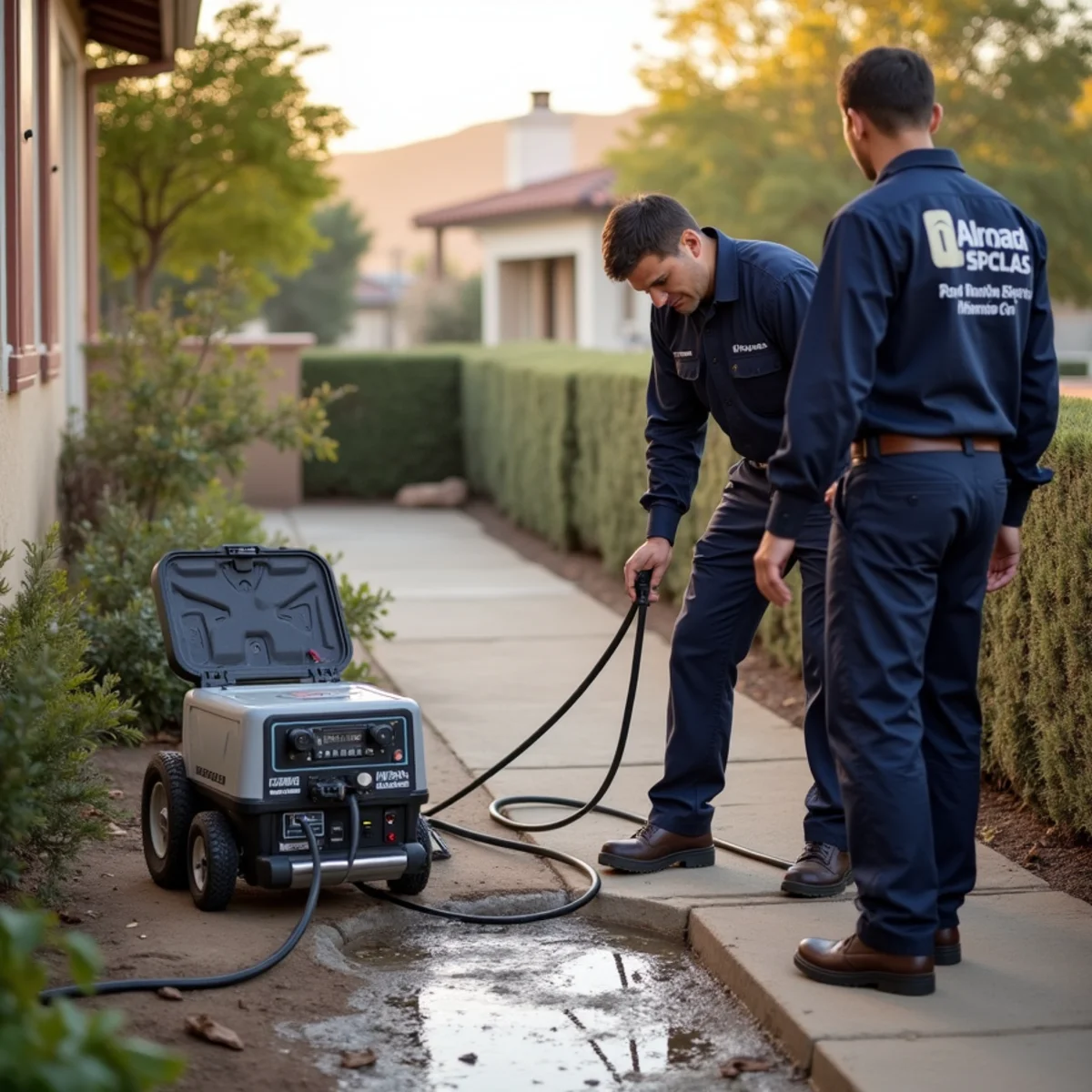
A slab leak repair is a small job wrapped inside a potentially large one. Repairing a section of copper under concrete is straightforward; finding it is where the money is either saved or wasted. Accurate location is the difference between one small opening in the floor and an exploratory trench.
The difference between a single, correctly-placed opening and four exploratory holes across a tile floor is entirely a matter of how well the leak was located beforehand. Here is how that is actually done.
Water damage happening right now?
We answer live 24 hours a day and commit to a 60-minute response across San Ramon.
+1 (201) 277-9344Step 1: Confirm It Is Actually a Supply Leak
Before any locating equipment comes out, the leak has to be confirmed and narrowed to a system. That starts at the meter: with every fixture closed, the low-flow indicator should be still. If it moves, water is escaping the pressurized system.
Then isolation testing. By closing off sections of the system and pressure testing them independently, we determine whether the loss is in the hot side, the cold side, the irrigation, the service line from the meter, or a pool line. Skipping this step and going straight to listening is how people end up locating a leak that turns out to be an irrigation valve in the yard.
Step 2: Acoustic Location
Pressurized water escaping a pipe makes a specific sound — a broad-spectrum hiss whose character depends on the size of the opening, the pressure and the surrounding material. Ground microphones and amplified listening equipment pick that up through concrete and flooring.
The technician works a grid across the suspect area, listening for the point of maximum intensity. Concrete transmits sound well, which works in our favour, but it also means the sound is audible over a broad area — so the skill is in distinguishing the peak from the general noise field. Flooring type matters too: tile and stone transmit well, while thick carpet with pad attenuates significantly.
On a good day, acoustic location alone narrows a slab leak to within a foot or two.
Step 3: Thermal Confirmation
A hot-water line leaking under a slab warms the concrete above it, and an infrared camera reads that temperature differential directly. It produces a visible thermal signature — usually a plume spreading outward from the leak point.
The value of thermal is that it is an entirely independent method. When the acoustic peak and the thermal plume agree on the same location, confidence is high enough to open the floor once. When they disagree, something is wrong with one of the readings and it is worth resolving before cutting concrete.
Thermal has a limitation: it works on hot-side leaks. A cold-water slab leak produces little or no useful temperature signature, which is when the third method matters.
Step 4: Tracer Gas, When Needed
For quiet leaks, very small leaks, cold-side leaks, or lines under thick slab where the acoustic signal is poor, tracer gas is the answer.
The line is drained and charged with an inert gas mixture — typically hydrogen and nitrogen — which is far less viscous than water and escapes readily through even a small opening. Because the gas is lighter than air it migrates upward through the slab and flooring, and a sensitive detector locates where it surfaces.
It takes longer than acoustic work and requires draining the system, but it works where nothing else does and it is highly precise.
What Bad Detection Looks Like
- Going straight to listening without isolation testing, so an irrigation leak gets located as a slab leak.
- Relying on a single method rather than confirming with a second, independent one.
- Cutting an exploratory hole "to have a look" before the location is confirmed.
- Marking a large area rather than a specific point — a five-foot mark means the concrete opening is five feet.
- No written documentation of the findings, which your adjuster will want.
What Happens After the Leak Is Found
Detection is the start of the job. Once the location is marked, there are usually two or three legitimate repair paths that differ substantially in cost and disruption — a spot repair through the slab, a reroute of the affected line overhead through wall and attic, or a partial or whole-house repipe.
We will tell you honestly which makes sense for your house. One failure in an otherwise sound system is a spot repair. A third pinhole in two years in a 1985 home on Tri-Valley water is a system that is telling you something, and continuing to buy spot repairs is usually the more expensive path.
Then everything downstream: extracting water that accumulated, drying the slab and the wall assemblies above it to a verified standard, remediating growth that started during the weeks the leak ran, and rebuilding what was opened.
What Detection Should Cost You, and What You Should Get
Leak detection is sold as a discrete service, and the standard of it varies widely. Knowing what a competent job produces makes it straightforward to tell whether you got one.
- A stated location, not an area. You should be told where the leak is within a foot or so, marked on the floor, rather than shown a general region of the room.
- The method used, explained. Acoustic, thermal, tracer gas or pressure isolation — you should know which was used and why, particularly if more than one was needed.
- Confirmation from a second method. A location established acoustically and confirmed thermally is far more reliable than either alone, and the good operators do both.
- A written report with the location and readings. Verbal findings are not much use to a plumber who arrives two days later, or to an insurer afterwards.
- Whether it is supply or drain. These are different repairs, and establishing which before opening concrete is fundamental rather than a detail.
- Hot or cold line. It narrows the repair considerably and it should be part of any competent finding.
- An honest statement of confidence. Some slabs are genuinely difficult, and an operator saying so is more trustworthy than one who never expresses doubt.
Frequently asked questions
When two independent methods agree — acoustic and thermal, or acoustic and tracer gas — location is typically accurate to within a foot or so, which means one small concrete opening. Accuracy degrades with thick slabs, heavy floor coverings and very small leaks, which is when tracer gas earns its cost.
No — the entire point of acoustic, thermal and tracer gas methods is to locate non-invasively so the concrete is opened once, in the right place. Anyone proposing exploratory demolition before locating is skipping the step that saves you money.
You can confirm one exists — shut every fixture and watch the meter’s low-flow indicator for fifteen minutes. A warm floor spot also strongly indicates a hot-side slab leak. What you cannot do without equipment is pinpoint it, and pinpointing is what determines whether you open one square foot of floor or twenty.
It happens occasionally even with good detection, and how a company handles it is the real test. Ask before work starts what the arrangement is if the initial opening misses. A firm confident in its detection will usually stand behind it; one that will not discuss the scenario at all is telling you something about how often it comes up.
Often not, and an honest operator will tell you that. If the decision to reroute the whole supply overhead has already been made, precisely locating the failure in the abandoned line achieves very little. Where it still matters is establishing that the leak is supply rather than drain, since a drain problem under the slab is not solved by an overhead repipe at all.
The short version
Isolate the system, locate acoustically, confirm thermally, use tracer gas where the signal is poor. Two independent methods agreeing is what makes a single small opening possible.
We locate, document for your claim, coordinate the repair and handle all the drying and restoration afterward.