Why San Ramon's 1970s–80s Slab-on-Grade Homes Are Slab-Leak Hotspots
Three independent degradation mechanisms working on the same copper pipe for forty years. That is why slab leaks are this city’s signature failure.
Written by the San Ramon Water Damage Pros crew — IICRC-certified technicians working to the ANSI/IICRC S500 standard on water losses across San Ramon and the Tri-Valley. Guidance here reflects how we actually run jobs, not general advice.
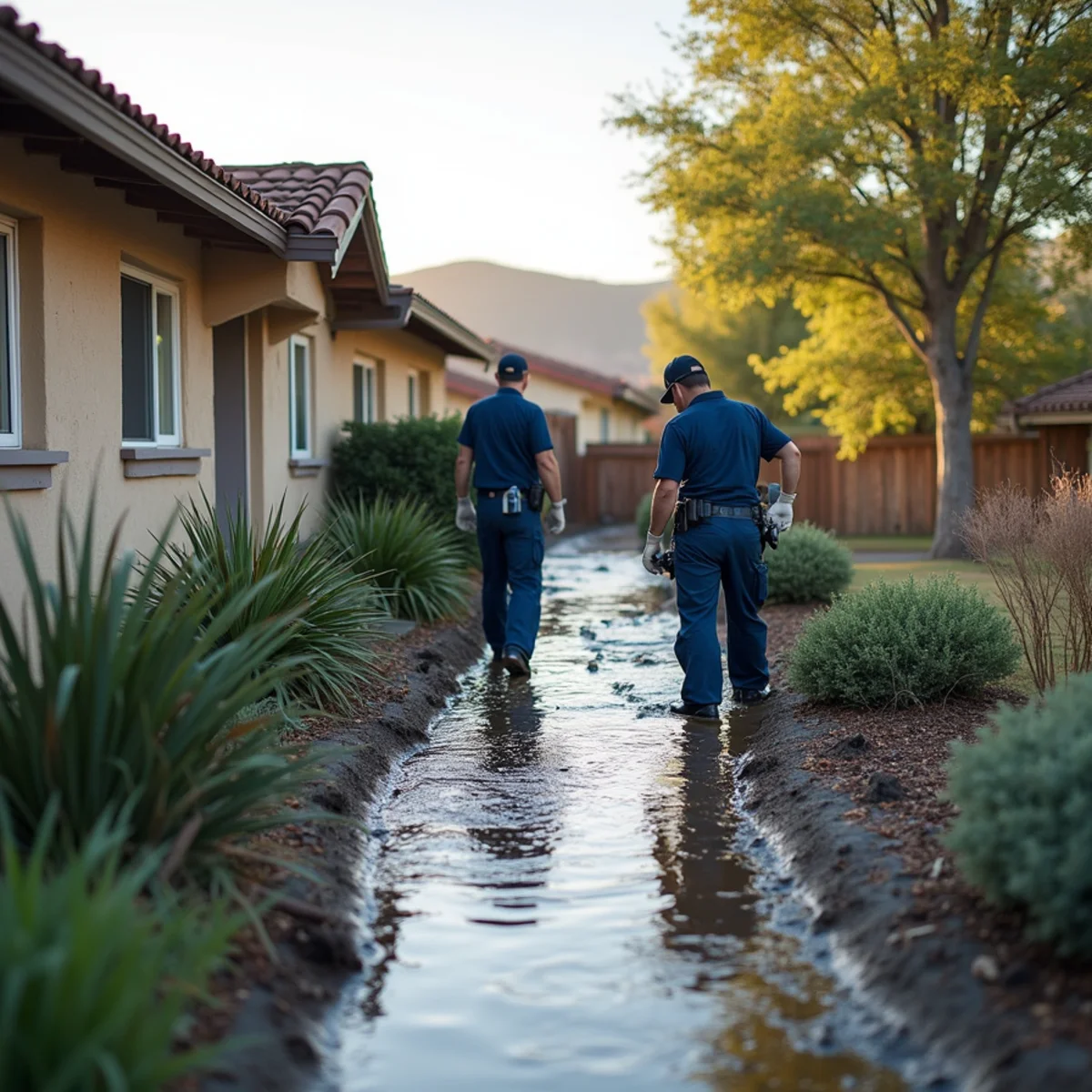
We do more slab leak work than any other single job type, and it is not evenly distributed across the city. It concentrates sharply in the neighborhoods built between roughly 1970 and 1985 — Central San Ramon, Broadmoor, Old Ranch, West San Ramon, Ponderosa, and the equivalent streets in Crow Canyon and Montevideo.
That concentration is not coincidence and it is not poor original workmanship. It is what happens when three separate degradation mechanisms act on the same component for four decades.
Water damage happening right now?
We answer live 24 hours a day and commit to a 60-minute response across San Ramon.
+1 (201) 277-9344Mechanism One: The Construction Type
San Ramon’s original suburban expansion was built slab-on-grade — a concrete slab poured directly on prepared ground, with no crawl space beneath. It was the efficient, standard approach for California tract housing of that era and there is nothing wrong with it as a foundation system.
The consequence for plumbing is that the supply lines serving the house run through or beneath that concrete. In a raised-foundation home, a supply line failure is annoying but accessible — you go into the crawl space and fix it. In a slab-on-grade home, the same failure is under several inches of concrete and whatever flooring sits on top.
That single design difference is why an identical pinhole costs a few hundred dollars in one house and several thousand in another.
Mechanism Two: The Water
EBMUD water in the Tri-Valley runs 16 to 18 grains per gallon, which is classified as very hard. That dissolved mineral content interacts with copper over long periods in a specific way: pitting corrosion.
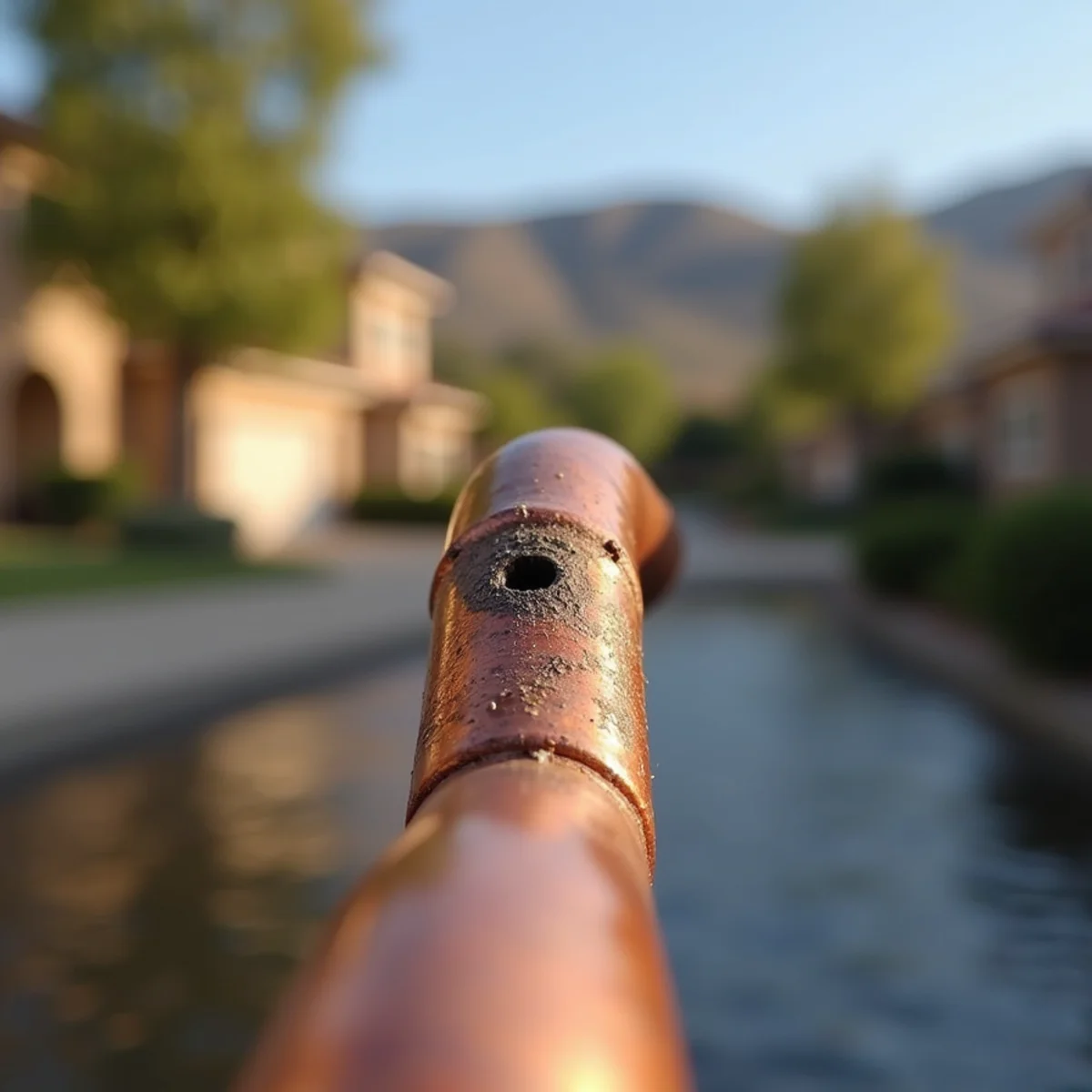
Pitting is not uniform thinning. It is localized attack — small areas where the pipe wall erodes from the inside considerably faster than the surrounding metal, until one spot thins through and pressure finds it. That is a pinhole leak, and it is the dominant failure mode for copper in this water.
The important characteristic is that pitting does not happen once. The same water has been in every pipe in the house for the same forty years, so when one run produces a pinhole, the others are in a similar condition. This is why "one leak means more leaks" holds up much better here than general advice would suggest.
Mechanism Three: The Ground
The San Ramon Valley sits on expansive clay — soil with a high proportion of montmorillonite, which absorbs water and swells substantially through the wet season, then contracts as it dries out through the long dry summer.
That is an annual cycle of ground movement under and around a rigid concrete slab. The slab itself is engineered to handle a degree of it. A copper line encased in or running beneath that concrete has no such engineering — it is held rigidly while the material around it moves, which applies repeated mechanical stress at fixed points.
Add periodic seismic activity from the Calaveras Fault system, which runs through this valley, and you have a third source of movement acting on the same rigid line.
Why the Detection Lag Makes It Expensive
A slab leak is not expensive because of the pipe. It is expensive because of how long it runs before anybody notices.
There is no visible drip. The water goes into the sub-slab fill, saturates the ground beneath the foundation, and wicks upward into wall bottom plates, baseboard and flooring. Weeks pass. By the time a homeowner notices a warm spot underfoot or an unexplained EBMUD bill, there is often significant moisture in the structure above and, frequently, microbial growth that started long before anyone knew there was a problem.
That is why a meaningful share of the slab leak jobs we take include mold remediation alongside the drying. The remediation is not caused by the leak so much as by the delay.
What Owners of These Homes Should Actually Do
- Learn the symptoms: a warm spot on the floor, running water audible with everything shut off, an unexplained EBMUD bill increase, cracking in tile grout or wall corners, and a musty smell near the floor.
- Run the meter test occasionally — shut every fixture and watch the low-flow indicator for fifteen minutes. Any movement means water is leaving the system.
- Know your pipe history. Has this house ever been repiped, wholly or partly? Partial repipes that joined copper to galvanized without dielectric unions create a new failure point at the junction.
- Check your incoming pressure. Above about 80 psi, a pressure regulator is a cheap intervention that reduces stress throughout the system.
- Think in terms of the system, not the leak. If you have had more than one failure, the remaining under-slab runs are in the same condition — and an overhead reroute or repipe takes the problem out of the concrete permanently.
- Check your insurance language. Most California policies cover the water damage and often the cost of accessing the leak, but not the pipe itself. That split changes the economics of your repair choice.
The Neighborhoods Where This Concentrates
- Central San Ramon — the original development along the I-680 corridor, and the highest-volume source of this work.
- Broadmoor — early 1970s ranch homes, the oldest plumbing stock in the city.
- Old Ranch — 1970s–80s tracts on former ranch land, close to a textbook case.
- West San Ramon — the highest density of older slab-on-grade housing anywhere in the city.
- Ponderosa — 1970s–80s family tracts with original systems well past service life.
- Crow Canyon and Montevideo — same era, with the additional complication of mature root intrusion into laterals.
What Buyers and Sellers Should Know
This housing stock changes hands constantly, and slab plumbing is one of the few genuinely consequential things about these houses that a standard inspection barely touches. Whichever side of the transaction you are on, these are the points that matter.
- A general home inspection does not test the supply system under the slab. It checks visible plumbing and runs the fixtures, which tells you nothing about a line encased in concrete.
- Ask for the meter test during the inspection. Fifteen minutes with every fixture closed and the low-flow indicator watched costs nothing and is the single most informative check available.
- Ask directly whether the house has had a slab leak, and how it was repaired. A spot repair and an overhead reroute leave the house in very different positions.
- Documentation of a completed repipe is an asset rather than a red flag. A house with a modern overhead system has retired the risk that its neighbours still carry.
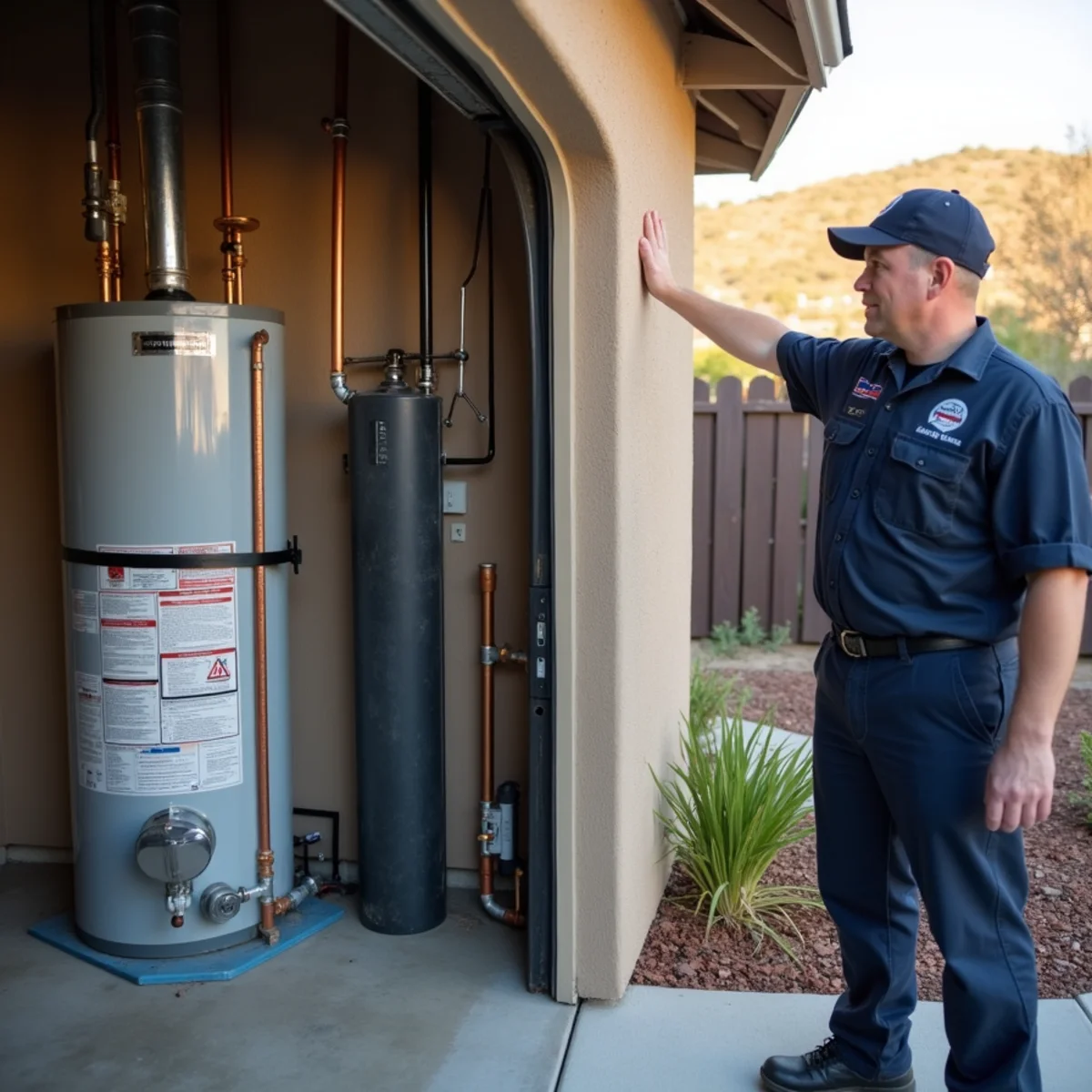
- Check the water heater date at the same time. In houses of this era it is frequently as old as the plumbing question you are already asking about.
- For sellers: a repair with permits and paperwork is worth considerably more at negotiation than an undocumented one, even if the work itself was sound.
- Neither side should treat one previous slab leak as disqualifying. It is a known characteristic of the housing type, and it is manageable if it is understood.
Frequently asked questions
In a 1970s or 80s San Ramon home, more often than not. Every run in the house has carried the same very hard water for the same length of time on the same moving ground, so the conditions that produced the first failure exist throughout the system. A second leak within a couple of years is essentially confirmation.
It is a reasonable question in a home of this age that has never been repiped, particularly if you plan to stay a decade or more. The clearer trigger is failure history: one leak is a spot repair, two within a couple of years usually means the repeated-repair path costs more than the repipe.
For most of these homes, yes. Overhead lines are accessible for future repair, out of the soil and concrete, and not subject to the seasonal clay movement that stresses under-slab runs. The trade-off is drywall work during installation and insulation where lines pass through unconditioned space.
California requires sellers to disclose known material facts affecting the value or desirability of a property, and a slab leak history generally falls within that. We are restoration contractors rather than legal advisers, so the specifics of your disclosure obligations are a question for your agent or attorney. What we can say is that a documented, properly completed repair presents far better than an undisclosed one that a buyer discovers later.
On a house of this era, yes, and it is not expensive relative to the transaction. A meter test establishes whether water is escaping now, and a camera inspection of the sewer lateral covers the other common failure in these neighbourhoods. Together they cost a fraction of one slab repair and they inform the price you are willing to pay.
The short version
Slab-on-grade construction puts the pipe where you cannot reach it. Very hard water pits it from the inside. Expansive clay moves the ground around it. Forty years of all three is why this city produces so many slab leaks.
We locate them precisely, give an honest read on repair versus repipe, and handle the drying and restoration afterward.