Black Mold vs. Mildew: How to Tell the Difference and When to Call a Pro
The useful question is not what species it is. It is whether the growth is on the surface or in the material — because that decides what you do about it.
Written by the San Ramon Water Damage Pros crew — IICRC-certified technicians working to the ANSI/IICRC S500 standard on water losses across San Ramon and the Tri-Valley. Guidance here reflects how we actually run jobs, not general advice.
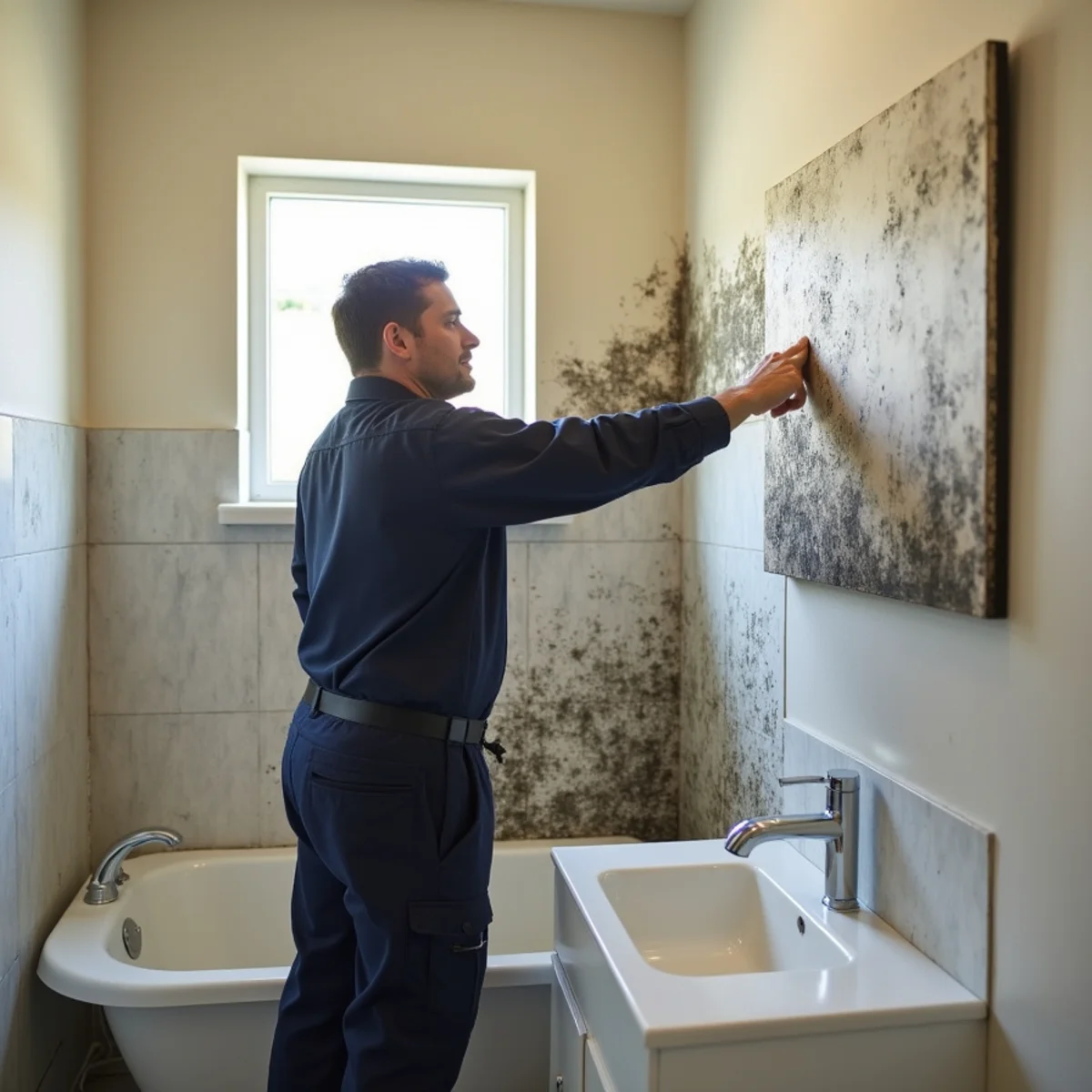
Almost every article on this topic tries to help you identify a species by colour and texture, which sounds useful and mostly is not. Several genera appear black, colour is an unreliable identifier, and — importantly — the remediation procedure does not change based on species.
The distinction that actually changes your decisions is different: is this surface growth on a non-porous material, or is it growth in or behind a porous material? One is a cleaning task. The other is a remediation project.
Water damage happening right now?
We answer live 24 hours a day and commit to a 60-minute response across San Ramon.
+1 (201) 277-9344Surface Mildew — Usually Manageable Yourself
- Location: bathroom tile grout, shower silicone, window frames, painted surfaces in humid rooms.
- Appearance: flat, powdery or fuzzy, sitting visibly on top of the surface.
- Cause: ongoing surface condensation and humidity, not a leak — poor ventilation is the usual culprit.
- Test: wipe it. Surface growth on non-porous material comes away and the surface underneath is intact.
- Fix: clean it, then address the ventilation. Run the bath fan during and for twenty minutes after showers, and confirm it actually vents outside rather than into the attic.
Growth In or Behind Material — Call Someone
- Location: drywall, wood, insulation, carpet pad, cabinet bases, subfloor, attic sheathing, crawl space framing.
- Appearance: staining that has soaked into the material, often with a soft or discoloured edge. Wiping it smears rather than removes it.
- Cause: a moisture source — a leak, a previous water loss that was never properly dried, condensation inside an assembly, or crawl space humidity.
- Test: if the material is soft, stained through, or if the growth returns within weeks of cleaning, it is in the material.
- Fix: find and stop the moisture, contain the area, remove the affected porous material, HEPA clean, dry to a verified standard, rebuild.
What Is Actually True About "Black Mold"
Stachybotrys chartarum is the species people mean, and the public conversation about it has run considerably ahead of the evidence. Here is the practical position.
Several mold genera appear black, so you cannot identify it visually. The remediation procedure — containment, physical removal, HEPA cleaning, moisture correction — is the same for all of them, so identification does not change what gets done. And health guidance from public health bodies generally treats indoor mold growth as something to remove regardless of species, rather than singling one out.
What is genuinely true: mold exposure can cause allergic reactions, asthma exacerbation and respiratory irritation, particularly for sensitive individuals, and any significant indoor growth should be removed. What is not established is the dramatic toxic-mold narrative attached specifically to one species.
So the practical advice is: do not panic about the colour, and do not spend money on species identification that will not change the work. Spend it on finding the water.
When Testing Is Worth It
Testing has real value in two situations and limited value outside them.
It is worth it when someone in the household has a documented health concern and you need a baseline, and it is worth it as independent post-remediation clearance verification on a larger job. In both cases the testing should be done by a third-party industrial hygienist, not by the company performing the removal — a contractor testing their own work has an obvious conflict of interest.
It is generally not worth it to identify a species before remediation, because the answer does not change the scope. If a company leads with expensive testing they will perform themselves, that is a reason to get another quote.
Why Bleach Does Not Work on Porous Materials
Bleach on tile grout or a glazed surface is reasonable — the growth is on top, and the chlorine reaches it.
On drywall or wood it fails, and the mechanism is worth knowing. Household bleach is largely water. Applied to a porous material, the chlorine reacts at the surface while the water soaks in, adding moisture to the substrate where the growth actually lives. You bleach the visible colour away and feed the colony underneath. It returns, usually within weeks, and now the material is wetter than it was.
On porous materials, physical removal under containment is what works. There is no chemical shortcut.
The Threshold for Calling Someone
- Visible growth over roughly 10 square feet — the general industry threshold for professional containment.
- Any growth you cannot see the full extent of, such as staining coming through drywall from behind.
- Growth that returns after cleaning, which means the moisture source is still active.
- Any growth following a water loss, particularly one that was not verified dry.
- A musty smell with no visible source — the growth is behind something.
- Anyone in the household with asthma, allergies or immune compromise.
Doing It Yourself Safely, When It Is Genuinely Small
Plenty of surface mildew is entirely reasonable to handle yourself, and a company that tells you otherwise is selling rather than advising. If it is on a hard, non-porous surface, covers less than about ten square feet, and the cause is condensation rather than a leak, this is a household job.
- Confirm the cause first — Surface mildew in a bathroom or on a cold exterior wall is a ventilation and condensation problem. If you cannot explain why that surface is damp, stop — you are probably looking at the symptom of a leak rather than a cleaning task.
- Ventilate and protect yourself — Open a window, wear an N95 respirator, gloves and eye protection. Disturbing growth releases spores, and a dust mask is not adequate for this.
- Use detergent and water on hard surfaces — Physical removal is what works. Scrub with detergent, rinse and dry thoroughly. On non-porous surfaces this removes the growth rather than merely killing it in place.
- Skip the bleach on anything porous — Bleach is mostly water, and on grout, drywall or timber the water carries into the material while the chlorine stays at the surface. It lightens the colour and feeds what is underneath.
- Dry the surface completely afterwards — Cleaning without correcting the moisture returns you to the same wall in a month. Run the extractor fan, improve the ventilation, or address whatever is keeping that surface cold and damp.
- Stop if you find it is not just surface — Soft material, growth reappearing within days, or anything visible when you probe behind the surface means the colony is in or behind the material. That is the threshold where it stops being a cleaning job.
Frequently asked questions
The evidence does not support singling out one species the way popular coverage does, and colour is not a reliable identifier anyway. What matters is that significant indoor growth should be removed regardless of species, and the removal procedure is identical either way.
Surface mildew on non-porous material like tile grout or shower silicone, yes — clean it and fix the ventilation. Growth in or behind porous material like drywall, wood or insulation, no. That needs containment, physical removal and correction of the moisture source.
Because the moisture source was never removed. Mold is a moisture problem with a biological symptom — treat the symptom without the cause and it returns in the same place, usually within a season. Any legitimate remediation scope starts by identifying where the water is coming from.
The common guidance is that a contiguous area beyond roughly ten square feet warrants professional remediation, and that is a reasonable line. Two more limits matter as much: anything on porous material, where surface cleaning does not reach the growth, and anything where you cannot identify and stop the moisture source. Either of those makes it a professional job at any size.
No. Testing tells you species and concentration, and for a small patch of surface mildew neither changes what you do — you remove it and fix the moisture either way. Testing earns its cost when you need to establish whether a problem exists at all, when you are documenting a dispute, or as clearance verification after remediation.
The short version
Surface growth on non-porous material: clean it and fix the ventilation. Growth in or behind porous material: find the water, contain, remove.
We inspect first, identify the moisture source, and scope the work around fixing the cause rather than treating the stain.