

24/7 Emergency Service
Water Damage Restoration in Lafayette, CA
Lafayette is about 25 minutes northwest of our base, up I-680 and west on Highway 24.
- 24/7 emergency crews — nights, weekends and holidays
- Free on-site estimate
- IICRC-certified technicians
- We bill your insurance directly
24/7 Emergency Service
Answered live, any hour
60-Minute Response
Across all of San Ramon
IICRC Certified
Works to the S500 standard
Insurance Billed Direct
Daily moisture logs
Tier 1 service area
Water damage restoration in Lafayette
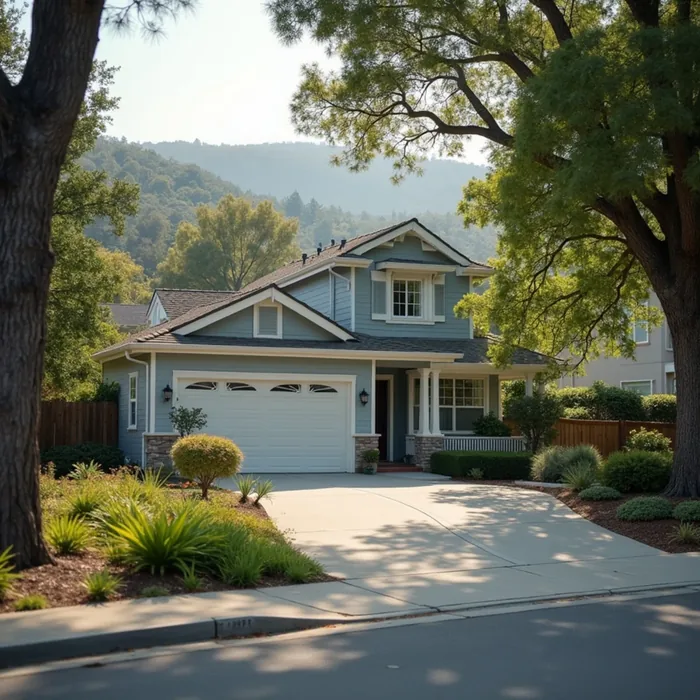
Lafayette is built into the hills along the Highway 24 corridor, and almost nothing about it is flat. Homes sit on slopes, driveways climb, and lots step down or up from the road — which means water on a Lafayette property is always moving somewhere, and usually toward a structure. The housing is largely 1950s through 1970s, much of it hillside construction of an era when drainage engineering was less rigorous than it is today.
The tree canopy here is exceptional and is a genuine factor in the work. Heavy oak, bay and pine cover fills gutters faster than most homeowners expect, drops limbs during winter storms and Diablo wind events, and puts aggressive root systems next to older sewer laterals. A great many Lafayette storm calls trace back to a gutter that stopped working in November.
Water damage help in Lafayette
Tell us what happened and we will respond within one business hour — or call now for 24/7 emergency dispatch.
Local risk profile
What Drives Water Damage in Lafayette
Hillside construction from the 1950s to 70s often relies on drainage that was adequate for the rainfall patterns of the time and is marginal against a modern atmospheric river. Below-grade walls without proper drainage planes, retaining walls with clogged weep holes, and area drains that were never sized for this kind of peak flow all show up in the same week each winter.
The plumbing profile matches the era: galvanized and early copper supply lines at or past service life, and original clay-tile sewer laterals under mature trees. Homes stepping down a slope also frequently have partial lower levels, which is where the water ends up.
- Hillside drainage systems from the 1950s–70s under-sized for peak modern storm flow.
- Heavy oak, bay and pine canopy filling gutters and dropping limbs onto roofs.
- Root intrusion into original clay-tile sewer laterals.
- Partial lower levels and below-grade rooms taking slope runoff and groundwater.
- Lafayette Reservoir watershed drainage crossing residential areas.
Working in Lafayette
We reach Lafayette in roughly 25 minutes via I-680 north and Highway 24 west. Hillside work here is slower per square foot than valley work — equipment has to be carried, access is often through a single stair, and lower-level rooms need their own drying chambers. We scope for that from the start rather than discovering it after the truck is parked.
Landmarks & corridors we work
- Lafayette Reservoir
- Highway 24 corridor
- Downtown Lafayette and Mount Diablo Boulevard
- Lafayette BART station
- Las Trampas Creek
- Briones Regional Park
Why this matters: Foothill community along Highway 24 with 1950s–70s hillside homes, heavy tree canopy and Lafayette Reservoir watershed drainage.
From the job log
Three jobs that recur in Lafayette
The blocked-swale hillside flood
A drainage swale along the uphill property line fills with leaf litter and sends the runoff it was built to carry against the house instead. The interior damage is the symptom; the repair is twenty minutes of clearing plus whatever the water already reached.
The cast iron stack failure
A drain line that has been slow for two years finally fails inside a wall or under the slab. Because it is drain water rather than supply water, the category is worse and more material comes out. Camera inspections on any house of this era are cheap insurance.
Root intrusion under the canopy
Mature trees over a clay-tile lateral laid in short jointed sections. Roots find the joints, the line narrows for years, and it blocks under peak demand. Lining preserves the driveway and the landscaping where the host pipe still holds its shape.
Water damage in Lafayette? Call now.
Lafayette is about 25 minutes northwest of our base, up I-680 and west on Highway 24.
- Free on-site estimate
- We bill your insurance directly
- IICRC-certified technicians
What we do here
The services Lafayette property owners call us for
Storm Damage Cleanup
Emergency tarping and board-up first, extraction and drying second — because the storm is usually still going.
Learn moreFlooded Basement & Crawl Space Cleanup
The space nobody looks at until the smell reaches the living room. Pump-out, vapor barrier, and a proper drying chamber.
Learn moreSewage Cleanup & Backup Removal
Category 3 contamination handled properly — containment, PPE, disposal, disinfection and odor control, not a mop and bleach.
Learn moreRoof Leak Water Damage Restoration
Tarp the opening, dry the attic and the ceilings below, and replace the insulation that quietly lost its R-value.
Learn moreTiming
Tree canopy, hillside lots and an aging drain stock
Lafayette combines three things that each cause water damage on their own: 1950s to 1970s houses with original cast iron drains, steep wooded lots, and a heavy canopy that drops enough material each autumn to block every drainage path on the property.
The seasonal pattern follows from that. Autumn leaf fall sets up the winter failures, and by the time the ground is saturated the drainage has already been compromised by something that was easy to clear in October.
- 1
October to November — leaf fall
Gutters, downspouts, area drains and hillside swales fill with leaf litter over a few weeks. Nothing fails yet, which is precisely why it gets ignored. Almost every hillside seepage call we take in January traces back to a drainage path blocked in this window.
- 2
December to March — saturation and slope
Sustained rain on wooded hillsides produces surface runoff, subsurface flow and pressure against below-grade walls. Retaining wall weep holes clogged with sediment hold water against the wall rather than releasing it, which is when a drainage problem starts becoming a structural one.
- 3
Any month — cast iron reaching the end
Post-war cast iron drain stacks corrode from the base upward on their own schedule. Slow drains that clear and return, a sewer odour near a cleanout and rust staining at a floor drain are the sequence. A camera inspection settles it long before a collapse does.
FAQ
Lafayette water damage questions
Many of the 1950s to 1970s houses do, and cast iron of that age corrodes from the base of the stack upward. Slow drains that clear and come back, a sewer odour near a cleanout and rust staining at a floor drain are the signs. A camera inspection settles the question and is far cheaper than the failure it prevents.
Usually because drainage designed in the 1950s to 70s is simply under-sized for the peak flow an atmospheric river delivers. Water sheets off saturated slopes faster than area drains can carry it, retaining wall weep holes clog, and it finds the lowest opening — a below-grade wall, a crawl space vent or a lower-level door.
A great deal. Heavy oak, bay and pine canopy fills gutters far faster than homeowners expect, and a gutter that stopped working in November puts a curtain of water down the wall in January. The same trees drop limbs on roofs during storms and Diablo wind events, and their roots invade older clay-tile sewer laterals.
About 25 minutes from San Ramon via I-680 and Highway 24. Hillside addresses can add a few minutes for access and equipment staging, and we account for that when we give you an arrival window.
Why call us
What you get on a Lafayette job
IICRC-certified, working to S500
Water category and damage class determined on site and recorded in writing — the same standard your adjuster reads from.
Licensed, insured, background-checked
A California CSLB licence you can verify yourself, general liability and workers’ compensation cover, and crews screened before they enter your home.
Daily moisture readings
A dry standard measured from unaffected materials in your own building, and the full drying log handed over at completion.
Insurance billed direct
Documentation built for the adjuster from the first hour, plus a written scope before any reconstruction begins.
Water moving right now? Do these three things first.
- 1. Shut off the main water valve — garage, exterior wall, or the box near the street.
- 2. Cut power to the affected circuits, only if you can reach the panel from a dry spot.
- 3. Photograph everything before you move it, including the failed pipe or fitting.
Then call — we stay on the line while the truck is already moving.
Nearby areas we also serve
Get help now
Serving Lafayette, CA from San Ramon Valley Blvd
San Ramon Water Damage Pros
2551 San Ramon Valley Blvd
San Ramon, CA 94583
Open 24 hours a day, 7 days a week
Office: Mon–Fri, 8:00 AM – 6:00 PM
24/7 emergency dispatch
24/7 emergency crews — nights, weekends and holidays. Free on-site estimate, written scope before any rebuild, and we bill your insurance directly.
- Free on-site estimate
- We bill your insurance directly
- IICRC-certified technicians