
Ceiling Leaking During a Storm? What to Do in the Next 30 Minutes
A bulging ceiling is holding water and can come down as a sheet. Here is how to handle the next half hour without making it worse or getting hurt.
Written by the San Ramon Water Damage Pros crew — IICRC-certified technicians working to the ANSI/IICRC S500 standard on water losses across San Ramon and the Tri-Valley. Guidance here reflects how we actually run jobs, not general advice.
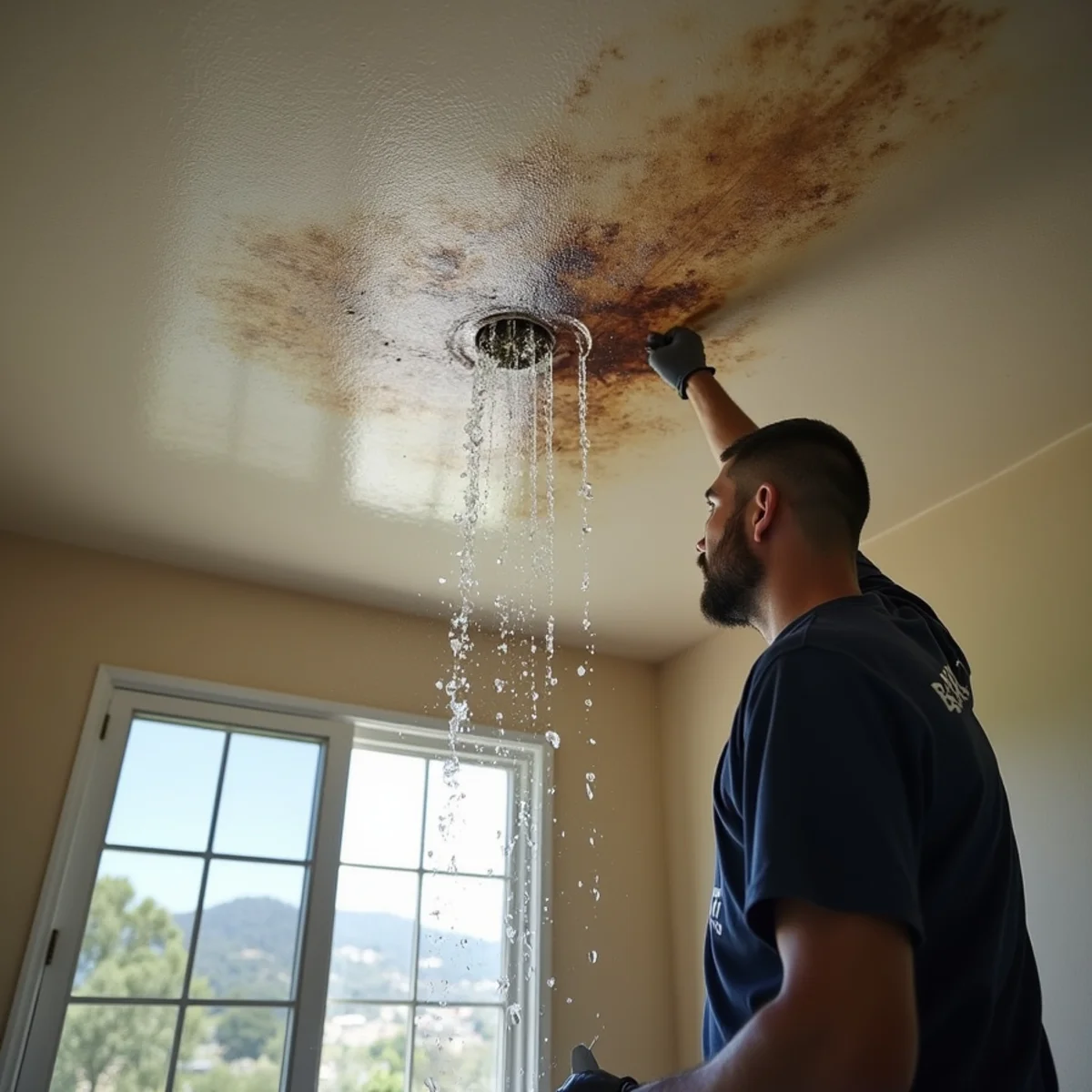
Water is coming through your ceiling. Before anything else, look at the drywall: if any part of it is bulging, sagging or looks heavy, get everyone out from under that area and keep them out. That bulge is a pocket of water, and drywall fails all at once.
Drywall holds a surprising amount of water before it lets go, and when it does it comes down as a full sheet rather than as a drip. Assuming nothing is bulging, here is the next thirty minutes.
Water damage happening right now?
We answer live 24 hours a day and commit to a 60-minute response across San Ramon.
+1 (201) 277-9344The Immediate Sequence
 1
1Clear the room beneath
Move furniture, electronics, rugs and anything of value out from under and around the leak. Work from the edges of the room rather than directly beneath the wet area.
 2
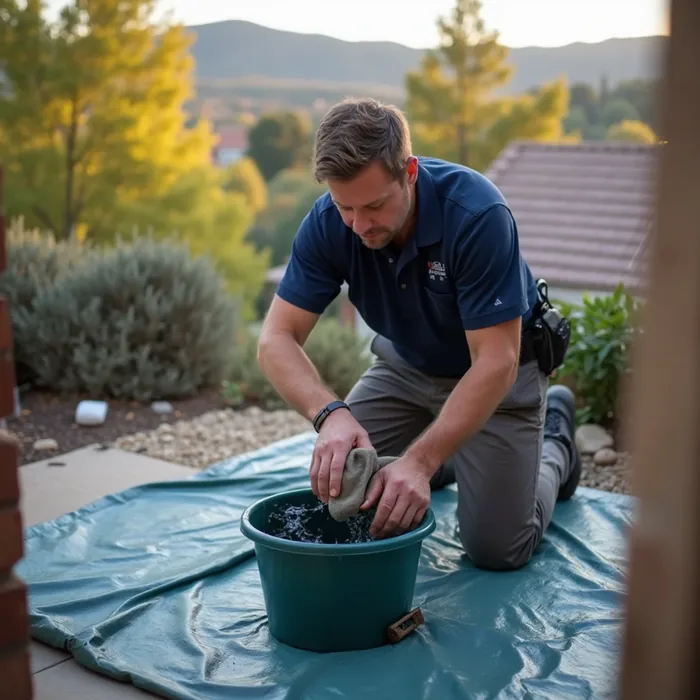
2Put down containers and protection
Buckets or bins under the active drip, with a plastic sheet or tarp under them so splashing does not soak the floor. A towel in the bottom of the bucket cuts the noise and the splash considerably.
 3
3Kill the power to that area if lights are involved
If water is anywhere near a ceiling light, a fan or a smoke detector, switch off that circuit at the panel. Water tracking along a ceiling reaches electrical boxes easily.
 4
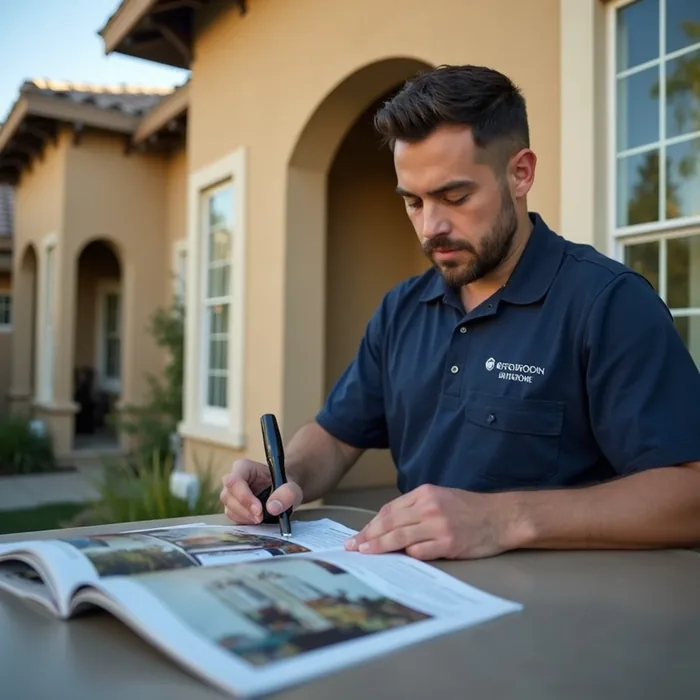
4Photograph everything
Video and photograph the ceiling, the water, the affected room and any damaged contents — before you clean anything up. If you know a wind event preceded this, note the date; wind is a covered peril and it matters.
 5
5Call for emergency tarping
If the source is the roof and the storm is ongoing, the building envelope needs to be closed before anything else is worth doing. We tarp in active rain.
About That Bulge — Read This Before You Poke It
The common advice is to puncture a bulging ceiling with a screwdriver to relieve the water in a controlled way. It is not wrong in principle, and restoration crews do exactly that. But it goes badly for homeowners more often than the advice admits, because you cannot tell from below how much water is up there.
What can happen: the small hole you make becomes the failure point for a much larger volume than you expected, and the whole saturated section comes down at once — on you, on the floor, on whatever you did not move. Wet drywall plus wet insulation is genuinely heavy.
Our recommendation is to leave it, stay out from under it, and tell us about it when you call. If it is going to be relieved, it should be done with containment underneath and someone positioned to the side rather than beneath it.
Where Storm Ceiling Leaks Actually Come From
Roofs almost never leak through the field of the shingles. They leak at the interruptions — the places where something penetrates the roof plane or where two planes meet, and where flashing rather than shingles is doing the work of keeping water out.
In San Ramon there is a seasonal pattern worth understanding. Diablo wind season runs October through March, and those dry offshore winds lift shingle tabs, break their seal and work flashing loose without causing any leak at the time. The roof is compromised but shows no symptom. Then an atmospheric river arrives weeks later and finds every opening at once.
The ridgeline neighborhoods take the strongest wind loading — San Ramon Hills, Bollinger Hills, Sycamore Heights, Hidden Valley and the homes backing onto Bollinger Canyon.
- Chimney flashing and cricket — the most common leak location on a pitched roof.
- Plumbing vent boots, where the rubber collar cracks with UV exposure after ten to fifteen years.
- Skylight seals and curb flashing.
- Valleys, where two roof planes concentrate the water volume.
- Roof-to-wall transitions and step flashing on two-story elevations.
- Solar panel mounting penetrations.
- Ridge cap and gable ends lifted by wind.
Not Every Ceiling Leak Is the Roof
If it is raining, the roof is the obvious suspect — but check the timing carefully, because plumbing failures happen during storms too and the diagnosis changes everything about the repair.
A leak that only appears during or shortly after rain is almost certainly envelope-related. A leak that runs continuously regardless of weather is plumbing. A leak that appears when someone showers upstairs is a shower pan, a wax ring or a supply connection. And a leak that appears when the air conditioning runs is HVAC condensate — a blocked drain line or a rusted-out drain pan on an attic air handler.
What the Repair Actually Involves
Stopping the leak is step one, not the whole job. Water entering at the roof runs along rafters and across the top of the ceiling drywall before it soaks through, so the wet area above is always larger than the stain below.
Saturated attic insulation has to come out. This is the line item homeowners most often resist and it is not negotiable: wet blown and batt insulation compacts, loses most of its R-value permanently, and holds moisture against the framing for months. Leaving it in is why a painted-over ceiling stain reappears.
After that: open and dry the ceiling cavity and framing to a verified standard, remediate any growth on the sheathing if the leak ran through several storms, then rebuild — drywall, texture match, stain-blocking primer and paint.
Why Chasing the Stain Repairs the Wrong Thing
The most expensive mistake with a storm ceiling leak is repairing where the water appeared. Water entering a roof rarely drops straight down — it travels along the top of the ceiling, down rafters and across the drywall until it finds a seam, a fixture penetration or a low point.
That means the stain marks the end of the journey, not the beginning. We have been called to houses where the ceiling has been patched and repainted twice at the same spot while the actual failure, several feet uphill and around a corner, kept working.
- Water can travel ten feet or more inside a roof assembly before it appears, and it always follows the framing rather than gravity alone.
- A leak that only shows during storms from one direction is wind-driven, which points at flashing and siding laps rather than at the roof field.
- Recessed light fittings, bathroom fans and ceiling registers are low points where travelling water exits — a leak at a light fitting almost never means the fault is above that fitting.
- Damage established during a wind event often does not leak until the next rain, which is why owners connect the leak to the wrong storm.
- Patching and painting a stain without tracing the entry point means the framing above stays wet, and the stain returns with the next storm.
- In the Tri-Valley, the correct response to a wind advisory is a roof inspection rather than waiting to see whether anything drips.
Frequently asked questions
We would rather you did not. You cannot judge the volume from below, and the small hole often becomes the failure point for a much larger section coming down at once. Stay out from under it, move what you can from the edges of the room, and let a crew relieve it with containment in place.
Yes, and it is usually the right call. Waiting for the weather to clear means hours or days more water entering the building, which grows the interior scope far faster than the tarping costs.
It matters a great deal, in your favour. Diablo winds lift and unseal shingles without causing an immediate leak, so the water arrives with the next storm. Wind is a covered peril; age and deferred maintenance are not. Note the wind event date and report both to your carrier.
Often yes, and rain can help — active water is easier to trace than a dry stain. From inside we use thermal imaging and moisture meters to map the wet path back toward its source. Getting onto a roof safely in an active storm is a different question, so emergency work usually means interior tracing and temporary containment first, with the roof inspection as soon as conditions allow.
Depends on how far it sagged and what it is made of. Drywall that took water but held its plane can frequently be dried in place with cavity drying, particularly if the insulation above it can be removed and replaced. Drywall that bulged, sagged or lost its bond with the tape has failed structurally and comes out regardless of how dry we could get it.
The short version
Clear the room, catch the water, kill the circuit, photograph everything — and stay out from under anything that is bulging.
We handle storm ceiling leaks across San Ramon 24 hours a day: emergency tarping first, then interior extraction, insulation removal, cavity drying and a texture-matched repair.