

24/7 Emergency Service
Water Damage Restoration in Castro Valley, CA
Castro Valley is roughly 25 minutes southwest of our base via I-580 through the Dublin Canyon corridor.
- 24/7 emergency crews — nights, weekends and holidays
- Free on-site estimate
- IICRC-certified technicians
- We bill your insurance directly
24/7 Emergency Service
Answered live, any hour
60-Minute Response
Across all of San Ramon
IICRC Certified
Works to the S500 standard
Insurance Billed Direct
Daily moisture logs
Tier 1 service area
Water damage restoration in Castro Valley
Castro Valley runs from flat, dense residential neighborhoods near the BART station up into steep canyon terrain below the Oakland Hills. Those canyons — Crow Canyon Road on the eastern side, Palomares and the upper reaches toward the ridge — carry homes on genuinely difficult sites, and they carry the compound risk that defines restoration work here.
The compounding is the important part. Steep, vegetated canyon terrain in this part of Alameda County sits in high fire hazard zones, and burned or thinned slopes lose the root structure and ground cover that would otherwise slow runoff. The next winter, storm water sheets off those slopes far faster than it did before, carrying sediment with it. A property can face fire risk in October and debris-laden runoff in January from the same hillside.
Water damage help in Castro Valley
Tell us what happened and we will respond within one business hour — or call now for 24/7 emergency dispatch.
Local risk profile
What Drives Water Damage in Castro Valley
Canyon homes deal with water arriving from above rather than rising from below. Saturated slopes push laterally against foundations and retaining walls, culverts and roadside ditches overtop, and driveways cut into a hillside act as channels aimed directly at the garage. Sediment in that runoff clogs area drains exactly when they are most needed.
The flatter neighborhoods near the town centre have a more conventional profile — post-war and 1960s–70s housing with plumbing at or past service life, producing the usual mix of supply-line failures, slab leaks and sewer lateral backups.
- Canyon slope runoff and sediment loading during heavy winter storms.
- Post-fire hydrophobic soils and reduced ground cover accelerating runoff.
- Retaining wall drainage failures and lateral groundwater pressure on hillside foundations.
- Culverts and roadside ditches overtopping onto private property.
- Flatland 1950s–70s housing with aging supply lines and sewer laterals.
Working in Castro Valley
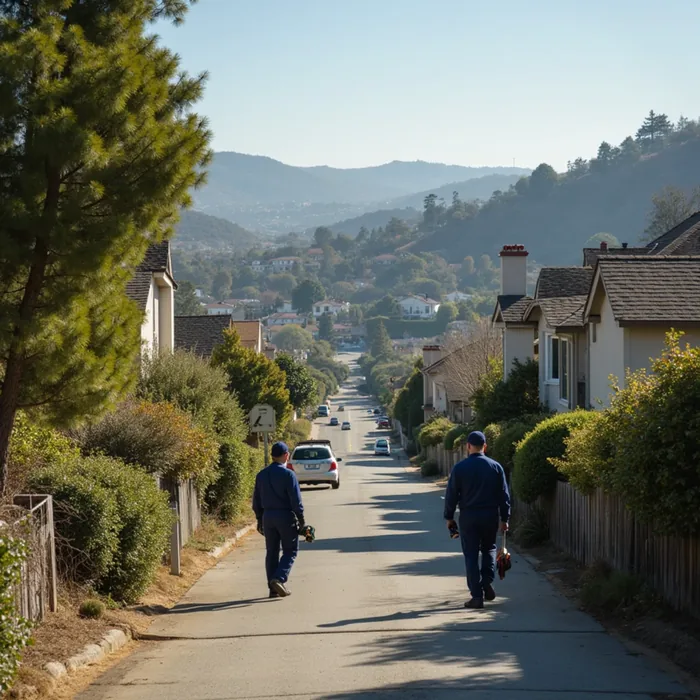
We reach Castro Valley in about 25 minutes via I-580 through Dublin Canyon. Hillside and canyon addresses take longer to work than flat lots — access, staging and equipment placement all get harder — so we plan for that rather than discovering it on arrival. Storm-season calls here are frequently drainage problems rather than plumbing problems, and the fix is usually outside the house.
Landmarks & corridors we work
- Castro Valley Boulevard corridor
- Lake Chabot Regional Park
- Crow Canyon Road canyon
- Palomares Canyon
- Castro Valley BART station
- Cull Canyon Regional Recreation Area
Why this matters: Canyon and hillside homes below the Oakland Hills, where wildfire exposure and winter storm runoff compound each other in the same canyons.
From the job log
Three jobs that recur in Castro Valley canyons
Debris-laden runoff indoors
Water arrives carrying silt, ash and organic material, and it is treated as Category 3 under the S500 standard. Porous materials it touched are removed rather than dried, and the space is cleaned and treated before anything is rebuilt over it.
Seepage at the uphill wall
The classic hillside failure. Water surfaces in the lowest finished room while the actual fault is drainage on the slope above. Interior sealing manages the symptom for a season; correcting what happens uphill is what actually ends it.
Blocked drainage during the storm
Area drains and catch basins that worked last year fill with sediment on the first big flow and back up at exactly the wrong moment. Ten minutes of clearing in October is the difference, and it is the single most common preventable cause we see here.
Water damage in Castro Valley? Call now.
Castro Valley is roughly 25 minutes southwest of our base via I-580 through the Dublin Canyon corridor.
- Free on-site estimate
- We bill your insurance directly
- IICRC-certified technicians
What we do here
The services Castro Valley property owners call us for
Storm Damage Cleanup
Emergency tarping and board-up first, extraction and drying second — because the storm is usually still going.
Learn moreFlood Cleanup
Storm and creek flooding handled as the contaminated loss it is — contained extraction, disposal, sanitizing and full structural drying.
Learn moreFlooded Basement & Crawl Space Cleanup
The space nobody looks at until the smell reaches the living room. Pump-out, vapor barrier, and a proper drying chamber.
Learn moreMold Remediation
Containment-first remediation that removes growth and fixes the moisture source — because mold that comes back was never really removed.
Learn moreTiming
Fire and water are the same problem here, six months apart
Castro Valley's canyon and hillside neighborhoods carry real wildfire exposure through the dry months, and the consequence of that exposure arrives in winter. Burned or thinned slopes shed water and debris rather than absorbing it, so the first significant rain after a fire season produces runoff volumes the drainage was never designed for.
Even without a fire, the terrain does most of the work. Cut-and-fill lots put the uphill wall partly below grade, and sustained rain puts saturated soil directly against it.
- 1
June to October — the dry season setup
Nothing fails, but the conditions for the winter are being set. This is the window for clearing swales and area drains, checking that downspouts discharge downslope and confirming that any hillside drainage installed years ago still runs.
- 2
First rains after fire season
The highest-risk moment in the Castro Valley year. Slopes that lost vegetation shed water and sediment together, and that debris-laden runoff blocks the drainage on its way through. Water that has crossed burned ground is handled as contaminated rather than clean.
- 3
January to March — sustained saturation
Seepage through below-grade walls peaks after weeks of accumulated rain rather than during the largest single storm. If a lower level takes water in February and not in November, the cause is saturation rather than intensity, and the fix is drainage rather than sealing.
FAQ
Castro Valley water damage questions
Because that wall is holding back saturated soil. On a cut-and-fill hillside lot, the uphill side is partly below grade, and once winter rain saturates the slope the water has nowhere to go but against the foundation. Seepage there is a drainage failure uphill of the house, not a fault in the wall itself.
Directly, and it surprises people. Burned slopes lose the vegetation and root structure that slow runoff, and fire can leave soils temporarily water-repellent. The following winter, storm water sheets off those hillsides much faster and carries sediment with it — so a property can face fire in autumn and debris-laden runoff into the garage a few months later from the same slope.
Clear gutters and downspouts, check that area drains and culverts are not silted up, confirm grading directs water away from the foundation, and look at retaining wall weep holes. Most Castro Valley storm intrusion we respond to is a drainage failure outside the house rather than anything to do with the plumbing inside it.
About 25 minutes via I-580 through Dublin Canyon under normal conditions. Canyon and upper-hillside addresses can add time, particularly during a storm when road conditions are poor — we will give you a realistic arrival window when you call rather than an optimistic one.
Why call us
What you get on a Castro Valley job
IICRC-certified, working to S500
Water category and damage class determined on site and recorded in writing — the same standard your adjuster reads from.
Licensed, insured, background-checked
A California CSLB licence you can verify yourself, general liability and workers’ compensation cover, and crews screened before they enter your home.
Daily moisture readings
A dry standard measured from unaffected materials in your own building, and the full drying log handed over at completion.
Insurance billed direct
Documentation built for the adjuster from the first hour, plus a written scope before any reconstruction begins.
Water moving right now? Do these three things first.
- 1. Shut off the main water valve — garage, exterior wall, or the box near the street.
- 2. Cut power to the affected circuits, only if you can reach the panel from a dry spot.
- 3. Photograph everything before you move it, including the failed pipe or fitting.
Then call — we stay on the line while the truck is already moving.
Nearby areas we also serve
Guides for Castro Valley property owners
Get help now
Serving Castro Valley, CA from San Ramon Valley Blvd
San Ramon Water Damage Pros
2551 San Ramon Valley Blvd
San Ramon, CA 94583
Open 24 hours a day, 7 days a week
Office: Mon–Fri, 8:00 AM – 6:00 PM
24/7 emergency dispatch
24/7 emergency crews — nights, weekends and holidays. Free on-site estimate, written scope before any rebuild, and we bill your insurance directly.
- Free on-site estimate
- We bill your insurance directly
- IICRC-certified technicians