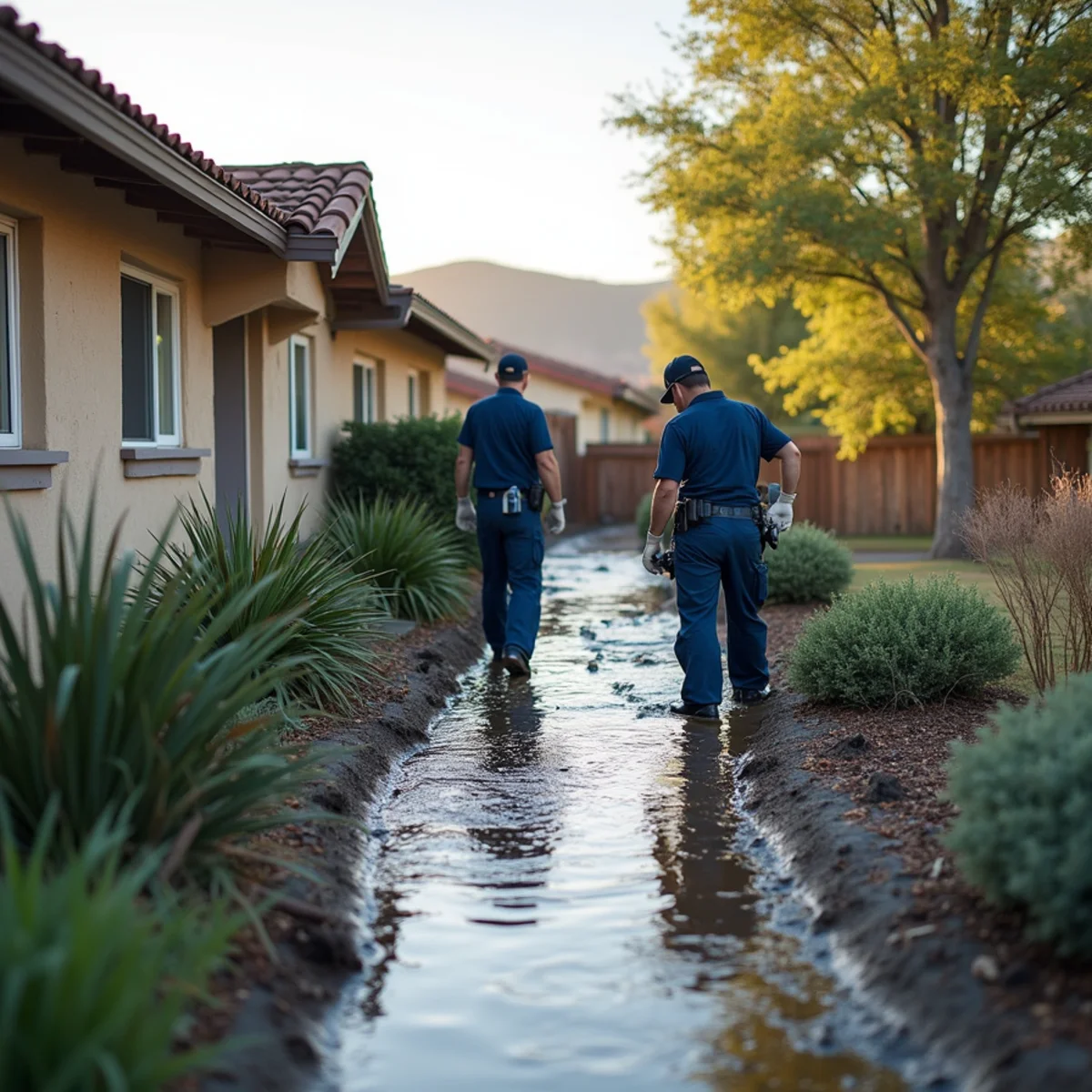
San Ramon Creek Flooding: What Homeowners Along the Creek Corridor Should Know About Storm Runoff
About 3.7% of San Ramon properties carry at least minor flood risk — a small share of the city and a large number of households, concentrated in predictable places.
Written by the San Ramon Water Damage Pros crew — IICRC-certified technicians working to the ANSI/IICRC S500 standard on water losses across San Ramon and the Tri-Valley. Guidance here reflects how we actually run jobs, not general advice.
San Ramon does not read as a flood city, and statistically it is not. But "low risk citywide" and "low risk on your particular lot" are very different statements, and the difference matters enormously if you happen to be one of the households in the second category.
First Street Foundation data indicates roughly 964 San Ramon properties — about 3.7% of the city — carry at least minor flood risk over a 30-year horizon. Small share, large number, and it is not evenly distributed.
Water damage happening right now?
We answer live 24 hours a day and commit to a 60-minute response across San Ramon.
+1 (201) 277-9344The Waterways That Matter
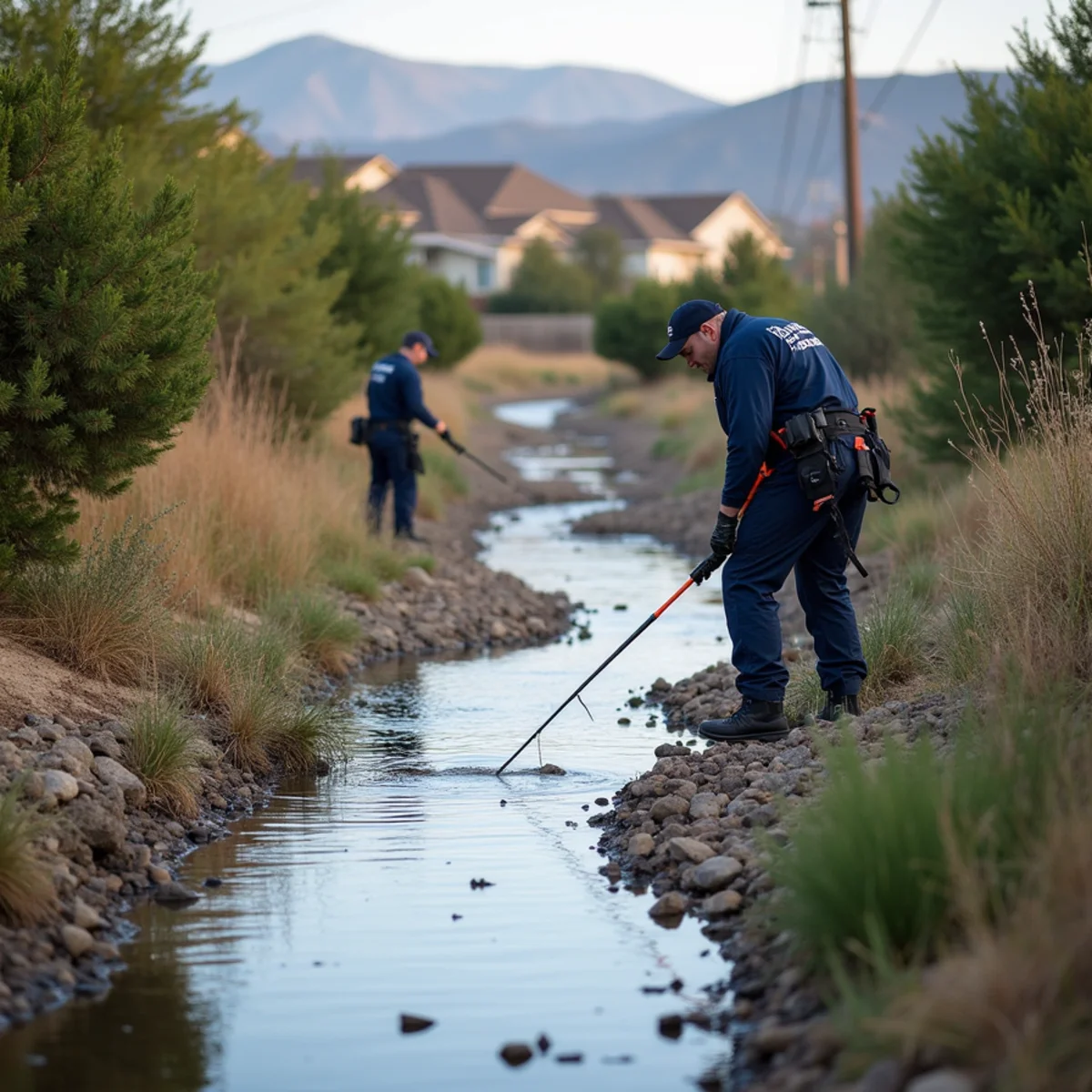
San Ramon Creek and Bollinger Creek are the principal watercourses running through the city, along with the network of storm drains, engineered channels and detention basins that Contra Costa County Flood Control maintains to carry storm flow through developed areas.
Those facilities do a great deal of work, and they are the reason a two-day atmospheric river does not put water into far more homes than it does. They are also why the properties that do flood tend to be the ones where private drainage failed rather than the public system.
The city clears creeks and drains ahead of each rainy season, which is itself a useful annual reminder that the wet season is approaching and worth using as a prompt for your own maintenance.
Where Exposure Concentrates
- Properties directly adjacent to the San Ramon Creek and Bollinger Creek corridors, where high channel flow slows how quickly surrounding drainage can shed.
- Low-lying sections of Norris Canyon and Crow Canyon.
- Hillside lots where saturated slopes above shed runoff toward the foundation — Bollinger Hills, Sycamore Heights, Round Hill and similar positions.
- Homes downhill of open space, particularly along the Bollinger Canyon interface where post-fire runoff is a factor.
- Any lot where grading has settled over the decades so that it now slopes toward the house rather than away.
- Trail-adjacent properties along the Iron Horse corridor, where the flat rail alignment cuts across natural drainage.
The Insurance Reality
This is the part worth being blunt about. Standard California homeowners policies exclude flood — meaning rising creek water, surface water, storm runoff and groundwater entering through a foundation. That coverage comes only from a separate flood policy, through the NFIP or a private carrier.
Two details matter. First, NFIP policies typically carry a 30-day waiting period, so flood insurance cannot be bought reactively — when the forecast turns in December it is already too late. If you are going to carry it, have it in place by early autumn. Second, NFIP covers building and contents separately and you have to buy both; a building-only policy will not pay for your furniture.
Mortgage lenders may require flood coverage on properties mapped near the creek corridors. If you are not required to carry it but sit in one of the exposure categories above, it is worth pricing rather than assuming.
What Actually Fails During a Major Storm
In our experience the properties that take water during an atmospheric river are rarely victims of the creek overtopping. They are almost always properties where a private drainage element stopped working.
- Gutters clogged with leaf litter, overflowing and putting a curtain of water down the wall and into window flashing.
- Downspouts discharging at the foundation instead of being carried several feet away.
- Yard and area drains silted up and no longer carrying water off the lot.
- Grading that has settled over the years so it now directs water toward the house.
- Driveways cut into a slope that channel surface water straight toward the garage.
- Crawl space vents at or below the level water reaches.
- Sump pumps without battery backup, failing exactly when a storm-driven outage arrives.
What to Do Before the Season
- Clear gutters and downspouts in October, and again mid-season after the wind drops more leaves.
- Extend downspout discharge several feet from the foundation.
- Flush and check area drains — sediment is what disables them, and it accumulates invisibly.
- Walk the perimeter after a heavy rain and watch where water actually goes. That is more informative than any inspection on a dry day.
- Check crawl space vents and access for water intrusion paths.
- If you depend on a sump pump, add a battery backup. Peak flow and power outages arrive together.
- Price flood insurance by September if you are in one of the exposure categories.
Reading Your Own Lot Before the Season
Flood maps describe watercourses. They say very little about where water goes on your particular property, and most of what gets inside a San Ramon home is surface runoff and drainage failure rather than a creek leaving its channel. This is how to work out your own exposure.
- Watch it rain, once — The single most useful thing on this list. Put a coat on during a real downpour and walk the property. Where water sheets, where it pools and where it moves toward the house is information no map contains.
- Find the low point of the lot — Water goes there. If the low point is against the house, or is a garage apron or a lower-level doorway, that is your exposure regardless of what the flood map says.
- Check what the neighbouring lots send you — Runoff from an uphill property crosses onto yours before it reaches anything of yours. A blocked drain uphill is functionally your problem even though it is not on your land.
- Trace every downspout to its discharge — Follow each one and confirm where the water actually ends up. Downspouts discharging within a few feet of the foundation are one of the most common causes of seepage we attend.
- Locate and test every area drain — Pour a bucket of water into each. If it does not drain quickly and freely, it will not perform in a storm — and sediment blocks them silently over the dry season.
- Look at the grade against the building — Ground should fall away from the foundation. Years of landscaping and mulch top-ups gradually reverse this, and once the grade runs toward the house every storm delivers water to the wall.
Frequently asked questions
Possibly. Creek proximity is one exposure path; hillside runoff, settled grading, clogged area drains and downhill-of-open-space positions are others. Most storm intrusion we respond to in San Ramon is a private drainage failure rather than a creek event.
No. Standard California policies exclude flood — rising creek water, surface water, storm runoff and groundwater entering the structure. That requires separate flood coverage through the NFIP or a private carrier, and those policies typically have a 30-day waiting period.
Yes. Water that has crossed the ground picks up soil, organic matter, landscaping chemicals and street runoff, and during heavy rain can carry sewage from a loaded sanitary system. It is Category 3, which means containment, PPE, disposal of porous materials and disinfection.
Yes, and arguably more than people who are. Mapped zones describe watercourse flooding, which is the less common way water gets into homes here. Surface runoff, blocked drainage and slope water affect properties across the valley with no relationship to the flood map, and those owners are usually the ones with no coverage for it either.
Usually a great deal, yes. Extending downspout discharges, clearing area drains and catch basins, restoring the grade against the foundation and clearing a swale are all modest jobs, and together they resolve most of what we are called out to. Substantial work — French drains, sump systems, regrading a slope — is worth considering only after the simple things have been done and proved insufficient.
The short version
The creeks matter, but the thing that most often puts water in a San Ramon house is a gutter, a silted-up area drain or grading that settled twenty years ago.
Fix those in October. And if water does get in, we handle storm flooding as the Category 3 loss it is, 24 hours a day.