
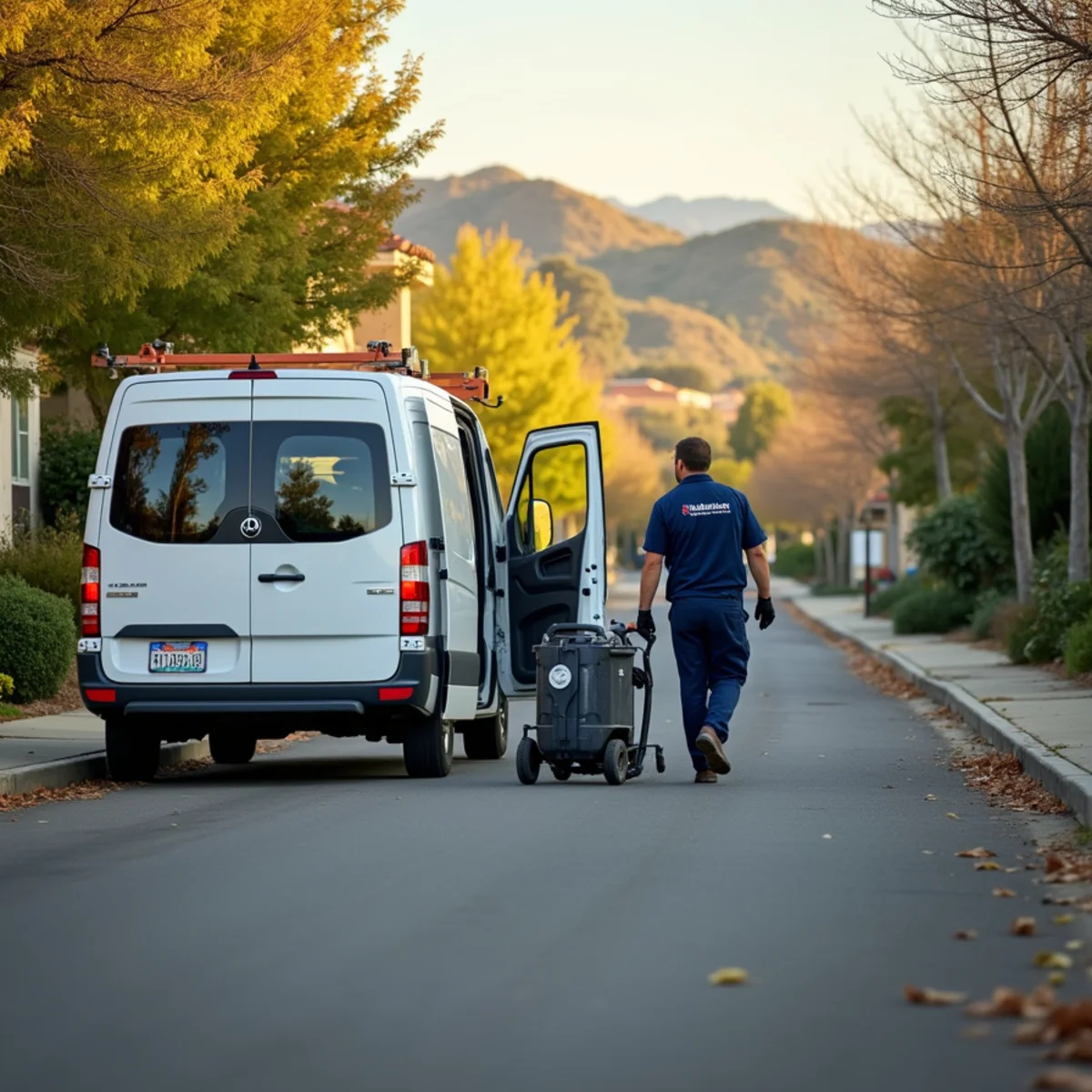
24/7 Emergency Service
Water Damage Restoration in Iron Horse, San Ramon
Iron Horse is about 4 minutes from our base — the trail runs past our door.
- 24/7 emergency crews — nights, weekends and holidays
- Free on-site estimate
- IICRC-certified technicians
- We bill your insurance directly
24/7 Emergency Service
Answered live, any hour
60-Minute Response
Across all of San Ramon
IICRC Certified
Works to the S500 standard
Insurance Billed Direct
Daily moisture logs
Neighborhood of San Ramon · 94583
Water damage restoration in Iron Horse
The Iron Horse neighborhoods run alongside the Iron Horse Regional Trail, the converted Southern Pacific rail alignment that threads north–south through San Ramon and on through Danville and Walnut Creek. Properties backing onto the corridor have a shared characteristic that is easy to miss: the trail is a linear feature that affects how water moves across the land it crosses.
A rail alignment was graded to be flat and consistent, which means it cuts across the natural drainage of the valley. Where the corridor sits slightly high relative to adjacent lots, it can pond water on the uphill side during heavy rain; where it sits low, it collects runoff from both directions. Neither is dramatic, but during a sustained atmospheric river it shapes where water ends up.
Water damage help in Iron Horse
Tell us what happened and we will respond within one business hour — or call now for 24/7 emergency dispatch.
Local risk profile
What Drives Water Damage Along the Iron Horse Corridor
Trail-adjacent drainage is the distinctive local factor — properties whose rear yards drain toward or away from the corridor behave differently in a storm than lots elsewhere on the same street. The mature trees planted along the corridor are the second factor, with root systems reaching into nearby sewer laterals.
Otherwise the housing follows the central San Ramon profile: copper at pinhole age, slab-on-grade producing slab leaks, and water heaters past service life.
- Trail corridor grading affecting how storm water moves across adjacent lots.
- Mature corridor trees with roots reaching nearby sewer laterals.
- Rear-yard drainage that ponds rather than sheds during sustained rain.
- Central San Ramon plumbing profile — pinholes, slab leaks, aging water heaters.
- Crawl spaces on trail-adjacent lots collecting corridor runoff.
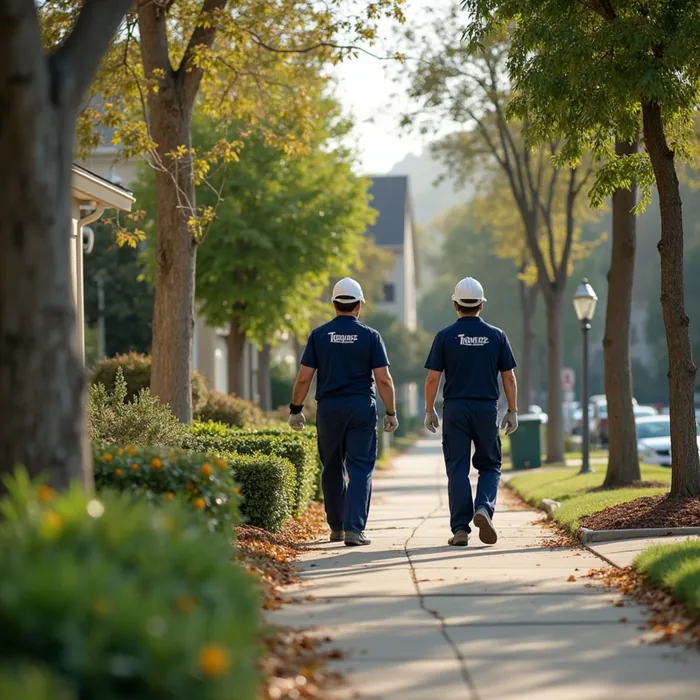
Working the Iron Horse Corridor
The trail runs right past our base on San Ramon Valley Blvd, so this is about a 4-minute response — the shortest we run. On storm calls along the corridor we look at yard drainage as part of the job rather than treating the wet room in isolation, because the cause is frequently outside.
Landmarks & corridors we work
- Iron Horse Regional Trail
- San Ramon Valley Blvd
- San Ramon Central Park
- Crow Canyon Road crossing
- Bishop Ranch business park
Why this matters: Homes along the Iron Horse Regional Trail corridor, where the former rail alignment shapes drainage and mature corridor trees reach sewer laterals.
From the job log
Three jobs that recur along the Iron Horse corridor
The persistently damp crawl space
Not a leak and not a storm event — sustained lateral moisture through permeable fill. The fix is a sealed vapour barrier over dried soil plus drainage that intercepts the flow before it arrives, rather than ventilation.
Seepage at the trail-facing wall
Appears in February rather than November, which identifies it as saturation rather than intensity. Interior sealing manages it briefly; interception on the corridor side is what actually resolves it.
The lateral near the fence line
A camera inspection distinguishes root intrusion from an offset or a belly and marks the position, which matters more than usual here because the line often runs close to a boundary and to public land.
Water damage in Iron Horse? Call now.
Iron Horse is about 4 minutes from our base — the trail runs past our door.
- Free on-site estimate
- We bill your insurance directly
- IICRC-certified technicians
What we do here
The services Iron Horse property owners call us for
Sewage Cleanup & Backup Removal
Category 3 contamination handled properly — containment, PPE, disposal, disinfection and odor control, not a mop and bleach.
Learn moreStorm Damage Cleanup
Emergency tarping and board-up first, extraction and drying second — because the storm is usually still going.
Learn more24/7 Emergency Water Removal
A real person answers at 3 a.m., a truck rolls immediately, and we talk you through the shutoff while it does.
Learn moreLeak Detection & Repair Coordination
Acoustic, thermal and pressure testing that locates the leak before anyone opens a wall or a slab.
Learn moreTiming
Built alongside a former rail alignment
Properties along the Iron Horse corridor sit next to ground that was graded as a rail bed, which means compacted fill and imported ballast rather than native soil. That layer moves water laterally more readily than the surrounding clay, and for adjacent homes it shows up as damp crawl spaces and seepage at the trail-facing wall during long wet spells.
The corridor's mature trees add root pressure on sewer laterals running near the property line.
- 1
October — clearing the trail side
Fence-line plantings and years of leaf litter block the swale that carries runoff along the property edge, and downspouts discharging toward the corridor need a clear path. Ten minutes here in autumn prevents pooling against the foundation in February.
- 2
January to March — lateral seepage
After weeks of rain, water moving through the old rail bed material arrives at the trail-facing wall and the crawl space beyond it. It is a slow, sustained wetting rather than a storm event, which is why it appears late in the season.
- 3
Peak demand — corridor roots
Mature trees along the alignment reach laterals near the property line. The intrusion advances over years and the blockage arrives when the house is at full occupancy, with the usual gurgling and slow-drain warnings beforehand.
FAQ
Iron Horse water damage questions
It can. The corridor was graded as a rail bed, which means compacted fill and imported ballast rather than native soil, and that layer moves water laterally more readily than the clay around it. For homes along it, that shows up as damp crawl spaces and seepage at the trail-facing wall during long wet spells rather than as a sudden event.
That water can still leave. Fence-line plantings and years of leaf litter block the swale that carries runoff along the property edge, and downspouts that discharge toward the corridor need a clear path. Ten minutes clearing a swale in October prevents the pooling that ends up against the foundation in February.
It can. The corridor was graded flat as a rail alignment, so it cuts across the valley’s natural drainage — sitting slightly high relative to some lots and low relative to others. During a sustained storm that shapes whether your rear yard sheds water or ponds it. It is worth knowing which one your lot does before November.
Mature trees. The corridor carries substantial tree cover, and those root systems reach the sewer laterals serving adjacent homes, entering at joints and forming a mass that blocks the line. Gurgling toilets and several slow drains at once are the early warning.
About 4 minutes — the trail runs past our base at 2551 San Ramon Valley Blvd. This is the fastest response area we serve, and we dispatch 24 hours a day with a live person answering.
Why call us
What you get on a Iron Horse job
IICRC-certified, working to S500
Water category and damage class determined on site and recorded in writing — the same standard your adjuster reads from.
Licensed, insured, background-checked
A California CSLB licence you can verify yourself, general liability and workers’ compensation cover, and crews screened before they enter your home.
Daily moisture readings
A dry standard measured from unaffected materials in your own building, and the full drying log handed over at completion.
Insurance billed direct
Documentation built for the adjuster from the first hour, plus a written scope before any reconstruction begins.
Water moving right now? Do these three things first.
- 1. Shut off the main water valve — garage, exterior wall, or the box near the street.
- 2. Cut power to the affected circuits, only if you can reach the panel from a dry spot.
- 3. Photograph everything before you move it, including the failed pipe or fitting.
Then call — we stay on the line while the truck is already moving.
Nearby areas we also serve
Guides for Iron Horse property owners
Get help now
Serving Iron Horse, San Ramon, CA from San Ramon Valley Blvd
San Ramon Water Damage Pros
2551 San Ramon Valley Blvd
San Ramon, CA 94583
Open 24 hours a day, 7 days a week
Office: Mon–Fri, 8:00 AM – 6:00 PM
24/7 emergency dispatch
24/7 emergency crews — nights, weekends and holidays. Free on-site estimate, written scope before any rebuild, and we bill your insurance directly.
- Free on-site estimate
- We bill your insurance directly
- IICRC-certified technicians