San Ramon Valley's Expansive Clay Soils: Why Slabs Crack, Walls Shift, and Pipes Shear
The ground under your house moves every year — swelling through winter, shrinking through summer. Rigid things buried in it eventually object.
Written by the San Ramon Water Damage Pros crew — IICRC-certified technicians working to the ANSI/IICRC S500 standard on water losses across San Ramon and the Tri-Valley. Guidance here reflects how we actually run jobs, not general advice.
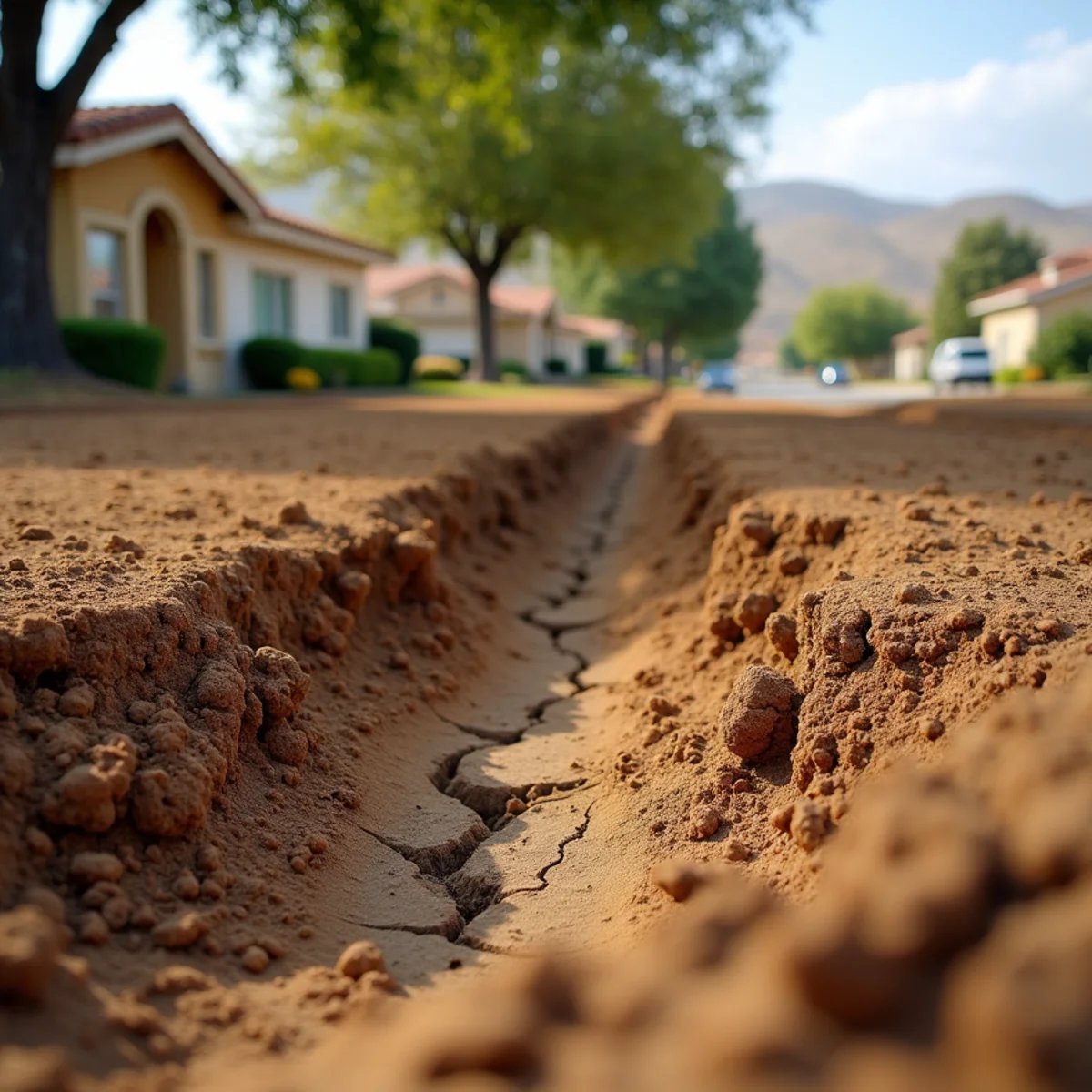
The San Ramon Valley sits on expansive clay: soil with a high proportion of montmorillonite, a mineral whose crystal structure absorbs water between its layers and expands substantially as a result. Wet it and it swells. Dry it and it contracts.
In a climate with a concentrated wet season and a long dry summer, that means the ground beneath every house here goes through a substantial annual movement cycle. Foundations are engineered for it. The rigid things buried in and around them are less well accommodated.
Water damage happening right now?
We answer live 24 hours a day and commit to a 60-minute response across San Ramon.
+1 (201) 277-9344The Annual Cycle
From November through March the soil takes on water and swells, lifting and pressing against whatever is in it. From roughly May through October it dries out and contracts, and in a dry year you can watch the surface crack open in visible fissures around foundations and along driveways.
The movement is not uniform. Soil near a downspout discharge stays wetter than soil on the opposite side of the house. Soil shaded by the building dries more slowly than soil in full sun. Soil under the middle of a slab retains moisture longer than soil at the perimeter. That differential is what causes problems — uniform movement would simply raise and lower the whole house.
What It Does to Plumbing
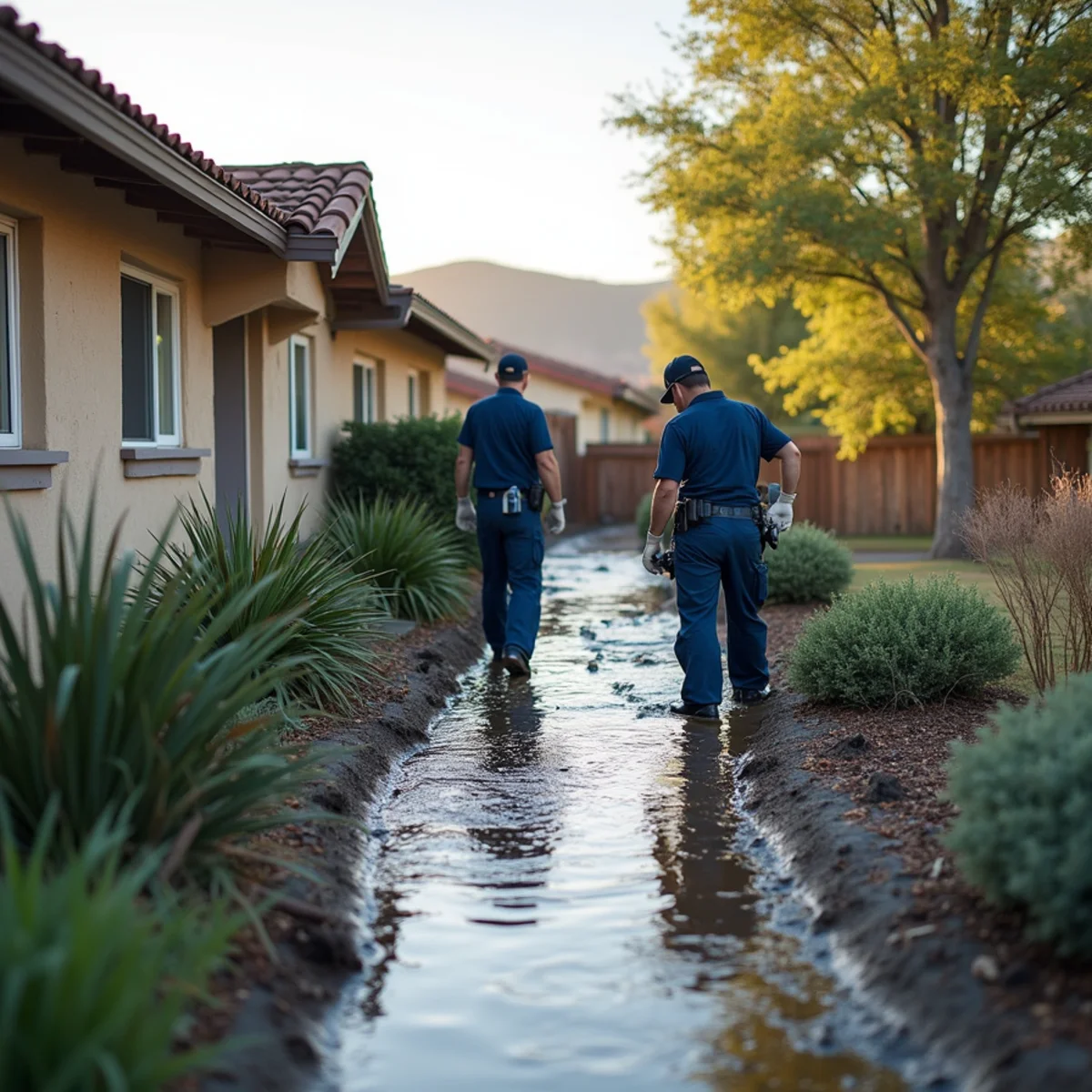
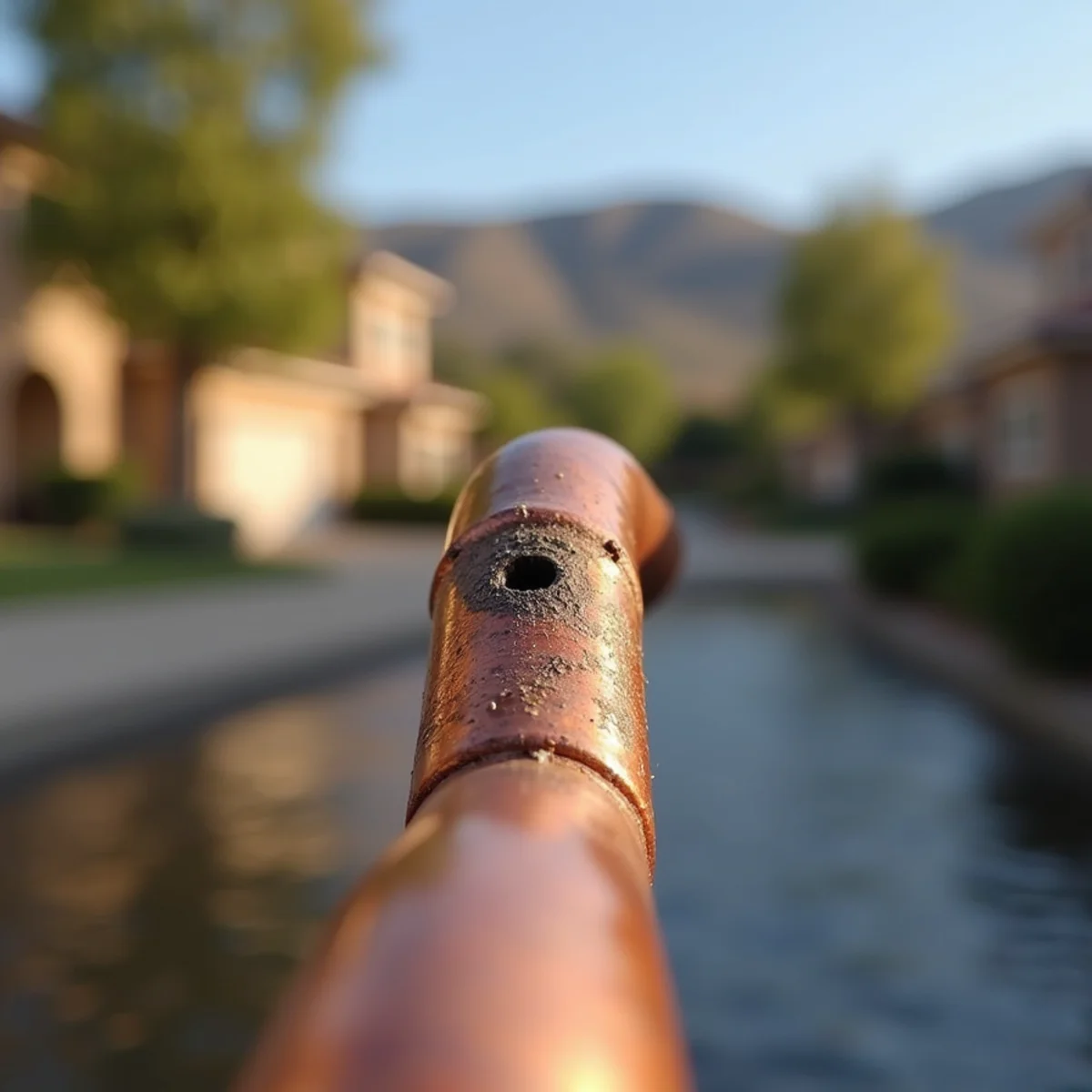
A copper supply line running through or beneath a concrete slab is held rigidly. The soil around it moves seasonally. That applies repeated mechanical stress at the points where the pipe is most constrained, year after year.
On its own that stress rarely breaks sound pipe. Combined with pitting corrosion from very hard EBMUD water thinning the pipe wall from the inside, it does — which is why slab leaks in this valley are best understood as two mechanisms working together rather than either one alone.
The same movement offsets sewer laterals at their joints, which both creates entry points for tree roots and reduces flow. And it stresses buried irrigation lines, which is why irrigation leaks are so common in the older established neighborhoods.
What It Does to Structures
- Hairline cracks in slabs and in stucco, particularly at corners and openings.
- Diagonal cracks running from the corners of windows and doors.
- Doors and windows that stick in one season and operate freely in another — a very characteristic sign.
- Cracked or lifted hardscape: driveways, patios and walkways separating from the house.
- Gaps opening between the house and an attached patio or porch slab.
- Grout cracking in tile floors, often in a line.
The Feedback Loop That Makes It Worse
Here is the part worth understanding, because it means these two problems amplify each other.
A slab leak puts water into the sub-slab soil continuously. That soil swells locally, in one area, while the surrounding soil follows its normal seasonal pattern. The result is differential movement concentrated exactly where the leak is — which can crack the slab and stress adjacent pipe.
Running the other way: differential soil movement stresses a pipe until it fails, and the resulting leak then wets the soil further and accelerates the movement. Either can start the cycle.
This is why, when we find cracking alongside plumbing symptoms, we investigate both rather than assuming which came first. Fixing the leak without recognizing the soil movement, or attributing everything to soil without checking for a leak, both leave half the problem in place.
Moisture Management Is the Actual Control
You cannot change the soil. What you can influence is how much its moisture content swings, and that is genuinely effective — the goal is consistency rather than dryness.
- Keep roof water away from the foundation. Extend downspouts several feet out; discharging at the base of a wall creates a permanently wet zone next to a permanently dry one.
- Maintain grading that slopes away from the house, and re-establish it when settlement reverses it.
- Water landscaping evenly around the perimeter rather than heavily on one side. Uneven irrigation creates exactly the differential you are trying to avoid.
- Fix irrigation leaks promptly — a buried leak keeps one area of soil saturated year-round.
- Be cautious about large trees very close to the foundation; they draw substantial moisture from one side during summer.
- Do not let the perimeter go completely dry in a drought year — some carriers and foundation specialists recommend modest, consistent perimeter watering to limit the summer contraction.
Telling Soil Movement From a Leak
Both produce cracks, sticking doors and uneven floors, and homeowners regularly spend money on the wrong one. The distinguishing feature is timing: soil movement is seasonal and reverses, while a leak is progressive and does not.
- Doors that bind in winter and free up in summer are soil movement. A door that has bound progressively worse over eighteen months regardless of season is not.
- Cracks that open and close with the seasons follow the clay cycle. Cracks that only ever widen point at something else.
- Movement affects the whole structure and shows in several rooms. A leak produces localised change around one area of the slab.
- Soil movement is silent. A supply leak under the slab frequently makes a running sound audible at night with everything shut off.
- A leak shows on the meter. Run the fifteen-minute test with every fixture closed — soil movement will not move the low-flow indicator.
- A hot-side leak produces a warm patch on the floor. Nothing about soil movement warms a slab.
- Both can be true at once, and often are — a long-running leak wets soil unevenly, which drives localised movement that then stresses more pipe.
Frequently asked questions
Sometimes both, and they reinforce each other. A leak saturates soil locally and causes differential swelling that cracks the slab; equally, soil movement can stress a pipe until it fails. When we see cracking alongside plumbing symptoms we investigate both rather than assuming which came first.
Generally no — earth movement is excluded from standard California homeowners policies. Water damage from a resulting pipe failure may still be covered, which is a different question from the foundation damage itself. The distinction matters when documenting a loss.
Manage the moisture consistently around the perimeter. Extend downspouts well away from the foundation, maintain grading that sheds water, water landscaping evenly rather than heavily on one side, and fix irrigation leaks promptly. Consistency matters more than dryness.
Consistent moisture is better for a slab on expansive clay than a dry season followed by saturation, and controlled perimeter watering is a recognised approach. The caution is that it has to be even and moderate — heavy watering in one spot creates exactly the differential movement you are trying to avoid, and running irrigation hard against the foundation causes its own problems. Even, modest, all the way round.
No. Hairline shrinkage cracks are normal in concrete and are present in most slabs in this valley. What warrants attention is a crack that is widening over time, one with vertical displacement so that one side sits higher than the other, or one accompanied by doors and windows going out of square. Those describe active movement rather than ordinary curing.
The short version
The ground here moves every year. You cannot stop it, but you can stop making it worse by keeping perimeter moisture even and roof water away from the foundation.
And when a slab leak does happen, we locate it precisely and dry the slab and the walls above it properly — because an undried slab is how this turns into a mold problem.