Why Your House Still Smells Musty After the Water "Dried"
That smell is a gas produced by active microbial growth. It is not a leftover odour — it means something is still wet right now.
Written by the San Ramon Water Damage Pros crew — IICRC-certified technicians working to the ANSI/IICRC S500 standard on water losses across San Ramon and the Tri-Valley. Guidance here reflects how we actually run jobs, not general advice.
A musty smell after a water loss is not a lingering reminder of what happened. It is a live signal. That odour is microbial volatile organic compounds — gas produced by growth that is actively metabolising right now, on something that is still damp.
So the question is never "how do I get rid of the smell." It is "what is still wet, and where." Masking it with an air freshener or an ozone treatment removes the signal and leaves the problem.
Water damage happening right now?
We answer live 24 hours a day and commit to a 60-minute response across San Ramon.
+1 (201) 277-9344The Most Likely Places
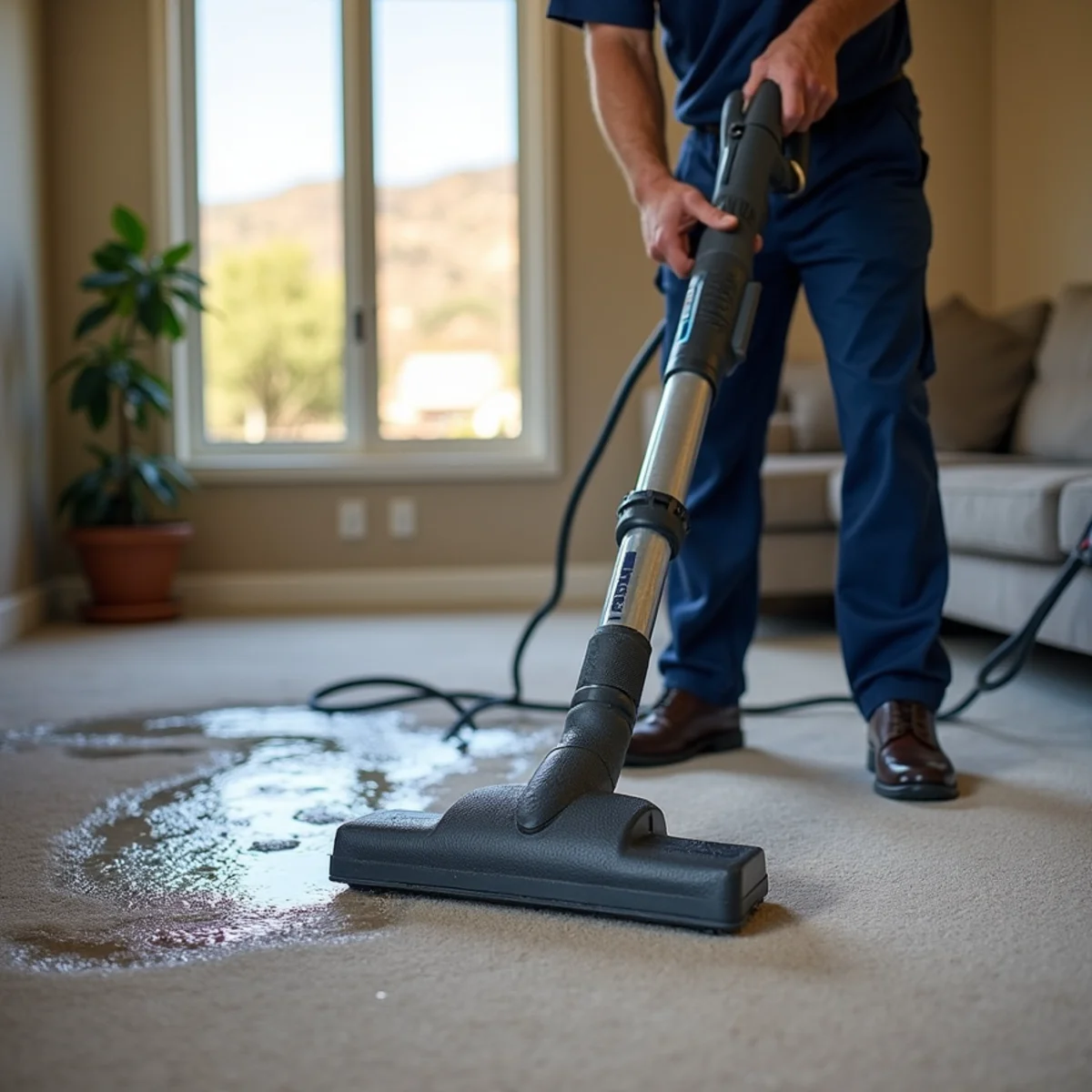
- Carpet pad that was never properly extracted. The face dried, the cushion did not, and it sits compressed with no airflow.
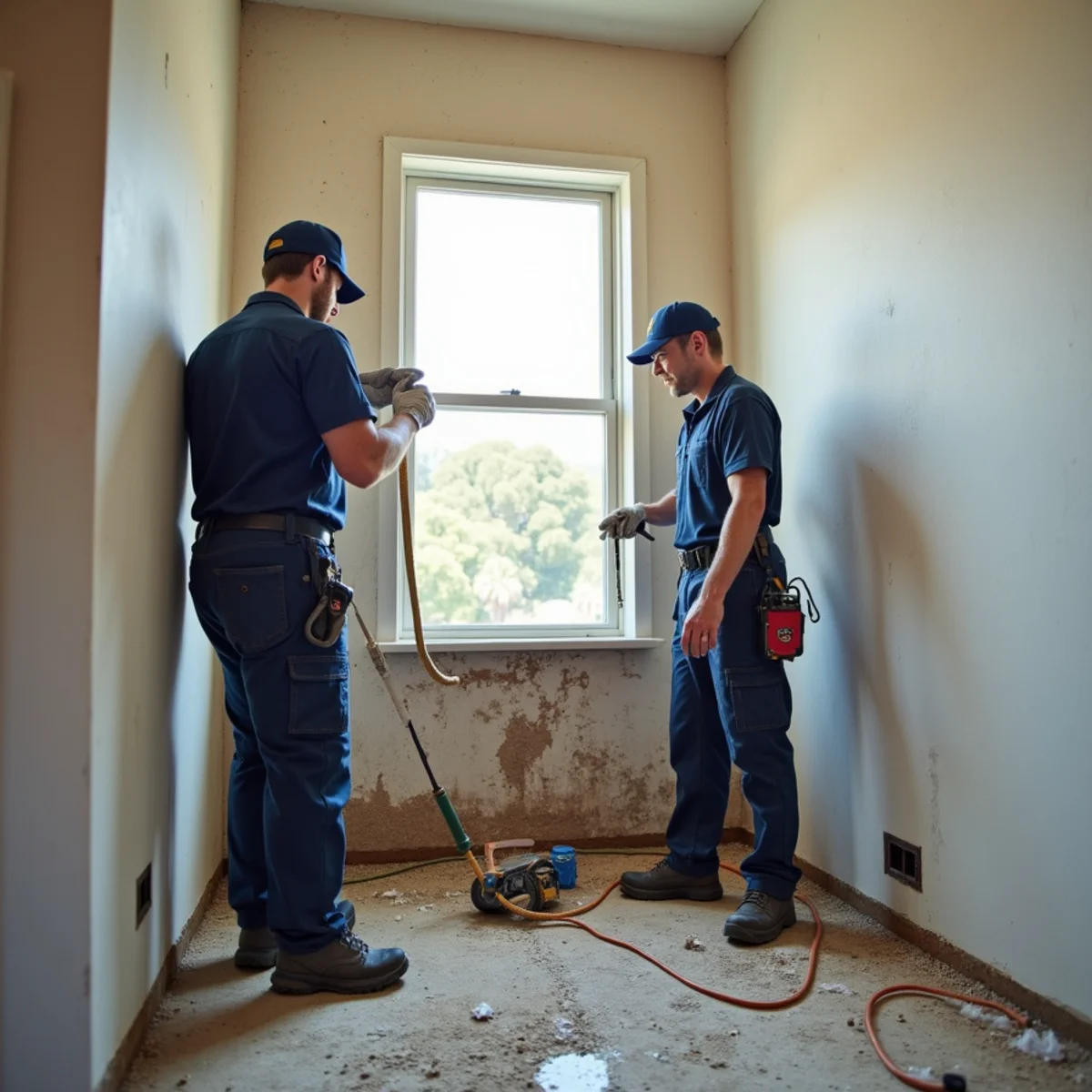
- Inside a wall cavity, particularly at the bottom plate, where water wicked and nobody opened it up.
- Under vinyl, laminate or engineered flooring, where water got beneath a floating floor and is now trapped.
- Wet insulation in a wall or attic, which holds moisture against framing for months and never recovers on its own.
- The subfloor beneath a floor covering that was replaced without drying what was underneath it.
- The crawl space, where standing water or a torn vapour barrier keeps feeding humidity upward into the house.
- Inside cabinet bases and toe-kick voids after a kitchen or bathroom leak.
- HVAC ductwork or the air handler, if either got wet or if the system ran during the loss.
Why the Smell Comes and Goes
People often report the odour is worse on some days than others, which makes it feel unreliable as a signal. It is not — the variation has straightforward causes.
Microbial activity increases with temperature and humidity, so warm days produce more gas. Air pressure changes and wind can push air out of a wall cavity or a crawl space into the living space. And running the HVAC changes pressure relationships throughout the house, which is why some people notice it most when the system kicks on.
The pattern is diagnostic. If the smell is strongest when the heating or air conditioning runs, look at the ducts and the air handler. If it is strongest on warm days near the floor, look down — crawl space or under a floor covering. If it is localized to one wall or closet, that is where to open up.
How This Happens After a "Completed" Job
Nearly every one of these calls traces back to the same root cause: the original drying was never verified against a dry standard. Somebody ran fans for a few days, the surfaces felt dry, the equipment came out and the room got put back together.
The specific failures we see repeatedly: equipment pulled during the flat part of the drying curve because readings had slowed; no dehumidification, so fans moved moisture into the air where it condensed elsewhere; wall cavities never opened, so airflow never reached the wet material; wet insulation left in place; and flooring replaced over a subfloor that was still holding moisture.
If nobody showed you daily moisture readings and a final verification, there is no evidence the structure ever reached a dry standard — and a musty smell weeks later is the evidence that it did not.
What Not to Do About the Smell
- Do not mask it. Air fresheners, plug-ins and scented products hide the only diagnostic signal you have.
- Do not rely on ozone treatment. It can knock down odour temporarily without touching the moisture or the growth producing it, and the smell returns.
- Do not paint over a stain hoping it settles the matter. Water stains bleed through standard paint, and the wall behind stays wet.
- Do not assume a dehumidifier in the room will fix it. If the moisture is inside a closed cavity or under a floor, room dehumidification does not reach it.
- Do not wait for it to fade. Growth spreads through material over time, so the remediation scope only gets larger.
What a Proper Investigation Looks Like
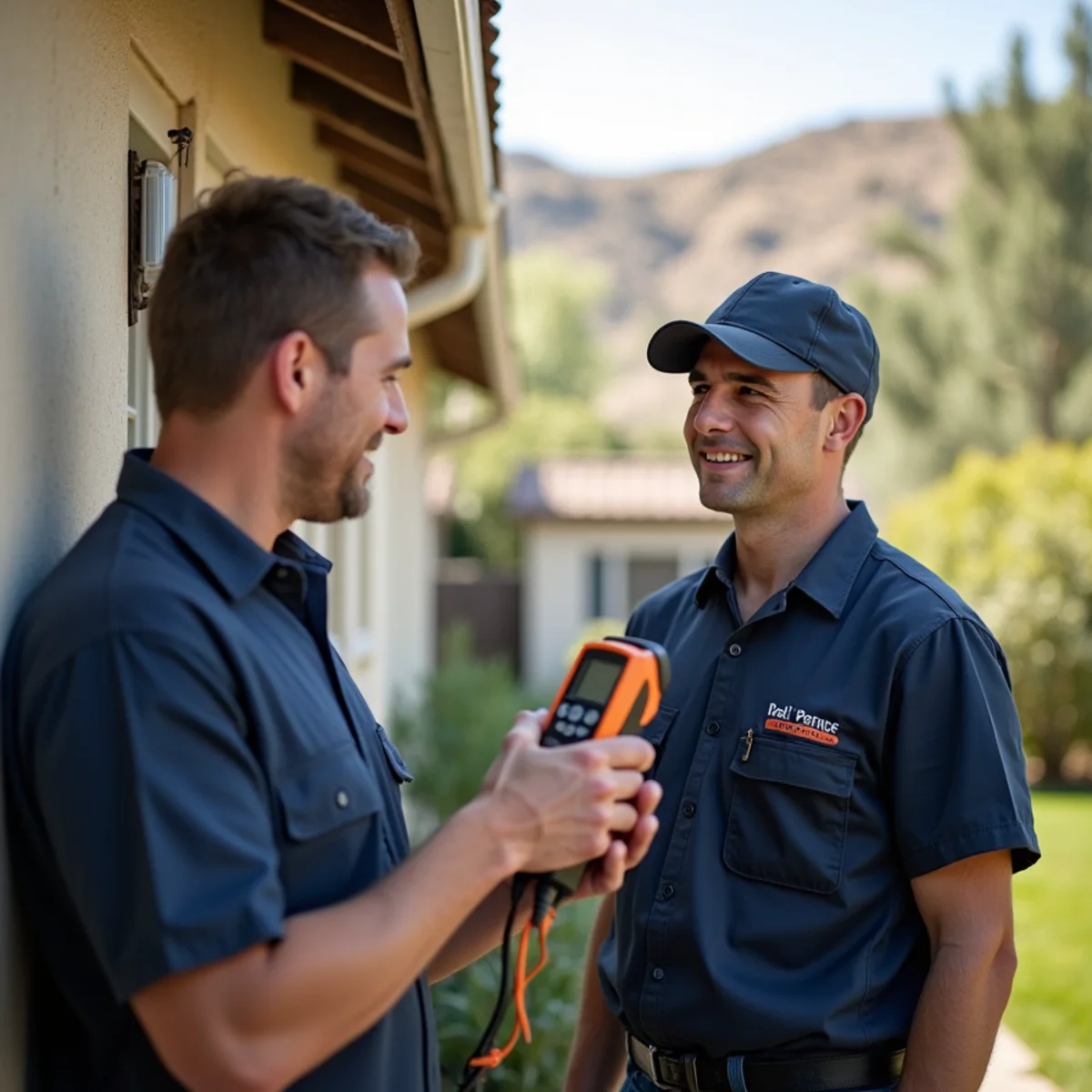
Finding the source is a measurement problem, not a guessing problem. Thermal imaging shows temperature differentials where evaporation is happening behind a surface. Pin and pinless moisture meters quantify moisture content in specific materials. A hygrometer identifies whether whole-house humidity is elevated, which points toward a crawl space or a large hidden source.
From there it is a matter of narrowing: which room, which wall, how high, and what is behind it. Only then does anything get opened up — and when it does, it is in the right place.
Once found, the fix is the standard sequence: remove the moisture source, remove contaminated porous materials under containment, HEPA clean, dry the assembly to a verified standard, then rebuild.
Tracing an Odour to Its Source
A musty smell is information, and it can usually be narrowed down considerably before anyone opens a wall. Working through the questions below in order will typically get you within a room or two of the source.
- Does it change with the weather? — Stronger on warm or humid days points at a crawl space or below-grade source, where warmth increases evaporation and the stack effect carries it upward into the living space.
- Is it worse near the floor? — Kneel down in each room. An odour that is noticeably stronger at floor level or near floor vents is coming from beneath the floor rather than from within the walls.
- Does it appear when the heating or cooling starts? — That points at the HVAC system itself — a drain pan, a condensate line, or growth in ductwork being distributed through the house every time the fan runs.
- Is it confined to one room, or worse behind one wall? — A localised odour usually means a wall cavity or a subfloor section, frequently at an exterior wall or below a bathroom on the floor above.
- Was there a previous water event in that area? — Even a job that was signed off can leave a pocket behind — insulation that was not removed, a cavity that was not opened, a subfloor under a vapour-retarding covering.
- Does it persist with windows open? — An odour that ventilates away is airborne and often manageable. One that returns within an hour of closing up is being generated continuously by a wet material somewhere in the building.
Frequently asked questions
It means active microbial growth of some kind on something damp. Whether it is mould, mildew or bacterial activity matters less than the fact that something is wet enough to sustain it — and that is the thing to find and fix.
Usually the drying was never verified. Equipment pulled early during the flat part of the curve, no dehumidification alongside the airflow, cavities never opened so the airflow never reached the wet material, or wet insulation left in place. Ask whether you were given daily moisture readings and a dry standard — if not, that is your answer.
It may reduce airborne particulate and make the room more comfortable, but it does nothing about the moisture and the growth producing the odour. The smell will persist and the affected material will keep degrading. Find the water.
Usually we can narrow it to a specific wall or floor section without opening anything. Moisture meters read through surfaces, thermal imaging shows evaporative cooling where moisture is present, and a borescope through a small hole in an inconspicuous place gives a direct look. Opening a wall is the last step rather than the first, and by then we already expect what is behind it.
Almost always one of three things: the moisture source was never corrected, so the conditions returned; an affected area outside the original containment was missed; or porous material that should have been removed was treated in place instead. A returning odour is a genuine finding rather than a nuisance, and it warrants reinvestigation rather than another round of treatment.
The short version
The smell is not residue — it is a live signal that something is wet right now. Find it with instruments rather than guesswork, fix the moisture source, and remediate what has grown.
We investigate persistent odours across San Ramon with thermal imaging and moisture mapping, and we tell you what we found rather than what we suspect.