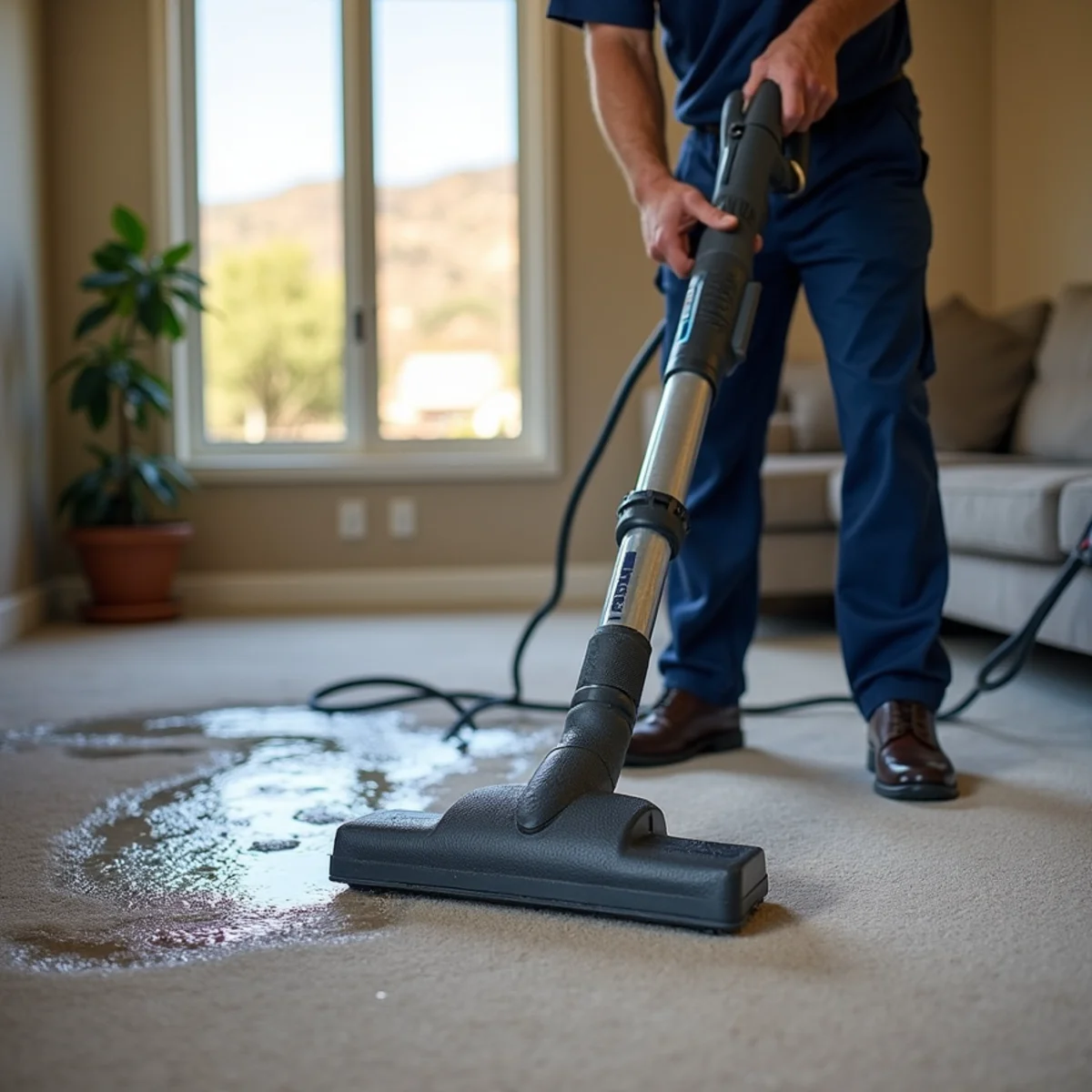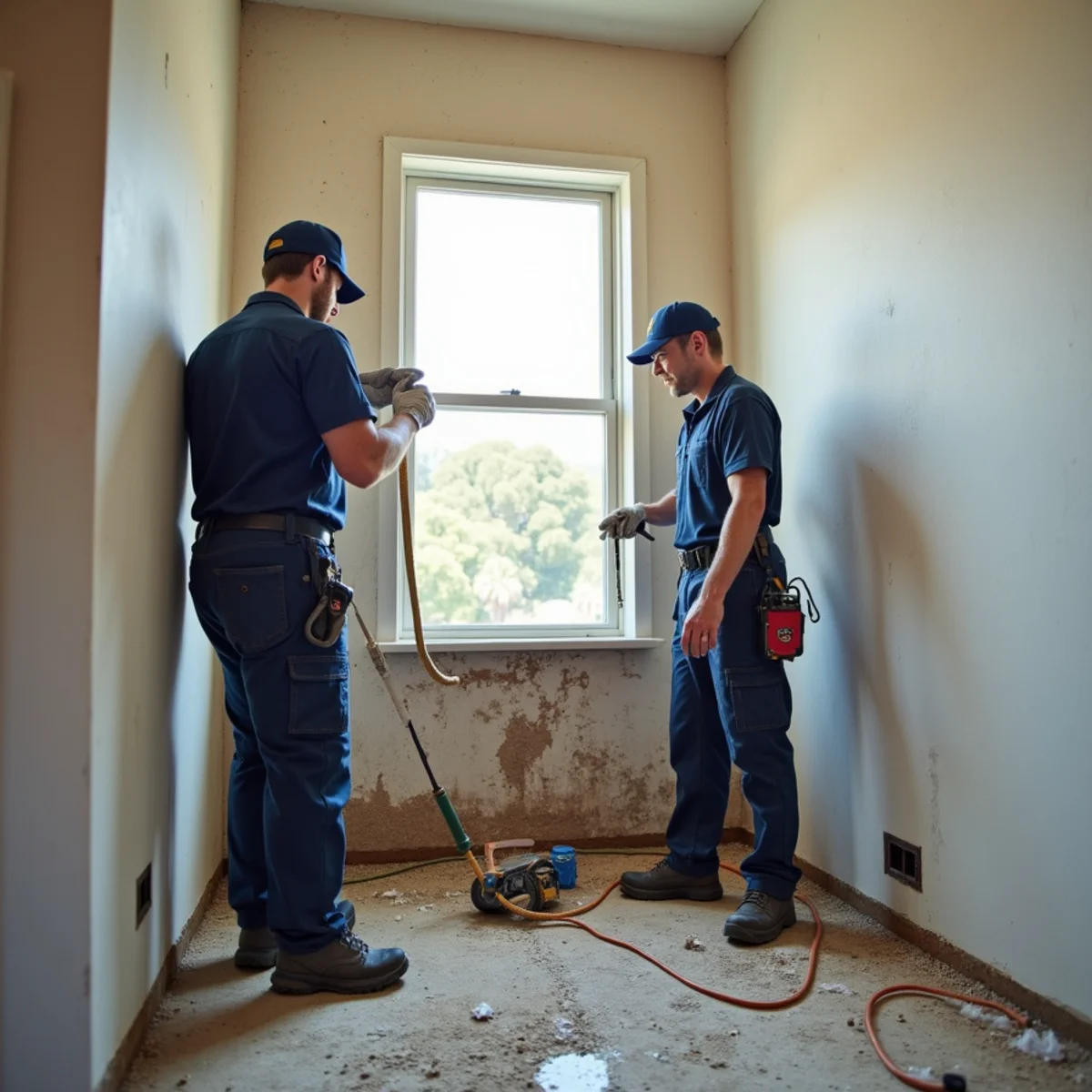
Stormwater Got Inside: What's Salvageable After a Flood and What Isn't
The rule is porosity, not appearance. Materials that absorb contaminated water into places you cannot verify clean have to go, however intact they look.
Written by the San Ramon Water Damage Pros crew — IICRC-certified technicians working to the ANSI/IICRC S500 standard on water losses across San Ramon and the Tri-Valley. Guidance here reflects how we actually run jobs, not general advice.
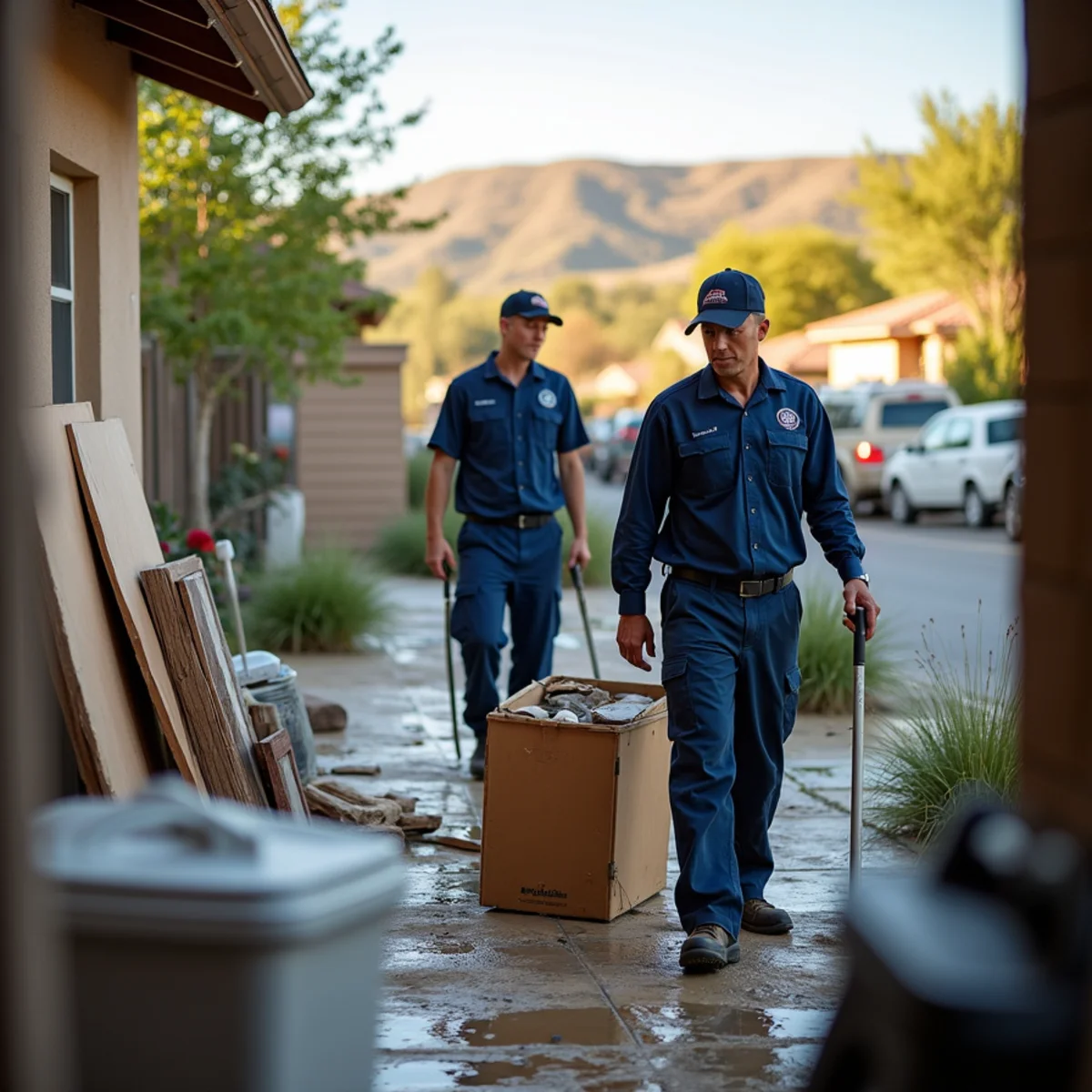
The disposal decisions after a flood frustrate homeowners more than any other part of the job, and they deserve an explanation rather than just an instruction. Things that look completely fine get thrown away, while things that look ruined get kept.
The logic is porosity. Storm water that has crossed the ground is Category 3 — contaminated with soil, organic matter, landscaping chemicals, street runoff and, during heavy rain when the sanitary system is loaded, sewage. Materials with open structure absorb that contamination into spaces that cannot be reliably cleaned or verified. Non-porous materials hold it only on the surface, where it can be cleaned and confirmed.
Water damage happening right now?
We answer live 24 hours a day and commit to a 60-minute response across San Ramon.
+1 (201) 277-9344Almost Always Disposed Of
- Carpet pad — every time, without exception, on Category 3 water.
- Fibreglass batt and blown cellulose insulation. Compacts, holds contamination, never recovers its R-value.
- Particleboard and MDF furniture, and the particleboard bases and shelves inside otherwise good cabinetry.
- Mattresses, box springs, pillows and upholstered furniture that took flood water.
- Drywall below the water line, cut back above the highest measured moisture point.
- Laminate flooring, which swells irreversibly at the seams.
- Cardboard boxes and their paper contents, unless individually valuable enough to justify document recovery.
- Food, including sealed packages and anything in a refrigerator that lost power for an extended period.
- Cosmetics, medicines and baby items that contacted flood water.
Usually Salvageable
- Solid wood furniture — cleanable and dryable, though finishes may need refinishing.
- Framing lumber and structural sheathing. Semi-porous, so cleaned and dried rather than removed.
- Sealed concrete, ceramic tile and natural stone.
- Metal, glass and hard plastics — non-porous, so surface cleaning and disinfection is sufficient.
- Clothing and linens, through hot-water laundering or professional cleaning, provided they were not sitting in it for days.
- Dishes, cookware and hard-surface kitchenware, after washing and disinfecting.
- Most electronics that were not submerged, if they are dried professionally before anyone tries to power them on.
The Genuinely Difficult Cases
Some items sit in between and the decision depends on specifics rather than on a rule.
Hardwood flooring depends on how long it was submerged and whether the subfloor beneath it can be decontaminated. Solid hardwood caught quickly, with specialty drying mats, sometimes survives — but on Category 3 water the subfloor beneath is the deciding factor.
Cabinetry: the boxes often survive if they are plywood, while the toe-kicks and particleboard bottom shelves do not. Frequently the answer is partial replacement rather than all or nothing.
Antiques, artwork and irreplaceable items justify specialist conservation attempts that would not make sense for ordinary contents. Do not dispose of them without asking.
Photographs and documents are recoverable more often than people expect, but the window is short. Freezing them buys time — genuinely, put wet photographs in the freezer — until a document recovery specialist can work on them.
Before You Throw Anything Away
There is a real tension on Category 3 losses: contaminated porous items should not stay in the house, but your adjuster needs to see what was lost. The resolution is documentation.
- Photograph every item before disposal, including model and serial numbers where visible.
- Make a written list with approximate age, purchase price and condition.
- Group similar items in photographs rather than shooting each sock individually — adjusters accept reasonable grouping.
- Have your restoration company document the disposal as part of the job file.
- Ask your adjuster whether they want to inspect anything before it goes. Many will accept photographic documentation on a Category 3 loss precisely because keeping the material is a health issue.
Cleaning What You Keep
Anything that contacted Category 3 water and is being kept needs cleaning and then disinfecting — in that order, because a disinfectant applied over soil does not work. Clean first to remove the soil, then apply an appropriate EPA-registered product and allow the contact time on the label.
Wear gloves and eye protection, and do not do this in an enclosed space without ventilation. If a large volume of contents needs processing, off-site cleaning is usually both safer and more effective than doing it in a contaminated building.
The First Forty-Eight Hours for Contents
Contents deteriorate on a much faster clock than structure, and the decisions in the first two days determine how much of it survives. Everything below is worth doing before anyone starts on the building itself.
- Get wet paper apart within hours. Documents and photographs fuse as they dry, and once pages have bonded they cannot be separated without damage.
- Freeze what you cannot deal with immediately. Sealing wet documents and photographs in bags and freezing them halts deterioration and buys weeks for a proper decision.
- Lift furniture off wet flooring and put foil or blocks under the legs. Wooden legs wick water upward and stain, and finishes transfer onto wet carpet.
- Photograph every item before it moves, individually where it has value. Anything disposed of without a photograph is difficult to claim later.
- Open drawers and cabinet doors rather than leaving them shut. Enclosed volumes hold humidity and grow the first colonies in the house.
- Get soft furnishings out of the affected rooms even if they seem dry. Upholstery and mattresses absorb far more than they show and raise the humidity of the whole space.
- Do not run electronics that got wet to see whether they work. Have them assessed; powering a wet device usually converts a repairable item into a written-off one.
Frequently asked questions
Because porous materials absorb contaminated water into spaces that cannot be cleaned or verified. A carpet pad or a mattress that looks intact has drawn Category 3 water deep into its structure, and there is no way to demonstrate it is safe. Appearance is not the criterion; porosity is.
Often, if you act quickly. Put them in the freezer — genuinely — which stops deterioration and buys time until a document recovery specialist can work on them. The main risks are ink migration and pages fusing together, both of which accelerate as they sit wet.
Ask them, but do not keep contaminated porous material in the house indefinitely waiting. Photograph everything thoroughly, list it with age and value, and have your restoration company document the disposal. Most adjusters accept that approach on a Category 3 loss for exactly this reason.
Usually not, and this is the one people most want a different answer to. Storm water is Category 3, and upholstery and its filling are porous throughout — there is no way to decontaminate the interior of a sofa reliably. Solid wood frames can sometimes be salvaged and reupholstered where the piece justifies it, which is worth exploring for genuinely valuable furniture and rarely for anything else.
Tell us on the first visit and we will treat them differently. Photographs, documents and textiles can often be stabilised by freezing and then handled by a specialist, and the outcome is far better than most people expect. What loses these items is not the water — it is the twenty-four hours spent dealing with the building first because nobody mentioned they were there.
The short version
Porous absorbs and cannot be verified clean; non-porous holds contamination on the surface and can. That single distinction explains nearly every disposal decision on a flood job.
We handle storm flooding across San Ramon as the Category 3 loss it is, and we document every disposal so your claim reflects what you actually lost.