Tri-Valley Hard Water Is Eating Your Copper Pipes: What San Ramon Homeowners Can Do About Pinhole Leaks
At 16 to 18 grains per gallon, Tri-Valley water is very hard — and the pinhole leaks it produces arrive in clusters, not one at a time.
Written by the San Ramon Water Damage Pros crew — IICRC-certified technicians working to the ANSI/IICRC S500 standard on water losses across San Ramon and the Tri-Valley. Guidance here reflects how we actually run jobs, not general advice.
If you live in San Ramon, Danville, Dublin or Pleasanton and your house was built in the 1980s or 90s, there is a reasonable chance you have already had a pinhole leak — or you will. It is the most common plumbing failure in this area and the cause is in the water supply.
EBMUD water in the Tri-Valley runs 16 to 18 grains per gallon. Anything above about 10.5 is classified as very hard, so we are comfortably in that range, and that mineral content does specific, cumulative things to copper.
Water damage happening right now?
We answer live 24 hours a day and commit to a 60-minute response across San Ramon.
+1 (201) 277-9344What Pitting Corrosion Actually Is
Copper is a good plumbing material and it normally forms a protective oxide layer on its inner surface that slows further corrosion. What hard water does over decades is disrupt that layer unevenly.
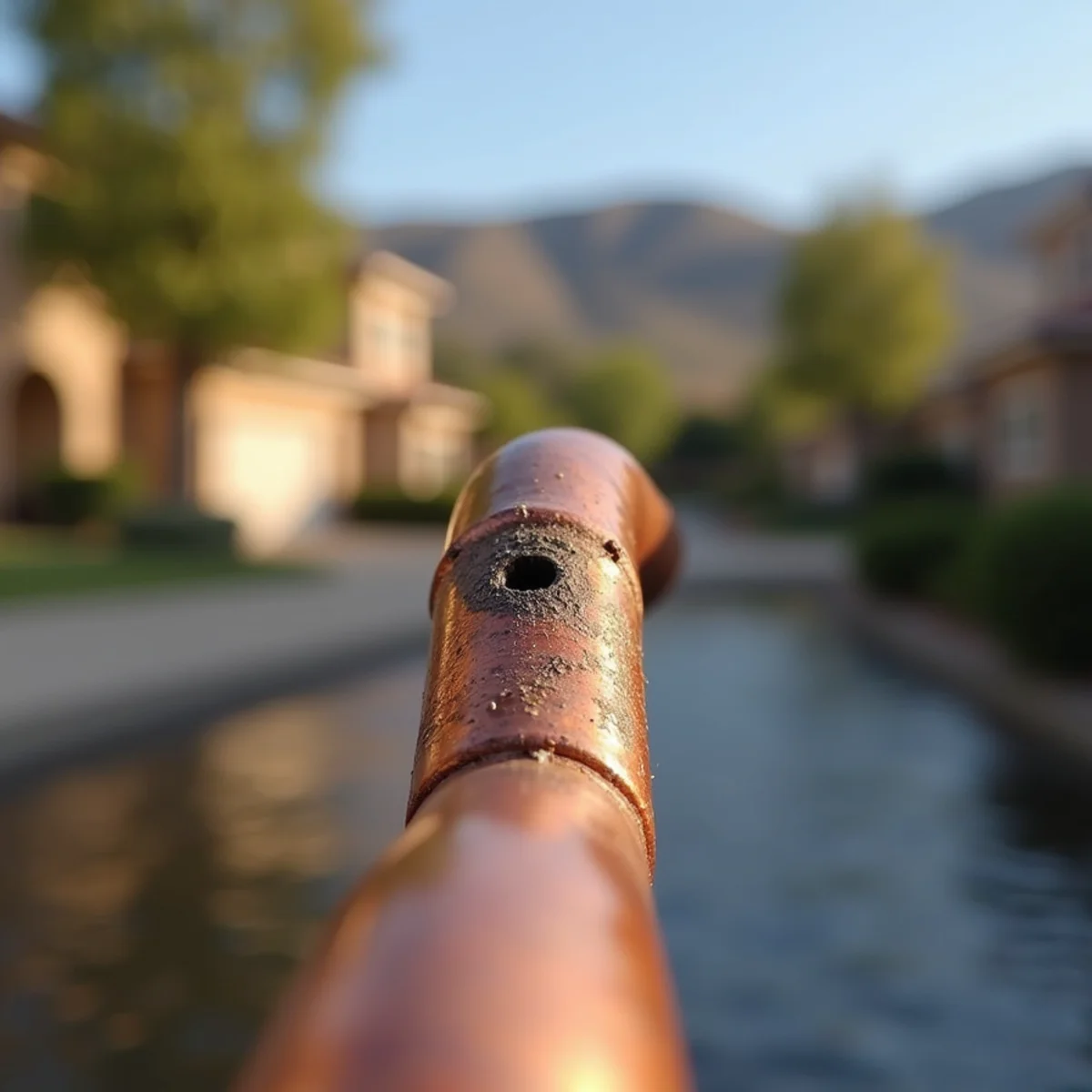
Where the protective layer breaks down, corrosion concentrates in a small area rather than spreading uniformly. That localized attack eats a pit into the pipe wall from the inside, and because all the corrosion energy is focused on one spot, it goes deep rather than wide. Eventually the pit penetrates the wall and pressure pushes water through a hole often smaller than a pinhead.
The name is literal. It is a pin-sized hole in an otherwise structurally sound pipe.
Why They Arrive in Clusters
This is the part homeowners find hardest to accept, and it is the most financially important thing on this page.
Every supply run in your house was installed at the same time, from the same material, and has carried the same water at the same temperature and pressure for the same number of years. The conditions that produced the first pinhole exist identically on every other run.
So the first failure gets spot-repaired and treated as bad luck. Eighteen months later there is a second, in a different wall. Then a third. Each one costs the plumbing repair plus drywall, texture, paint and sometimes flooring — and the homeowner has usually spent more on three repairs and three drywall patches than a repipe would have cost from the start.
The practical rule: a second pinhole within a couple of years in an 80s or 90s home is not bad luck. It is the system reporting its condition.
Where They Show Up
- Inside wall cavities, which is why the first sign is often a stain rather than visible water.
- Above ceilings, where the water runs along framing and soaks through several feet from the actual hole.
- In the attic on upper-floor supply runs.
- On hot-water lines more often than cold, because higher temperature accelerates the chemistry.
- At elbows and fittings, where flow turbulence disrupts the protective layer more aggressively.
- Under slabs in older homes, where they present as slab leaks rather than visible pinholes.
What Helps, and What Does Not
A pressure regulator — genuinely useful, cheap
High static pressure accelerates everything and stresses fittings. If your incoming pressure is above roughly 80 psi, a regulator is inexpensive and reduces stress throughout the system. Worth testing with a hose-bib gauge, which costs very little.
A water softener — useful, but understand what for
Softening reduces scale accumulation downstream and meaningfully extends water heater life. What it does not do is reverse pitting already present in existing pipe. Think of it as protecting a repipe rather than as an alternative to one.
Repiping — the actual solution
Replacing the supply system, normally routed overhead through the attic and down interior walls. It is the definitive answer and it also removes the under-slab exposure in slab-on-grade homes. Modern materials — PEX in particular — are not subject to this corrosion mechanism at all.
Repeated spot repairs — the expensive default
Reasonable for a first failure. Past the second, you are paying the plumbing cost plus the drywall and finish cost repeatedly, on a system that will keep producing failures. Run the arithmetic honestly against a repipe quote.
The Neighborhoods Where We See It Most
- Twin Creeks — 1980s–90s tracts, original copper at classic pinhole age.
- Live Oak — same era, same pattern, clustered around Live Oak Park.
- Greenbrook — 1980s–90s family housing with heavy household demand.
- Silver Creek — 1990s–2000s, slightly newer but entering the window.
- Del Valle and the equivalent Pleasanton and Danville tracts of the same era.
- Central San Ramon and the older neighborhoods, where it shows up as slab leaks instead.
Catching One Before It Does Damage
- Run the meter test occasionally: shut every fixture and watch the low-flow indicator for fifteen minutes.
- Watch your EBMUD bill for unexplained increases — a continuous leak runs 24 hours a day and shows there first.
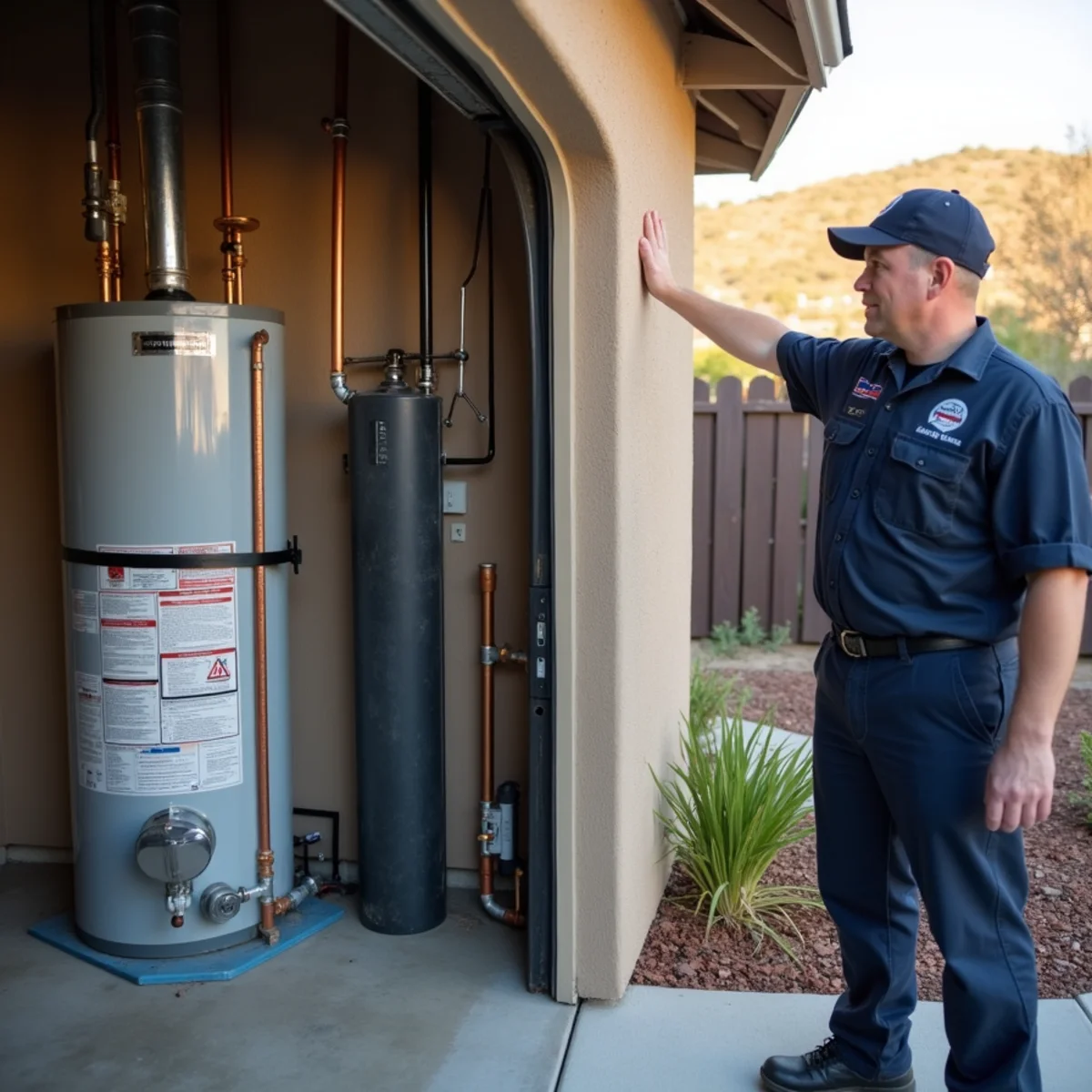
- Look at exposed copper in the garage, under sinks and in the crawl space for green or white crusty deposits, which indicate the same process on runs you cannot see.
- Listen for running water with everything off.
- Take a stain on a wall or ceiling seriously the first time rather than painting over it.
What Hard Water Costs You Beyond the Pipes
Pinhole leaks are the dramatic consequence of very hard water, but they are not the expensive one for most households. Scale accumulates steadily in everything that heats or controls water, and it shortens service lives quietly across the whole house.
- Water heaters lose efficiency as sediment builds on the base and around the element, and they reach end of life earlier than their rated figure.
- Dishwashers and washing machines fail at the inlet valve, where scale prevents the valve seating fully — which is also how a machine floods a kitchen while nobody is using it.
- Tankless heaters need descaling on a schedule; skipped, they lose output and eventually fault.
- Faucet cartridges and shower valves stiffen and drip, and the drip is what people notice rather than the cause.
- Toilet fill valves scale up and pass water silently, which is the single most common source of an unexplained bill.
- Ice makers and refrigerator water lines block or leak at the connection, and the leak is behind an appliance nobody moves.
- Angle stops seize in place, which is only discovered at the moment somebody needs to close one in an emergency.
Frequently asked questions
EBMUD water in the Tri-Valley runs roughly 16 to 18 grains per gallon, which is classified as very hard — anything above about 10.5 grains falls in that category. That mineral content drives pitting corrosion inside copper supply lines over the course of decades.
It slows further scale accumulation and meaningfully extends water heater life, but it does not reverse pitting already present in existing pipe. It is best understood as protection for a repipe rather than an alternative to one.
Generally from the second or third pinhole. Each failure costs the plumbing repair plus drywall, texture, paint and sometimes flooring, and the conditions that caused it exist on every other run in the house. Once you are repeating that cycle every year or two, the repipe is the cheaper total.
For most households here it pays back over time, though not in the way people expect. The savings come from appliance and heater life and from reduced repair frequency rather than from the pipes, and they accumulate slowly. If you are planning to repipe anyway, doing both at once is the sensible sequence — new pipe carrying the same untreated water starts the same clock over.
PEX is not subject to the pitting corrosion that produces copper pinholes, which is a genuine advantage in this water. It does not make the water any softer, so scale still accumulates in heaters, valves and appliances exactly as before. Repiping in PEX removes one failure mode rather than solving the underlying water chemistry.
The short version
Very hard water pits copper from the inside, and because every pipe in your house has the same history, the failures come in clusters rather than singly.
We locate pinhole leaks precisely, handle the drying and repair, and give you an honest read on whether your house has reached repipe territory.