The Calaveras Fault Earthquake Swarm: How Seismic Activity Causes Hidden Pipe Breaks Across the San Ramon Valley
The plumbing failures after a swarm rarely happen during the shaking. They show up days later, in pipe that was already marginal.
Written by the San Ramon Water Damage Pros crew — IICRC-certified technicians working to the ANSI/IICRC S500 standard on water losses across San Ramon and the Tri-Valley. Guidance here reflects how we actually run jobs, not general advice.
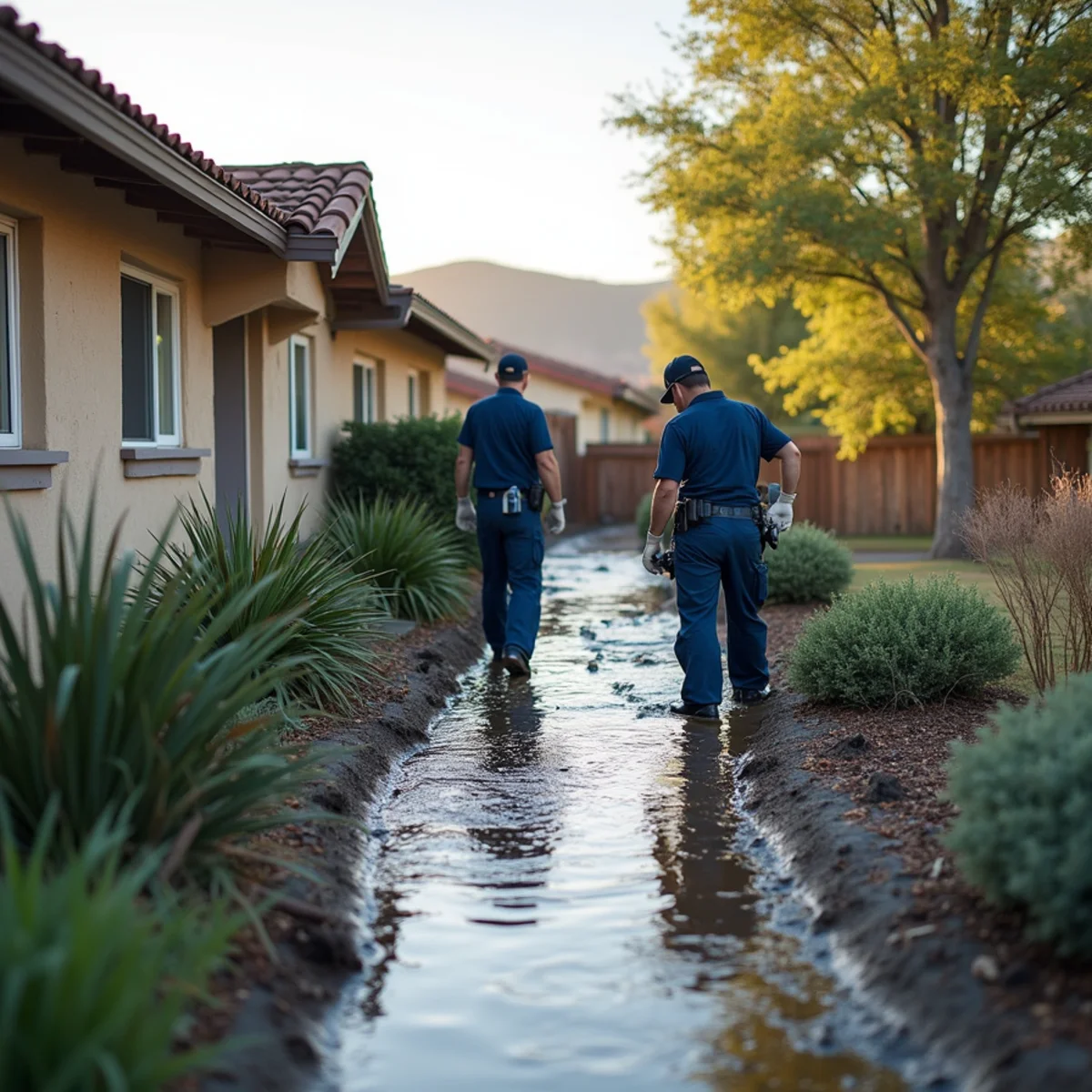
The San Ramon Valley sits on the Calaveras Fault system, and this area has a well-documented history of earthquake swarms — clusters of small to moderate events over days or weeks rather than a single main shock. The 2015 San Ramon swarm is the most-studied local example.
The Las Positas Fault lies to the south, and USGS monitoring of this segment is ongoing for good reason. For most residents a swarm is a series of unremarkable jolts. For plumbing that has already been degrading for forty years, it is a series of loading events — and the failures that result usually show up after the shaking has stopped.
Water damage happening right now?
We answer live 24 hours a day and commit to a 60-minute response across San Ramon.
+1 (201) 277-9344Why Failures Appear Days Later
Seismic movement does not usually break a sound pipe. What it does is finish off a compromised one.
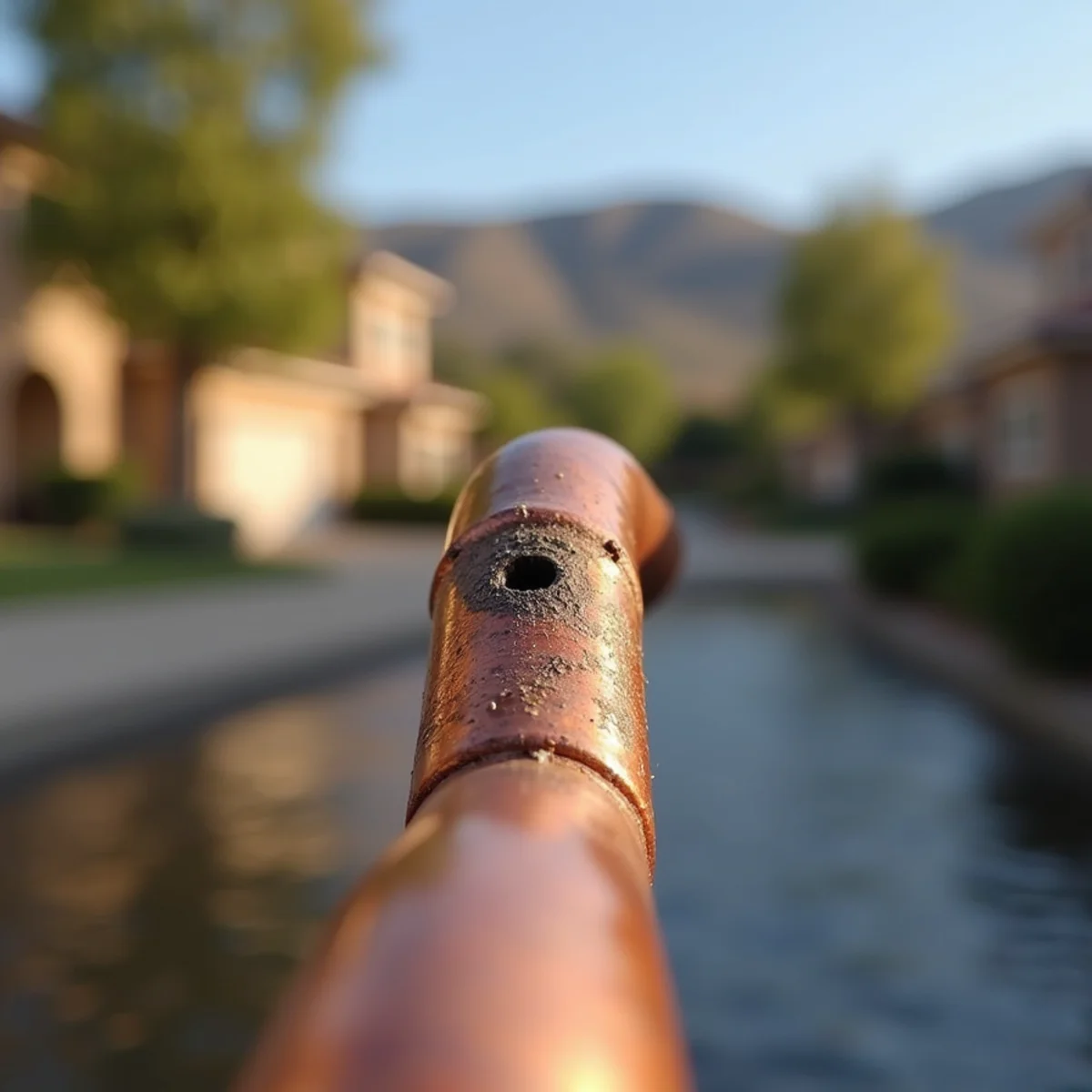
Consider a copper supply line under a slab that has been pitting from the inside for four decades on very hard water. The wall at the pit is thin but intact and holding pressure. Ground movement flexes the assembly, works the joint, and turns a thin spot into an opening — or opens a hairline crack that then propagates over the following days under normal pressure cycling.
Because the failure is progressive rather than instantaneous, and because a slab leak or an in-wall leak has no visible symptom at first, homeowners routinely do not connect the two events. They report "my pipe burst last Tuesday" without mentioning the shaking a week earlier.
What Actually Fails
- Water heater connections — the single most common and most preventable failure. A tank that shifts shears its rigid gas and water connections at the top.
- Under-slab supply lines already thinned by pitting corrosion, held rigidly in concrete while the ground moves.
- Old galvanized supply pipe, which is brittle and corroded internally in the oldest San Ramon homes.
- Cast iron drain lines, which crack rather than flex.
- Sewer laterals, particularly clay tile, which offsets at the joints.
- Buried service lines where they enter the structure — the transition point concentrates stress.
- Rigid connections at fixtures where flexible connectors were never fitted.
The Water Heater Is the Priority
If you do one thing after feeling an earthquake, check the water heater. It is the highest-consequence, easiest-to-inspect item in the house.
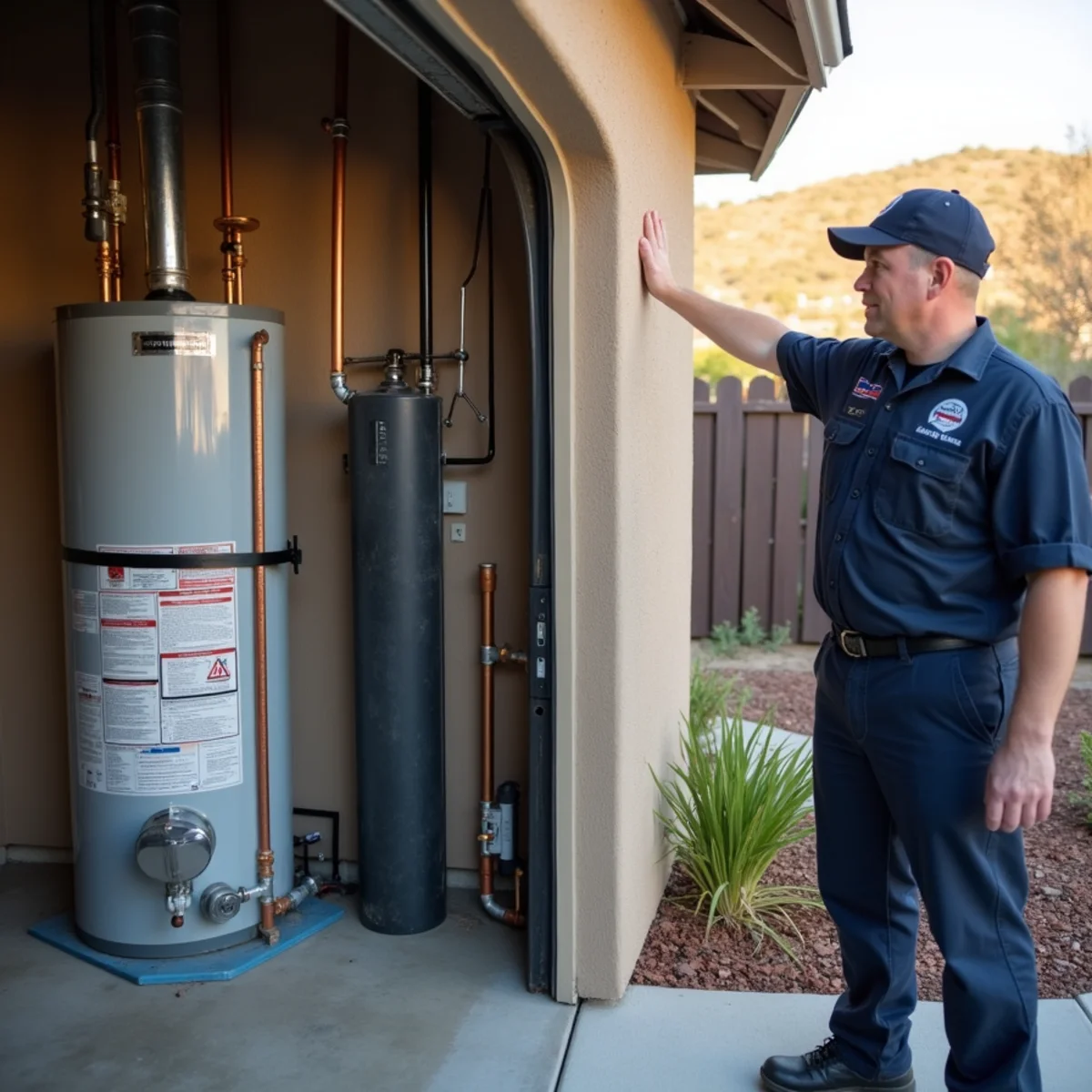
California Health & Safety Code §19211 requires water heaters to be braced, anchored or strapped against horizontal displacement — two straps, one in the upper third and one in the lower third of the tank, anchored into structure rather than into drywall. It applies at sale and on replacement, and in a valley on an active fault system it is functional rather than bureaucratic.
The failure mode is specific: an unstrapped tank walks or tips during shaking, and the rigid connections at the top break. A sheared gas line is a fire and asphyxiation hazard. A broken water connection is an uncontrolled flood — into a garage in most homes, or down through the ceilings in the Dougherty Valley, Gale Ranch and Windemere homes where the tank sits on an upper-floor platform.
Flexible connectors at both water and gas substantially reduce the chance of a rigid line shearing. The whole upgrade — straps plus flexible connectors — is inexpensive and takes an afternoon.
Your Post-Earthquake Checklist
 1
1Check for gas first
If you smell gas or hear hissing, leave immediately and call from outside. Do not switch anything on or off.
 2
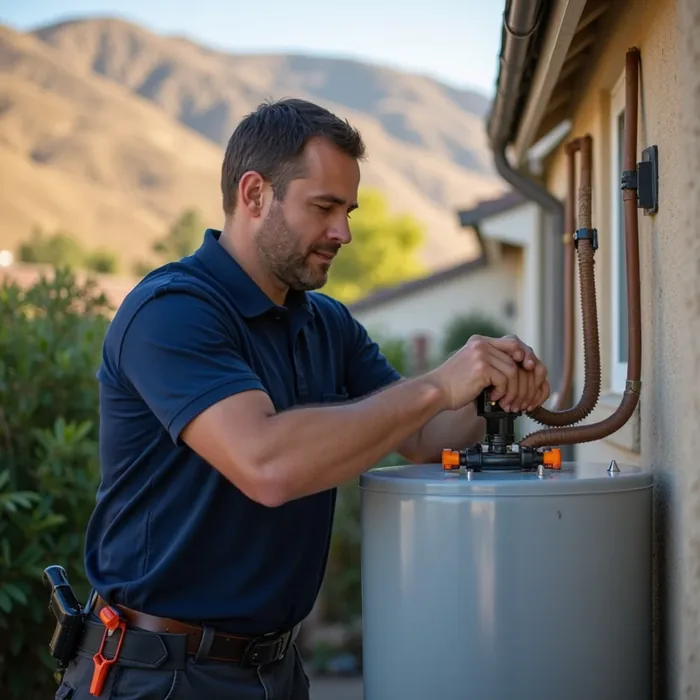
2Inspect the water heater
Straps intact and tight, tank not shifted on its base, no water at the base, connections at the top undisturbed.
 3
3Run the meter test
Shut every fixture and appliance and watch the low-flow indicator on the EBMUD meter for fifteen minutes. Any movement means water is escaping somewhere.
 4
4Walk the house listening
In a quiet house with everything off, listen for running water in walls or under the floor.
 5
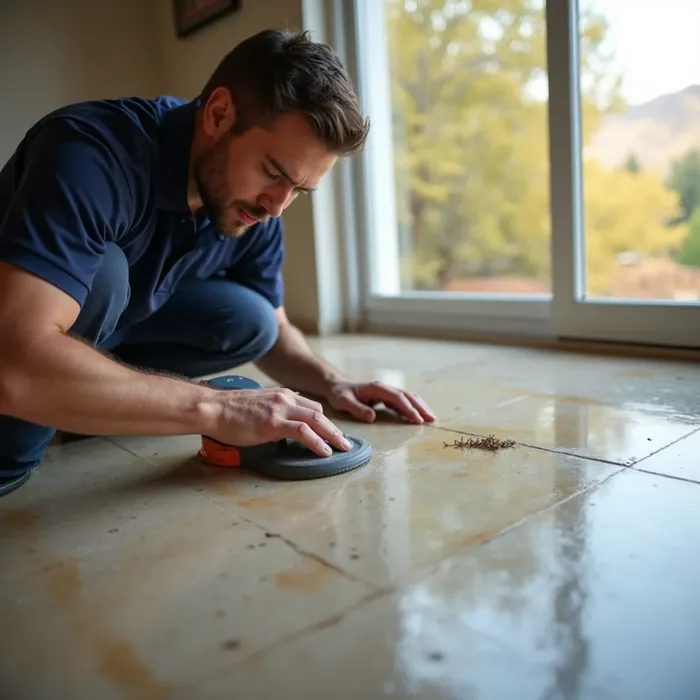
5Check floors for warm spots
A new warm patch on a slab floor indicates a hot-side slab leak that was not there before.
 6
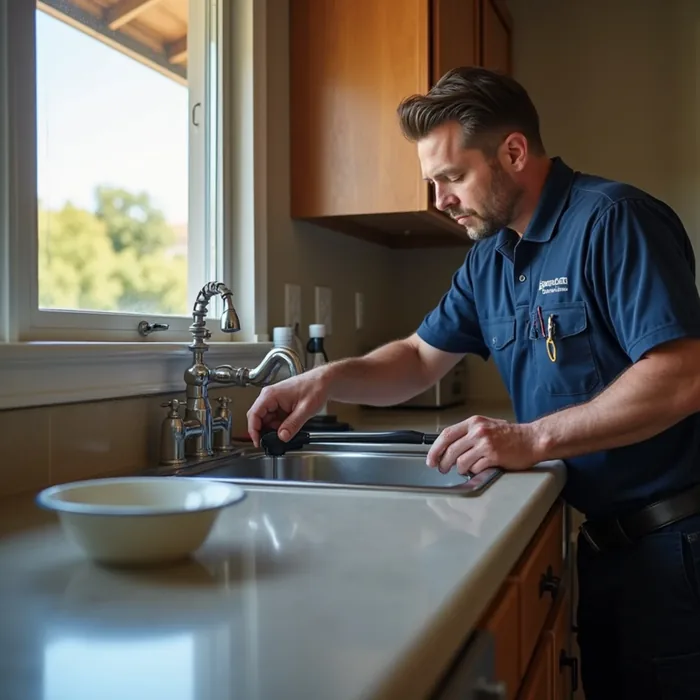
6Look under sinks and in the garage
Exposed connections, angle stops and supply lines — check for drips, and check whether anything looks stressed or has moved.
 7
7Keep watching for two weeks
Progressive failures take time to declare themselves. Watch your next EBMUD bill closely.
Insurance: An Important Distinction
This one catches people out. Earthquake damage is excluded from standard California homeowners policies and requires separate earthquake coverage. But the resulting water damage is often treated differently from the structural earthquake damage — many policies cover sudden and accidental water discharge as its own covered peril regardless of what precipitated it.
That means a burst pipe following an earthquake may well be covered under your standard policy even without earthquake insurance, while cracks in your foundation from the same event would not be. The specific wording varies by carrier, so it is genuinely worth reading your policy or asking your agent rather than assuming you are not covered.
Either way, document the timeline: the date you felt shaking, the date you noticed symptoms, and the date the failure was confirmed.
What to Secure Before the Next One
Almost all earthquake-related water damage in ordinary homes comes from a small number of predictable points. None of the mitigation below requires an engineer, and all of it is worth doing on an unremarkable weekend rather than after an event.
- Water heater strapping: two straps, upper and lower third of the tank, anchored into structure rather than into drywall. This is both the highest-risk item and the cheapest to fix.
- Flexible connectors at the heater. Rigid copper connections snap when a tank shifts; corrugated flexible connectors absorb the movement.
- A flexible gas connector on any gas appliance, for the same reason and with far worse consequences if it fails.
- Know where the main water shutoff is and confirm it turns. Exercising it twice a year is what makes it work when it matters.
- Secure any freestanding appliance that could shift and take a supply line with it — a washing machine on a raised platform is the common one.
- Fit an automatic shutoff on the main if the house is regularly empty. It responds to the failure immediately whether or not anyone is home.
- Photograph your plumbing and appliances now. Establishing what was intact before the event is far easier than arguing about it afterwards.
Frequently asked questions
Yes, and it is common. Seismic movement rarely breaks sound pipe — it finishes off pipe that was already corroded or stressed. A thinned section can open under normal pressure cycling in the days that follow, and a slab or in-wall leak produces no visible symptom at first. Post-earthquake plumbing calls reliably arrive as a wave rather than immediately.
Yes. Health & Safety Code §19211 requires water heaters to be braced, anchored or strapped against earthquake displacement, with straps in the upper and lower third of the tank anchored into structure. It applies at sale and on replacement, and on the Calaveras Fault system it prevents the single most common post-quake water loss.
Possibly, even without earthquake coverage. Structural earthquake damage requires a separate policy, but many standard policies treat sudden and accidental water discharge as its own covered peril. The wording varies by carrier — worth checking your policy specifically rather than assuming either way.
At least a fortnight, and the check is cheap enough to repeat weekly for a month. A joint worked loose by shaking can pass a meter test on day one and fail on day nine as it continues to weep and erode. The single test people rely on is the one taken immediately, which is exactly the one most likely to miss a progressive failure.
For plumbing, sometimes more. A swarm delivers repeated moderate loading over days or weeks rather than a single event, and joints that have already corroded for decades fail under repetition rather than under peak force. That is the specific mechanism behind hidden pipe breaks after a swarm, and it is why the delayed inspection matters here.
The short version
Check the water heater straps, run the meter test, and keep watching for two weeks. The failures that follow a swarm are usually in pipe that was already on borrowed time.
We respond across San Ramon 24 hours a day, and we will document the timeline properly so the claim reflects what actually happened.