Water Heater Flooded the Garage: Emergency Steps Before Help Arrives
A failed tank releases 40 to 75 gallons at once — and then keeps refilling. Two valves stop it. Here is where they are and what to do next.
Written by the San Ramon Water Damage Pros crew — IICRC-certified technicians working to the ANSI/IICRC S500 standard on water losses across San Ramon and the Tri-Valley. Guidance here reflects how we actually run jobs, not general advice.
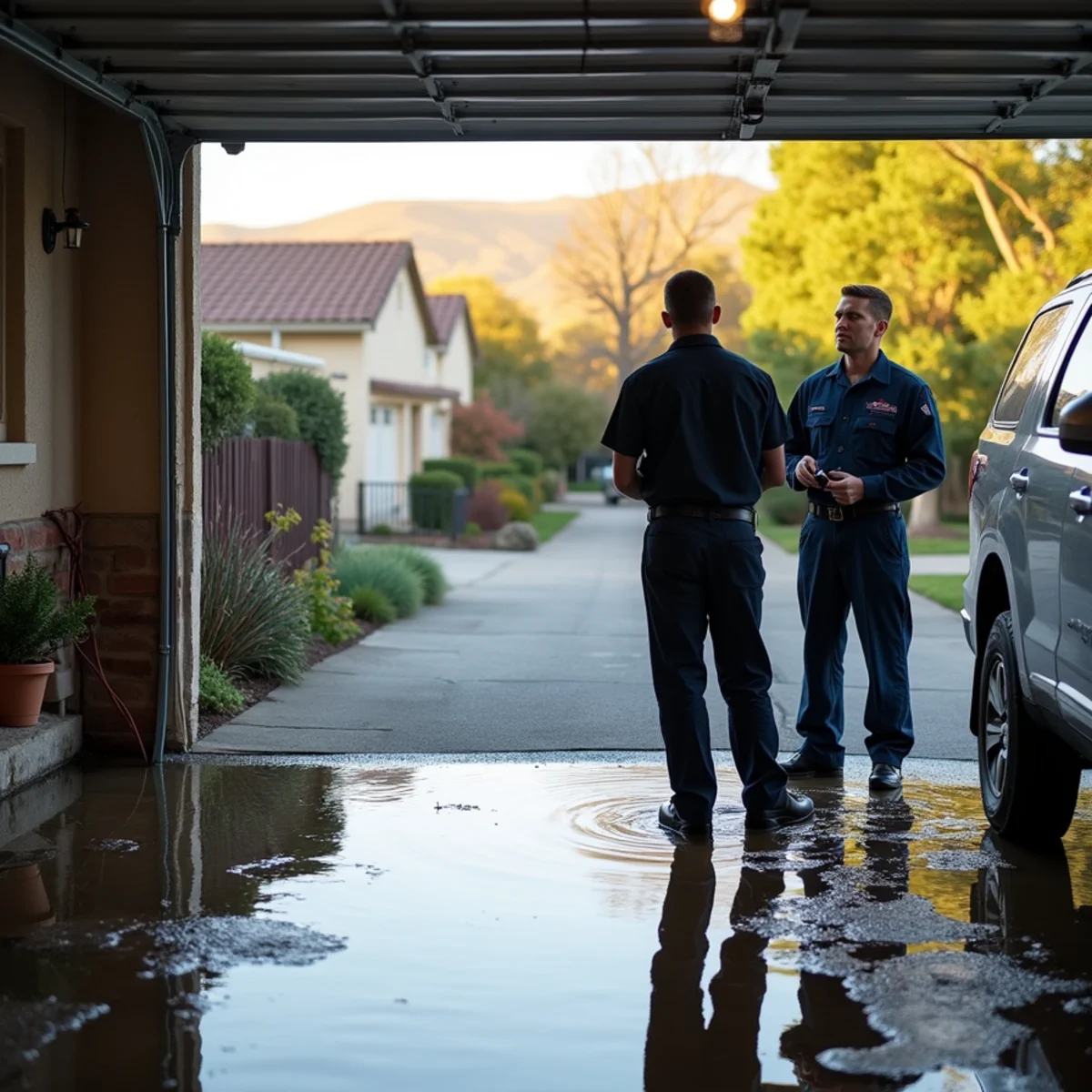
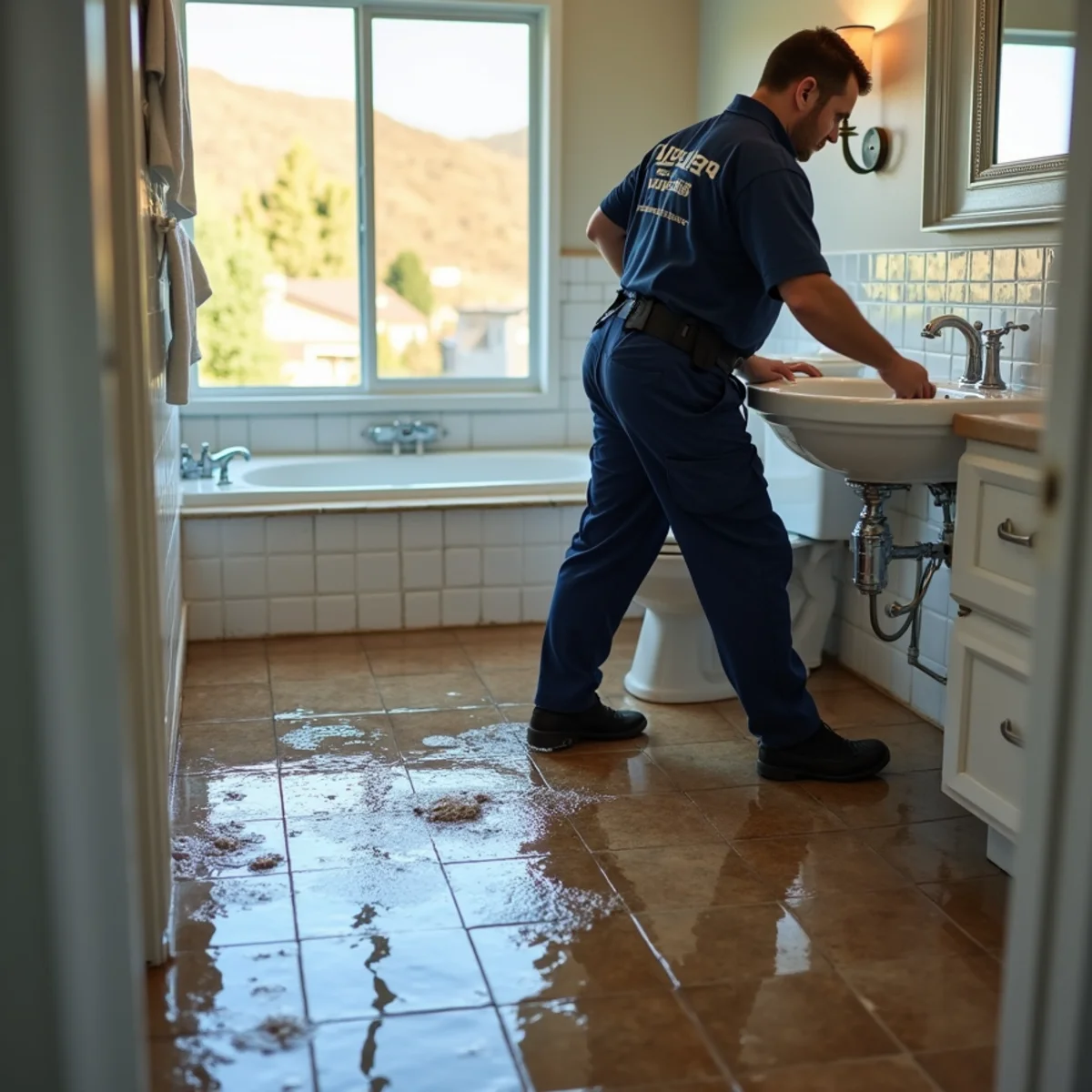
A water heater failure is deceptively urgent. The tank holds 40 to 75 gallons, and when it splits that whole volume lands on the floor in minutes — but the part people miss is that the supply is still connected. The tank keeps trying to fill, so water keeps arriving until someone closes a valve.
There are two things to shut off, and both are on or near the unit. Do these first, then read the rest.
Water damage happening right now?
We answer live 24 hours a day and commit to a 60-minute response across San Ramon.
+1 (201) 277-9344Shut These Two Things Off Right Now
 1
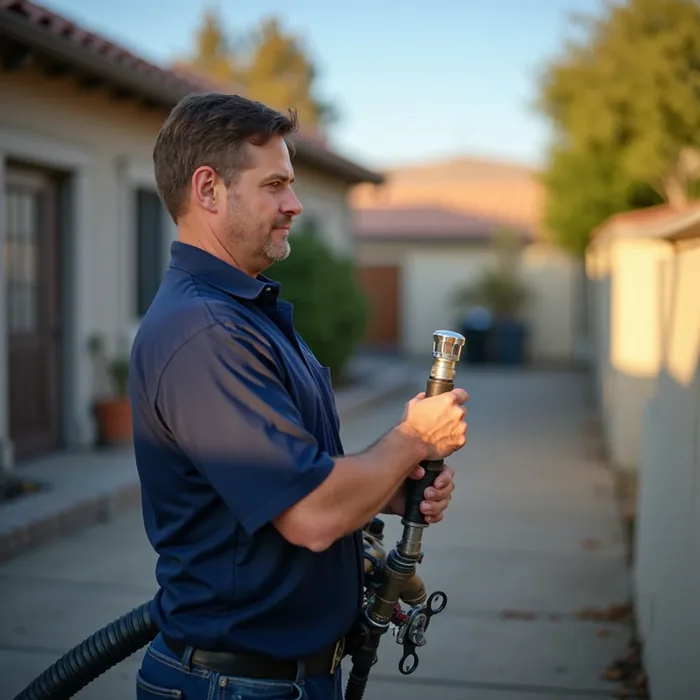
1Close the cold water inlet valve
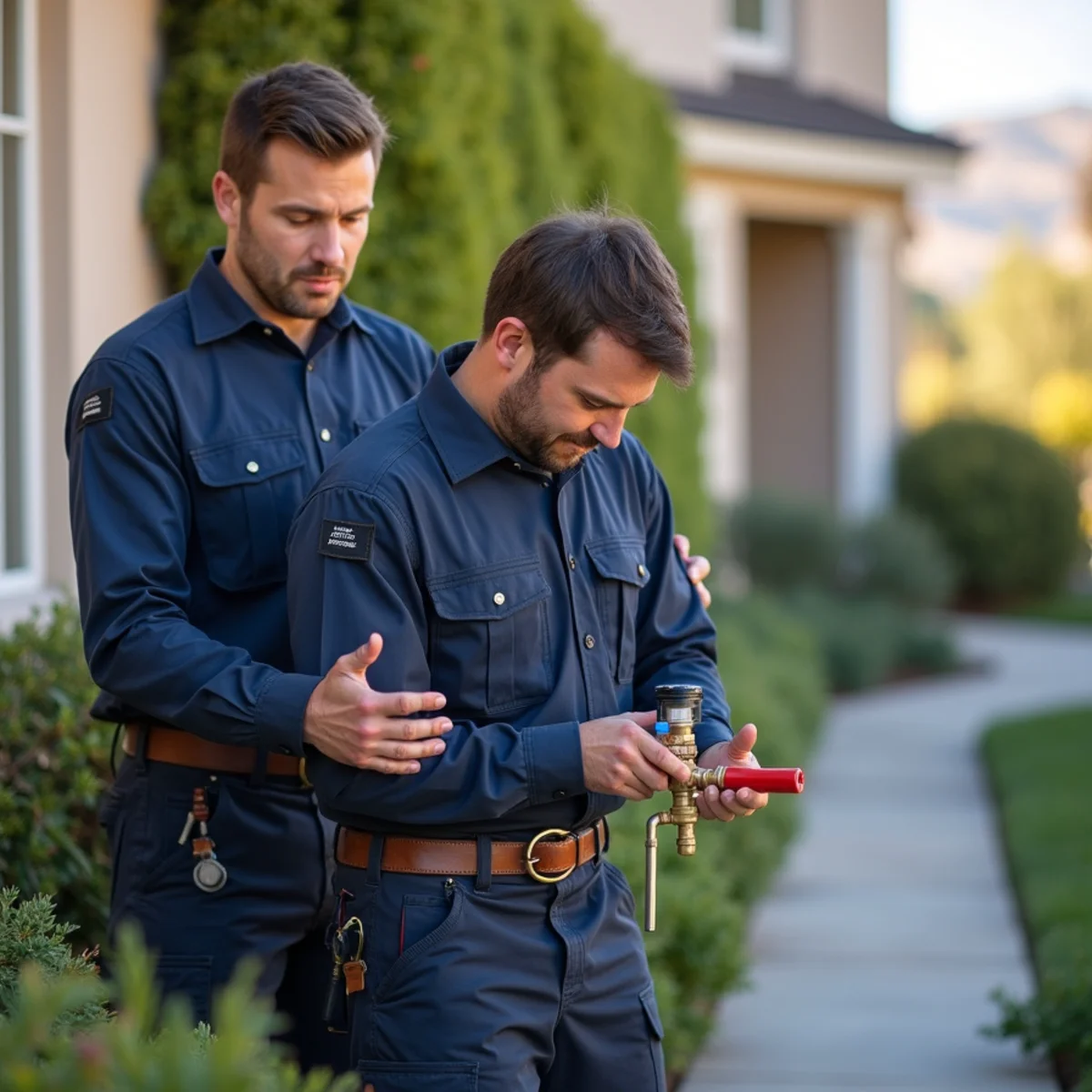
It is on the pipe entering the top of the tank, usually on the right. It may be a lever (turn it a quarter turn so it sits across the pipe) or a round handle (turn clockwise until it stops). If it will not budge or you cannot reach it safely, close the main water valve to the house instead.
 2
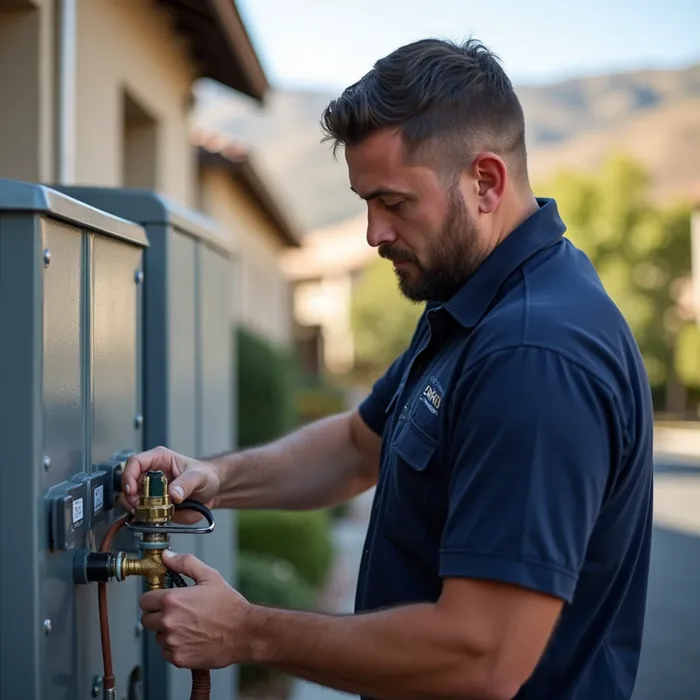
2Cut the fuel or power to the unit
For a gas heater, turn the gas control valve on the front of the unit to "OFF" — and if you can reach it safely, close the gas shutoff on the supply line. For an electric heater, switch off its dedicated breaker at the panel. An electric element firing in an empty tank will destroy itself and can create a hazard.
 3
3Stay out of standing water near electrical anything
Garages have outlets, freezers, washer/dryer connections and often the panel itself at low level. If reaching a valve means wading through water near any of that, stop and wait for the crew.
Then Do These Four Things
- Photograph and video everything before moving anything — including the tank itself and where the water is coming from. Your adjuster will want evidence of the failure point, and the tank will be hauled away.
- Move stored contents off the floor. Cardboard boxes wick water upward fast and are usually unsalvageable within an hour; get anything you care about onto a shelf or out of the garage.
- Check the interior doorway. Garage floors slope, but not always toward the door — water very often runs under the interior door into a hallway or a carpeted room and starts wicking into drywall there.
- Call for extraction. Garage slabs look like they will just dry, and they do not: the water has already gone into the bottom of the drywall, the wall plate and whatever is beyond that doorway.
If Your Water Heater Is Upstairs, This Is More Serious
A great many San Ramon homes — particularly in Dougherty Valley, Gale Ranch and Windemere — put the water heater on a second-floor platform or in an interior closet rather than in the garage. It is a reasonable design decision for hot water delivery time, and it dramatically raises the cost of a failure.
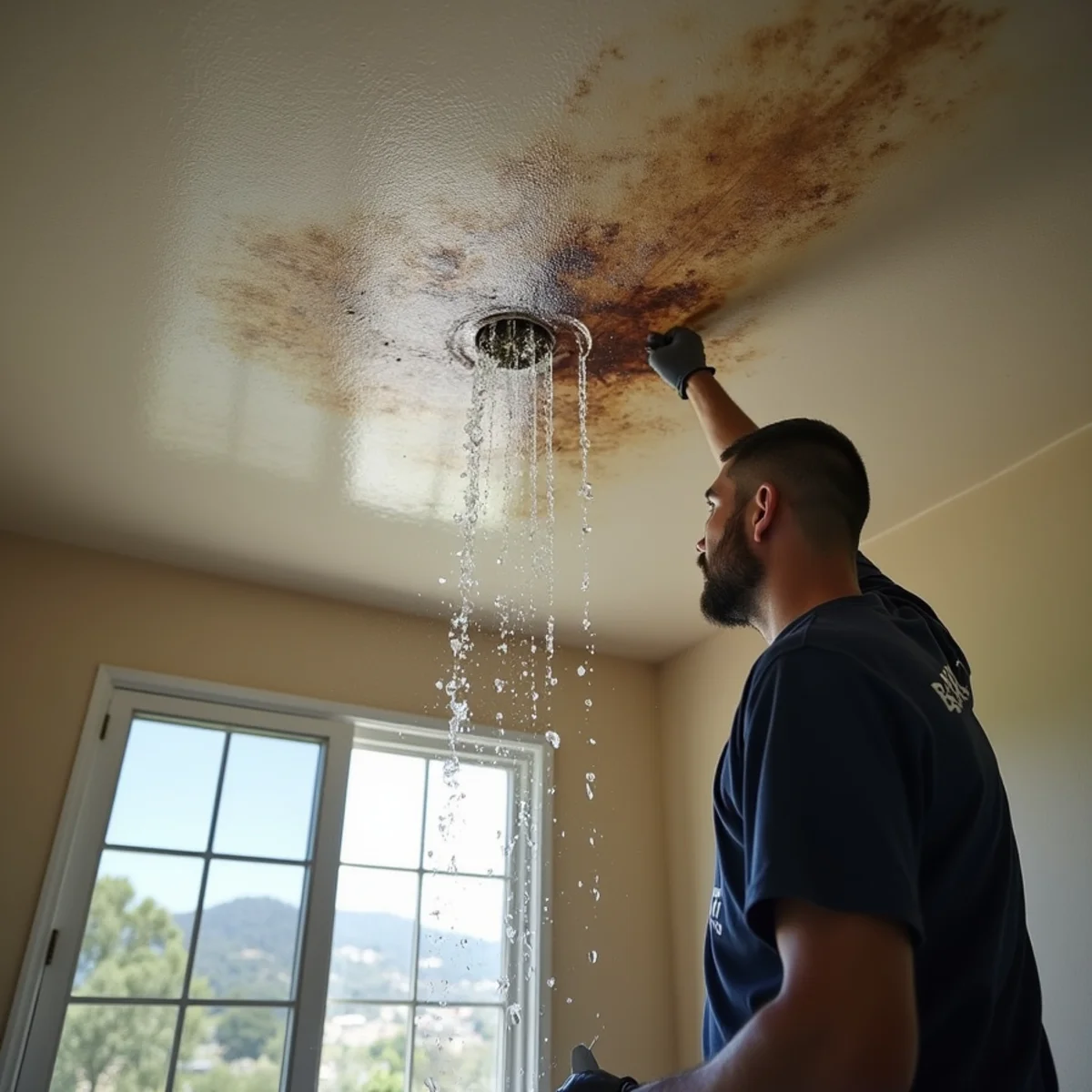
The difference is what is downstream. A garage tank empties onto a slab. An upstairs tank empties into a floor assembly and then through the ceiling of whatever sits below — usually a great room, kitchen or bedroom — bringing insulation and drywall down with it and wetting flooring on two levels.
If that is your situation and the ceiling below is bulging or sagging, get everyone out from under it. Drywall holds a surprising amount of water before it fails, and when it fails it comes down as a sheet.
Why Water Heaters Fail Early in the Tri-Valley
EBMUD water here runs 16 to 18 grains per gallon — very hard by any measure. That dissolved mineral content precipitates out as scale and settles on the bottom of the tank, exactly where the burner applies heat. The scale layer insulates the water from the heat source, which drives up the temperature of the tank floor itself and accelerates the corrosion that eventually breaches it.
The practical consequence is that tanks which might last twelve years on soft water frequently do not make it past eight to ten here. If yours is over ten, replace it on a schedule rather than waiting for the failure — the replacement costs a fraction of the cleanup.
The rumbling or popping sound many people ignore is this process happening: that is water boiling underneath the scale layer.
Preventing the Next One
- A drip pan plumbed to an actual drain — not just a pan sitting there catching nothing. This is the single highest-value item on the list.
- A leak sensor in the pan, and for upstairs or closet installations, an automatic shutoff valve that closes the supply when the sensor triggers. That is the only one that helps while you are at work.
- Two seismic straps, upper and lower third of the tank, anchored into structure. California Health & Safety Code §19211 requires this, and on the Calaveras Fault system it is genuinely functional.
- Flexible connectors at the water and gas lines so a shifting tank does not shear a rigid pipe.
- Annual flushing to slow scale accumulation, and replacement on age rather than on failure.
What Gets Missed After a Garage Heater Failure
A garage flood looks contained. The slab is sloped, the door is right there, and it is tempting to squeegee it out and consider the matter closed. That is how a straightforward job becomes a mould call two months later.
- Assuming the water stayed in the garage. It tracks under the shared wall through the bottom plate and gets beneath the flooring in the adjoining rooms, which is where it does the real damage.
- Ignoring the drywall base. The bottom few inches of garage drywall wick water upward well past the visible line, and the insulation behind it holds moisture long after the surface feels dry.
- Leaving stored cardboard on the slab. Boxes wick water across the floor and hold it against whatever is under them, and wet cardboard supports growth faster than almost anything else in the building.
- Not checking the framing at the base of the wall. Bottom plate and the first few inches of stud take up water and stay wet, and that is not visible from either side without a meter.
- Replacing the heater and stopping there. The new tank does not dry the slab, the wall, or the room next door — and a slab that took water releases it slowly for days.
- Forgetting to photograph the failed tank before it is hauled away. It is the evidence that the failure was sudden rather than a long-running drip, and that distinction matters to the claim.
Frequently asked questions
Realistically eight to twelve years on Tri-Valley water, shorter than the general guidance you will read elsewhere. Very hard water deposits heavy scale on the tank floor, insulating the burner and accelerating corrosion. Check the manufacturing date encoded in the serial number on the label.
The damage the water causes is usually covered as a sudden and accidental loss. The tank itself normally is not — that is treated as a maintenance item. Photograph the failed tank before it is hauled away.
It depends where from. A drip at a fitting or valve is a repair. Water seeping from the tank body means the tank has corroded through, and those failures typically go from a seep to a full release with little warning. Shut the inlet and fuel and replace it now.
Probably not. Concrete absorbs water and releases it slowly, and a surface that feels dry can still be well above the moisture level of an unaffected part of the same slab. That trapped moisture is what causes flooring problems later if anything is laid over it, and it is why we take comparative readings rather than judging by touch.
Usually the resulting water damage is covered while the tank itself is not — most policies treat a worn-out appliance as maintenance and the sudden discharge as the covered event. Age alone rarely voids the water damage portion. What can cause trouble is evidence of a long-running leak that was visible and ignored, which is why documenting the failure as sudden matters.
The short version
Two valves stop the water: the cold inlet on top of the tank, and the fuel or breaker. Everything after that is documentation and extraction.
We handle water heater floods across San Ramon 24 hours a day, and when we coordinate the replacement we make sure it goes back in with a pan, a drain, proper strapping and flexible connectors — so the next one is an inconvenience rather than a flood.