Burst Pipe? Your First-Hour Action Plan to Stop the Damage
A half-inch supply line moves several gallons a minute. What you do in the next sixty minutes determines whether this is a three-day dry-out or a three-week rebuild.
Written by the San Ramon Water Damage Pros crew — IICRC-certified technicians working to the ANSI/IICRC S500 standard on water losses across San Ramon and the Tri-Valley. Guidance here reflects how we actually run jobs, not general advice.
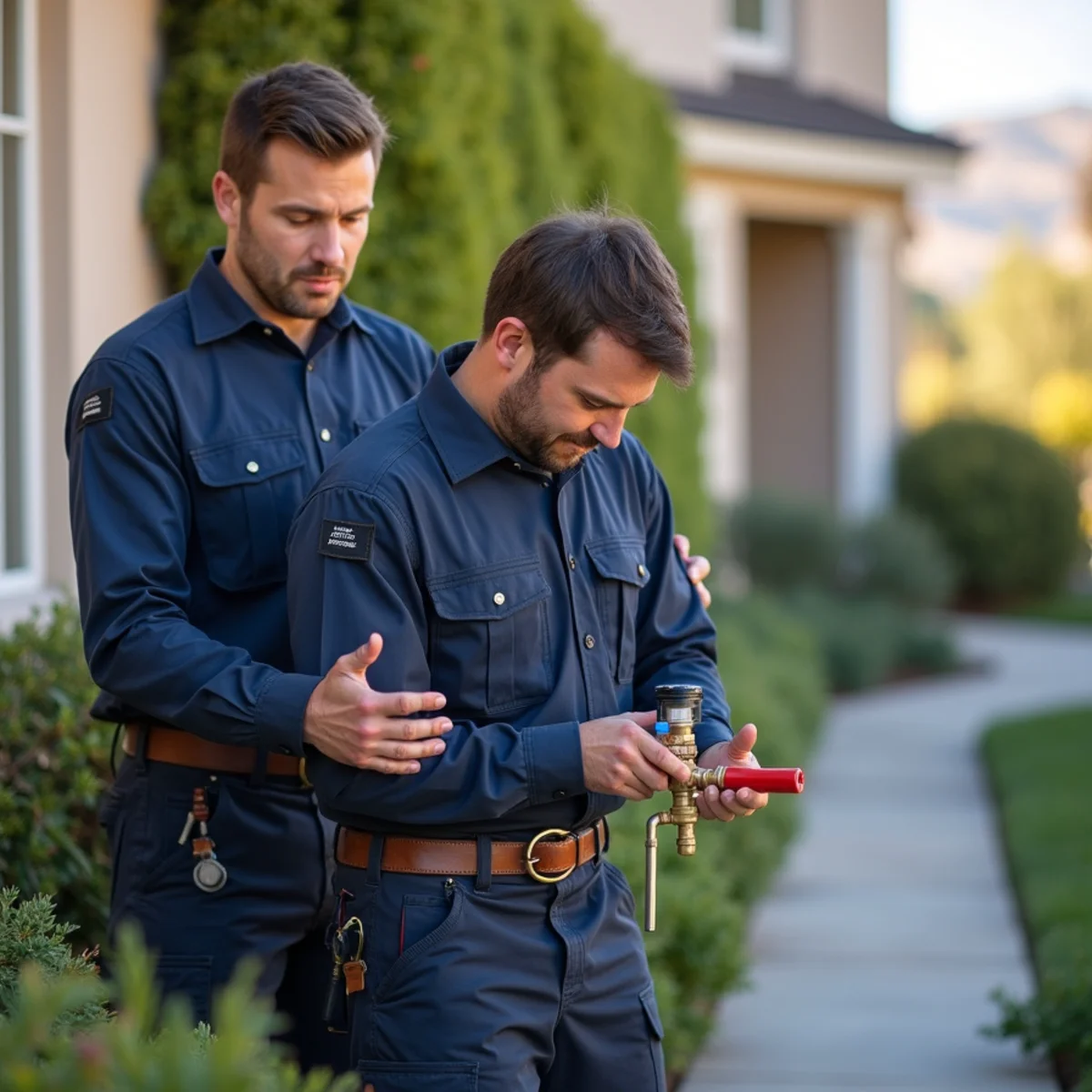
If water is actively running right now, stop reading after this paragraph and go do step one: shut off the main water valve. Everything else on this page will still be here in five minutes, and the water will not wait. If you already have the water off, skip ahead — the rest of the first hour starts below.
Step one: shut off the main water valve. In most San Ramon homes it is in the garage near the water heater, on an exterior wall where the service line enters, or in a covered box near the street at the property line. Turn it clockwise until it stops. If you cannot find it or it will not turn, call us and we will talk you through it while a truck is moving.
Now, assuming the water is off — here is the rest of the first hour, in the order that actually matters.
Water damage happening right now?
We answer live 24 hours a day and commit to a 60-minute response across San Ramon.
+1 (201) 277-9344Why the First Hour Decides the Cost
A half-inch supply line at normal residential pressure moves several gallons a minute, continuously. That is the arithmetic behind why burst pipes are the most destructive common water loss: a failure running for two hours has put hundreds of gallons into a structure that was designed to keep water out.
But volume is only half of it. The other half is what that water does while it sits. Drywall wicks moisture upward at roughly an inch an hour, carpet pad keeps absorbing until it is saturated, and water travels along the top of the bottom plate into the wall cavity next door. Materials that could have been dried in place at hour one frequently have to be demolished by hour six.
There is also a category clock. Clean Category 1 water sitting in a warm structure picks up contamination from building materials and degrades toward Category 2 within roughly 48 hours. Acting fast does not just shorten the job — it can keep the whole loss in a cheaper classification with far more salvageable material.
The First-Hour Checklist, In Order
 1
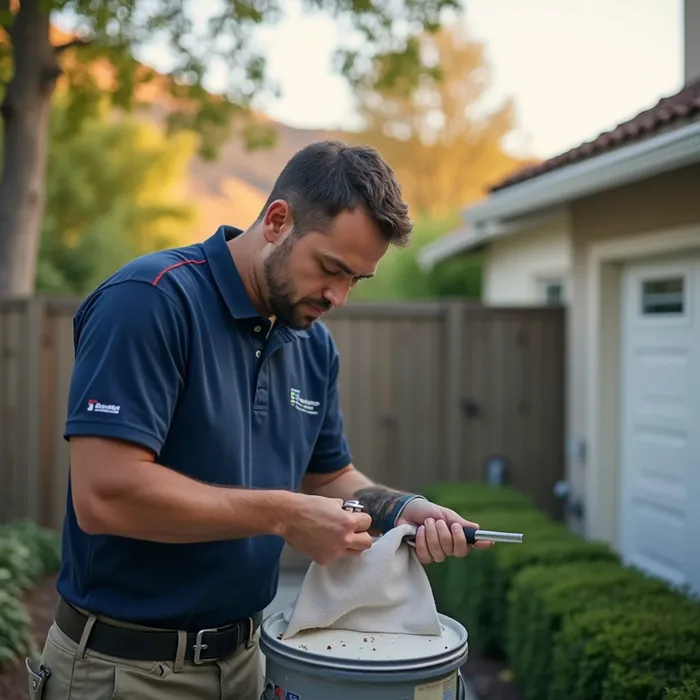
1Shut off the main water valve
Garage near the water heater, exterior wall at the service entry, or a covered box near the street. Clockwise to close. If the failure is clearly at one fixture, the local angle stop under it may be enough — but if in doubt, close the main.
 2
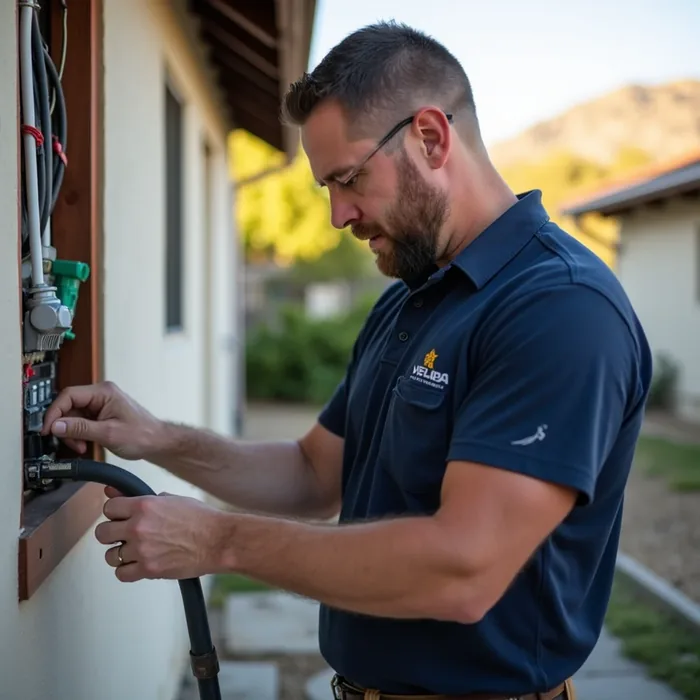
2Cut power to affected circuits — only if it is safe
If you can reach the breaker panel from a dry position, kill the circuits serving the wet area. If reaching the panel means walking through standing water, do not. Wait for the crew.
 3
3Call for professional help
Do this before you start cleaning up, not after. Extraction equipment on site within the first couple of hours is the single largest factor in how much of your house survives.
 4
4Photograph everything before you move anything
Video the whole affected area, then photograph specifics: water lines on walls, standing water depth, damaged contents, and — critically — the failed pipe or fitting itself. Adjusters routinely ask for proof of the original failure point.
 5
5Move what you can, protect what you cannot
Get electronics, documents, rugs and small furniture out of the wet area. For heavy furniture you cannot move, put aluminium foil or blocks under the legs so wood stain and metal glides do not bleed into the carpet.
 6
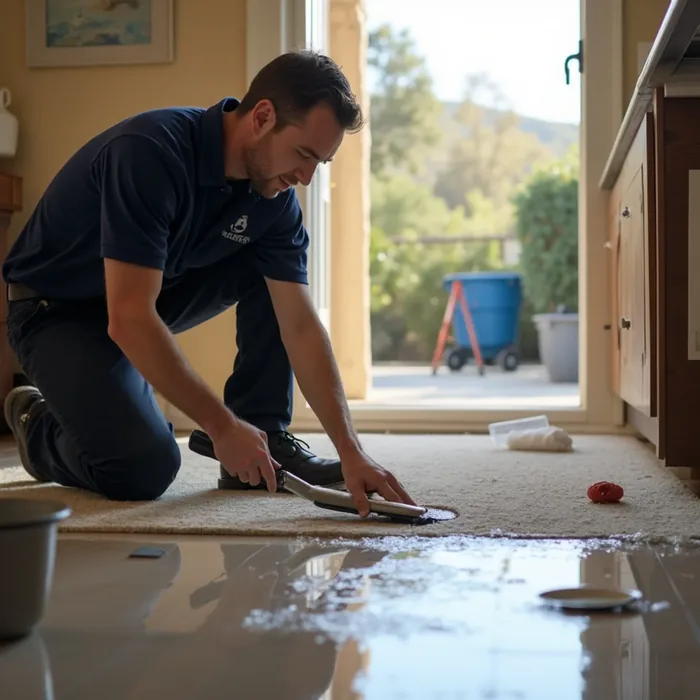
6Stay out of the wet area
Every footstep drives water deeper into the carpet pad and subfloor. Once you have photographed and moved what matters, keep traffic out.
 7
7Call your insurance carrier
Report the claim, but do not wait for an adjuster to authorize emergency mitigation. Nearly every policy obligates you to prevent further damage — waiting is usually a breach of that duty, not caution.
What Not to Do
- Do not run household fans. They move moisture into the air where it condenses on cool surfaces and inside wall cavities — you relocate the problem rather than solving it.
- Do not use a shop vacuum on more than a small spill. It pulls surface water only, leaves the pad and subfloor loaded, and on contaminated water it aerosolizes what it picks up.
- Do not open windows assuming fresh air helps. During San Ramon’s wet season the outdoor air is often carrying more moisture than the indoor air you are trying to dry.
- Do not pull up carpet yourself. Wet carpet is extremely heavy, tears easily, and lifting it improperly usually removes the option of saving it.
- Do not throw damaged items away before they are documented. Your adjuster needs to see them, or at least see photographs of them.
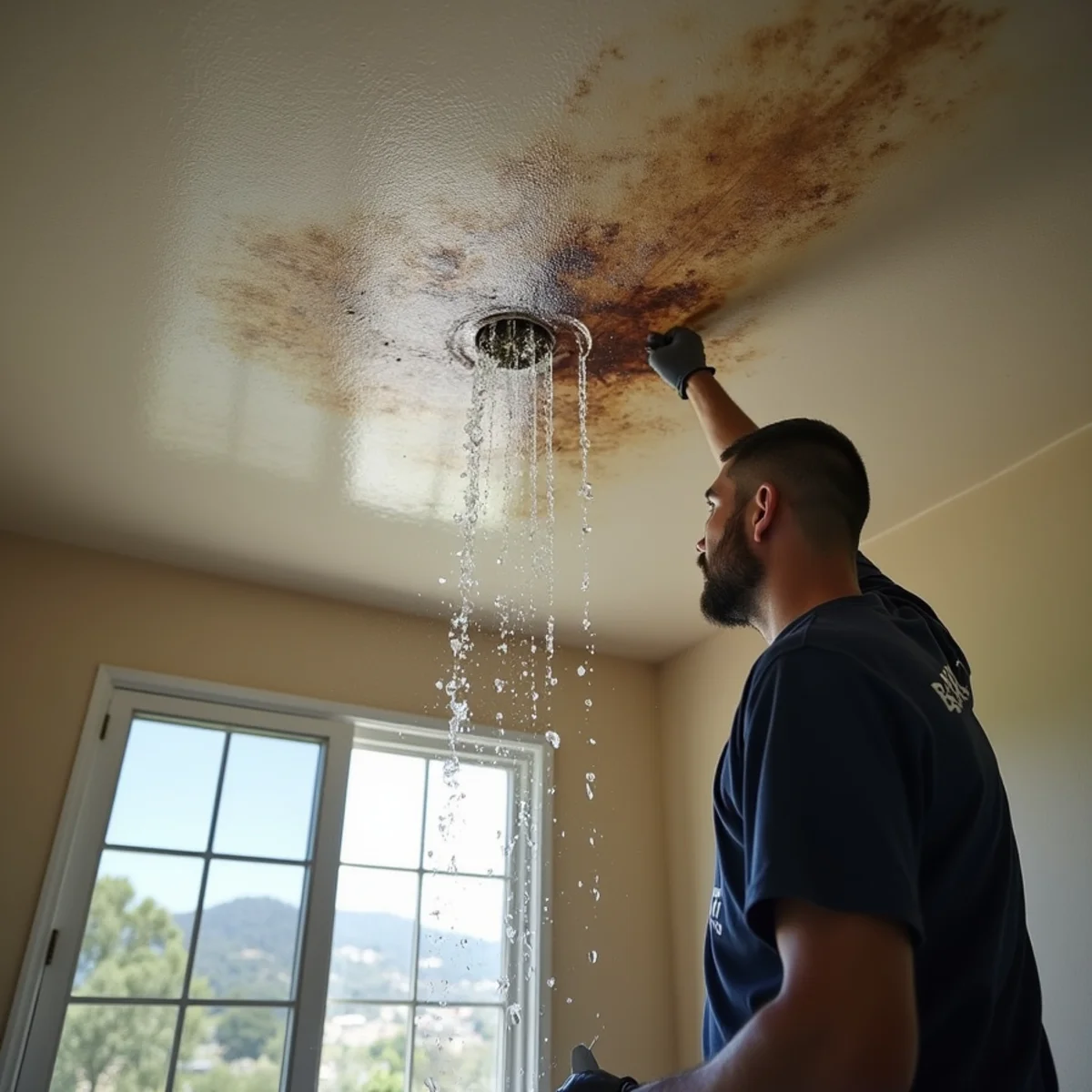
- Do not stand under a bulging ceiling. That pocket is holding water and can release as a full sheet without warning.
Why San Ramon Pipes Burst
Freezing is not the usual culprit here the way it is in colder climates, though it does happen on the coldest nights in the hillside neighborhoods where record lows reach the 18 to 22°F range. Locally, three other mechanisms account for most failures.
The first is hard water. EBMUD water in the Tri-Valley runs 16 to 18 grains per gallon, and that mineral content drives pitting corrosion inside copper supply lines. The pipe wall thins from the inside at specific points until pressure finds the weakest one — that is the pinhole leak, and a pinhole under enough pressure becomes a rupture.
The second is soil movement. The San Ramon Valley sits on expansive clay that swells through the wet season and shrinks through the dry one, cycling mechanical stress into lines held rigidly in concrete slabs.
The third is seismic. The Calaveras Fault system runs through this valley, and periods of elevated activity are reliably followed by a wave of calls about lines that were already marginal.
What Happens After We Arrive
The crew makes the scene safe, confirms the source is actually stopped, and locates the failure precisely with acoustic and thermal tools so the wall gets opened once in the right place rather than three times in the wrong ones. Then extraction starts while a second technician maps the true wet perimeter — which is nearly always larger than what is visible.
Burst-pipe water travels, so we chase it: the room on the other side of the wall, the ceiling below, the cavity behind the baseboard. Everywhere it went gets extracted, then the drying plan is built and equipment goes in the same visit. We do not extract and come back tomorrow.
Mistakes That Turn a Burst Pipe Into a Reconstruction
Almost every burst pipe we attend could have been smaller. The water volume is fixed by how long it ran, and the decisions made in the first hour are what set that number. These are the ones we see cost people the most.
- Looking for the leak before closing the main. The source does not matter yet — every minute spent finding it is another few gallons into the structure.
- Turning the main off and then back on to test something. Whatever was flowing resumes, usually into a wall you have not opened yet.
- Using a household vacuum on standing water. A domestic wet-dry vacuum has neither the lift nor the capacity for it, and using a standard vacuum on water is an electrocution risk.
- Putting fans on it and calling that drying. Airflow without dehumidification moves moisture from the floor into the air and then into the drywall, ceiling and contents. It relocates the problem.
- Waiting for an adjuster to authorise mitigation. Carriers expect you to limit the damage; delay is one of the more common reasons a claim gets partially denied.
- Throwing away the failed section of pipe. That component is the evidence for the claim. Bag it, photograph it in place first, and keep it.
- Closing the house up and going to a hotel. Trapped humidity in a sealed building at room temperature is exactly the condition that supports growth within a couple of days.
Frequently asked questions
A half-inch supply line at normal residential pressure moves several gallons per minute continuously. A failure running unnoticed overnight can release hundreds of gallons — which is why the shutoff valve matters more than anything else you can do.
Sudden and accidental pipe bursts are among the most reliably covered losses under a standard California homeowners policy. What is typically not covered is the failed pipe itself, or damage attributed to long-term seepage. Photograph the failed section before anyone removes it.
No. Almost every policy obligates you to mitigate and prevent further damage, so waiting can actually work against your claim. Report the loss, then start emergency mitigation immediately and document everything as you go.
Either the main did not fully close, or what you are hearing is the system draining down through the break — which stops within a few minutes. If it continues past that, the valve has not seated. Older gate valves frequently fail to close completely after years of never being turned. Try the street-side valve at the meter, and tell us on the phone so we arrive expecting it.
Less than most people expect for a clean supply-line break caught early. Water from a burst supply pipe is Category 1, so drywall, framing and even some flooring can often be dried in place using cavity drying rather than removed. What forces removal is time and contamination — a break that ran overnight, or water that picked up contaminants on its way, changes the answer.
The short version
The homeowner who calls at minute five and the one who calls at hour five are dealing with two different jobs — same leak, very different cost. Speed is the one variable you control completely.
We answer live 24 hours a day and dispatch immediately, with a 60-minute response commitment across San Ramon. If water is running right now, shut the main and call.