Washing Machine Supply Line Burst: 5 Steps to Limit the Damage
A washer hose is one of the highest-flow failures in a house, it runs at full pressure whether the machine is on or not, and it usually fails while nobody is home.
Written by the San Ramon Water Damage Pros crew — IICRC-certified technicians working to the ANSI/IICRC S500 standard on water losses across San Ramon and the Tri-Valley. Guidance here reflects how we actually run jobs, not general advice.
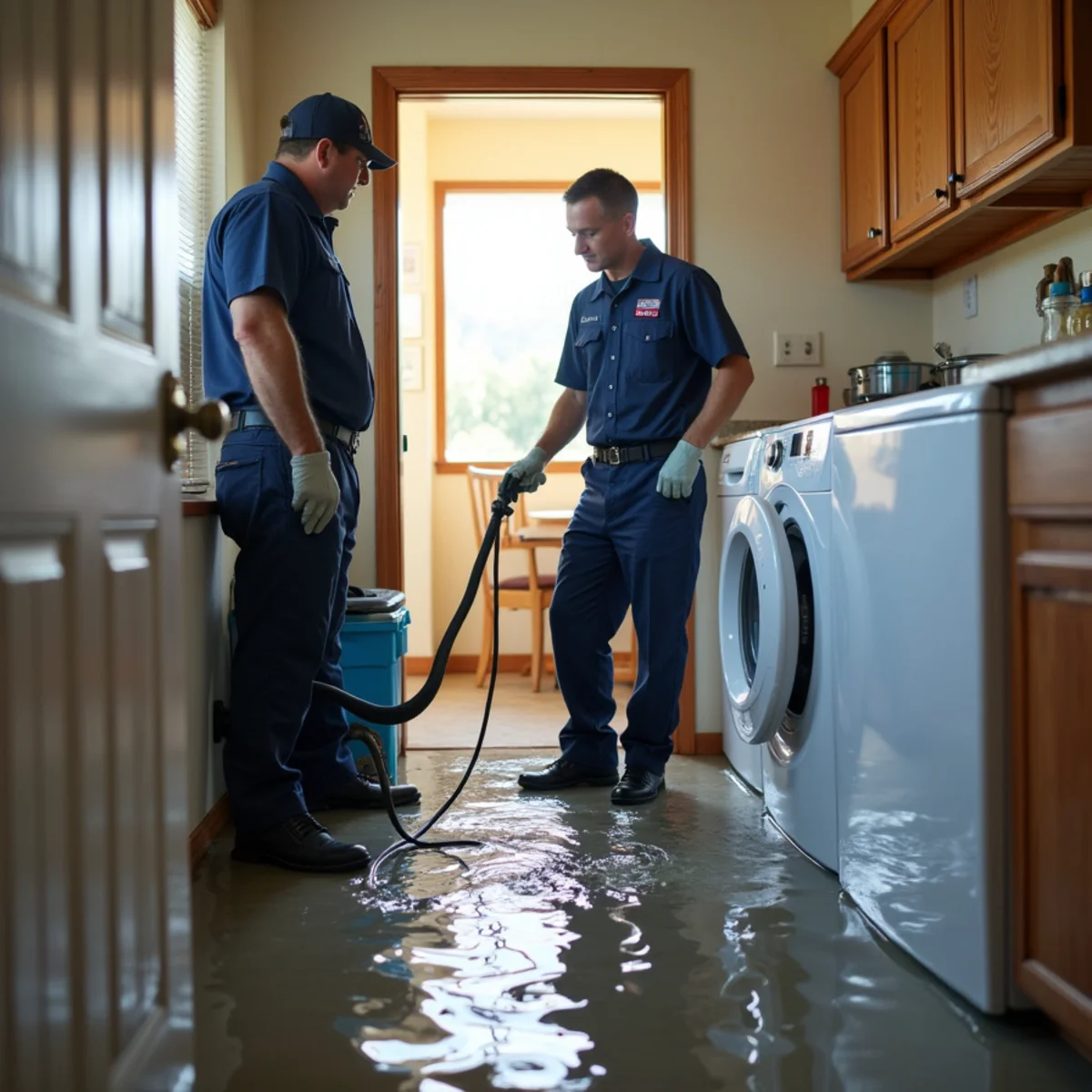
Washing machine supply hoses are, per dollar of hose, the most destructive component in a typical home. They sit under full line pressure 24 hours a day whether the machine is running or not, they are hidden behind an appliance nobody moves, and when one lets go it delivers water at full flow until someone closes a valve.
The classic version of this loss happens while the family is out for the day. Here is what to do if you have just found it, and then what to do so it never happens again.
Water damage happening right now?
We answer live 24 hours a day and commit to a 60-minute response across San Ramon.
+1 (201) 277-9344The Five Steps
 1
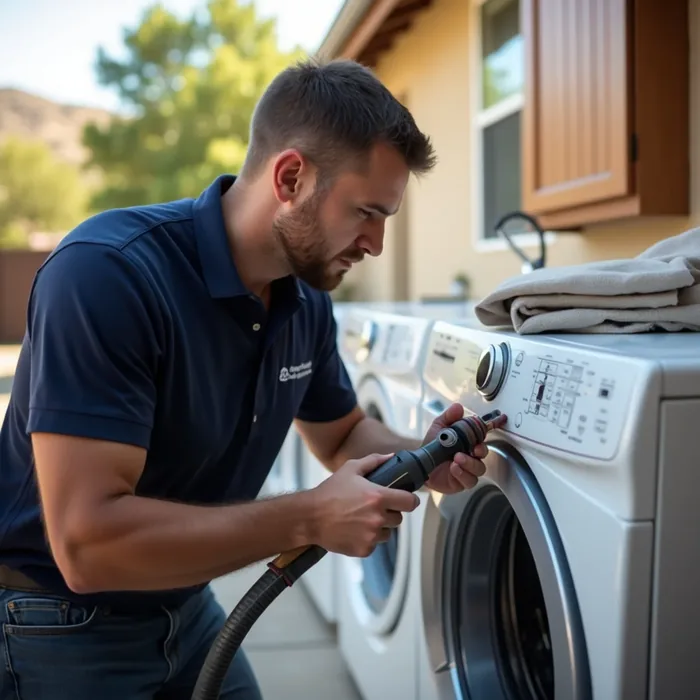
1Close the supply valves behind the machine
Two valves, hot and cold, on the wall box behind the washer. If they will not turn — and on valves that have not been operated in fifteen years they often will not — go straight to the main water valve for the house. Do not spend five minutes fighting a stuck valve while water runs.
 2
2Cut power to the laundry area if there is standing water
Only if you can reach the panel from a dry position. Laundry rooms have a dryer circuit, outlets at low level and often a floor-level junction — do not wade through water to investigate.
 3
3Find out where the water went
This is the step people skip. Laundry rooms share walls with hallways, bedrooms and garages, and water runs under the wall plate into whatever is adjacent. Check the rooms on the other side of every wall, and if the laundry is upstairs, check the ceiling below immediately.
 4
4Photograph everything, including the failed hose
Video the affected areas before moving anything. Then photograph the burst hose specifically — adjusters ask for evidence of the failure point, and the hose is the first thing that gets thrown away.
 5
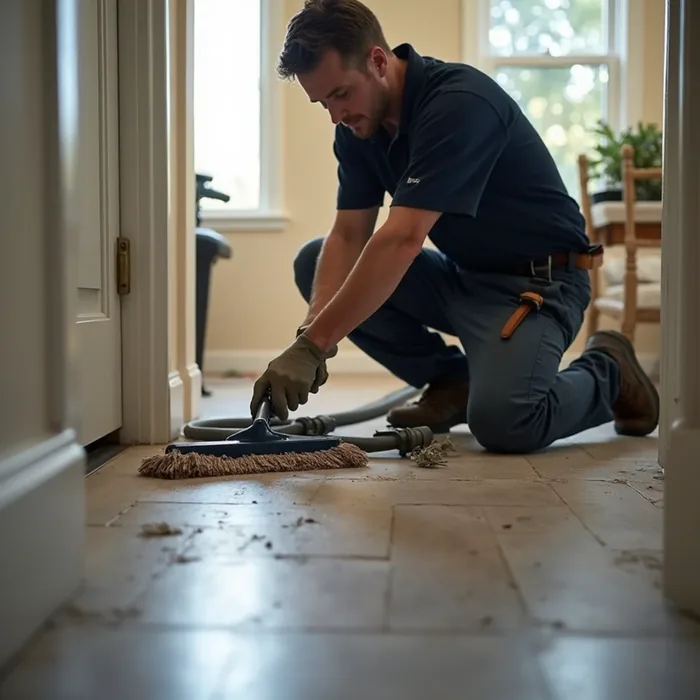
5Call for extraction before you start mopping
What is on the floor is the smallest part of the problem. Water has already gone into the wall base, under the flooring and into the subfloor. Towels address the visible 10% and leave the rest to grow mold.
Why an Upstairs Laundry Is So Much Worse
Second-floor laundry rooms are standard in most of San Ramon’s newer housing — Dougherty Valley, Windemere, Gale Ranch, Silver Creek and the 1990s-onward tracts generally. They are genuinely convenient and they turn this failure into a multi-level loss.
Water on an upper floor goes into the floor assembly, saturates the subfloor, runs along joists and comes through the ceiling below — typically into a great room, kitchen or bedroom. You end up with two floors of drying, a cavity between them, wet insulation and a ceiling that needs replacing rather than a wet laundry room floor.
If your laundry is upstairs and the ceiling below is stained or bulging, get everyone out from under it and mention it when you call.
The Fix Costs About Thirty Dollars
This is one of the few genuinely cheap prevention stories in home maintenance, which is why it is worth being emphatic about it.
Rubber washing machine hoses degrade from the inside. They soften, bulge and eventually split, and the standard guidance is to replace them every five years. Braided stainless steel hoses cost very little more, last considerably longer and fail far less often. There is no good reason to have rubber hoses on a washing machine in 2026.
- Replace rubber hoses with braided stainless steel — the whole job is about thirty dollars and twenty minutes.
- Check both hoses twice a year for bulging, cracking, corrosion at the fittings, or stiffness.
- Leave a few inches of slack so the hose is not under tension where it connects.
- Close the supply valves if you are away for more than a few days — and exercise those valves occasionally so they still turn when you need them.
- Consider a single-lever shutoff valve box, which closes both hot and cold at once and is far more likely to actually get used.
- A leak sensor on the floor behind the machine costs very little and catches the slow failures too.
The Other Laundry Failure Nobody Watches
It is not always the supply hose. The drain hose can work its way out of the standpipe during the spin cycle, which pumps the machine’s entire drain volume onto the floor — and it does it every cycle until someone notices.
Check that the drain hose is secured in the standpipe and that the standpipe itself is not slow-draining. A standpipe backing up during the pump-out is a common and completely preventable cause of repeated small floods that eventually produce mold behind the wall.
Why Laundry Hoses Fail, and How to Tell Yours Is Next
Washing machine supply hoses sit under full mains pressure every hour of every day, whether the machine is running or not. That is the detail people miss: the hose is not stressed during a wash cycle, it is stressed permanently, and it fails when the rubber finally gives up rather than when the machine is in use.
Rubber hoses are the ones that burst. Braided stainless hoses are only a little more expensive, are widely available, and effectively remove this failure from your house.
- Look at the ends first. Bulging, blistering or any deformation near the crimped fitting means it is already failing and should be replaced this week.
- Check for rust or corrosion at the coupling. That is where the pressure concentrates and where a burst almost always starts.
- Feel the hose. Rubber that has gone hard, brittle or crazed on the surface has lost its flexibility and is at the end of its life.
- Note kinks or tight bends behind the machine. A hose pressed against a wall or bent sharply fails at that point well ahead of its rated life.
- Find the date. Most hoses carry a manufacture date; anything over five years old is worth replacing regardless of appearance.
- Close the taps when the house will be empty for more than a couple of days. Most laundry valves are quarter-turn and take two seconds each.
- Fit a drip tray with a drain if the laundry is on an upper floor. It will not stop a burst, but it handles the slow leaks that are far more common.
Frequently asked questions
Every five years for rubber hoses — or better, replace them once with braided stainless steel and check them twice a year. The upgrade costs about thirty dollars and eliminates one of the most common significant water losses in a house.
Braided stainless hoses, a shutoff you actually use, and ideally a drain pan plumbed to a drain plus a leak sensor. A supply failure upstairs drains straight into the ceiling below and becomes a two-level loss rather than a wet floor.
Only for a genuinely small spill on a hard floor. If water reached carpet, ran under the wall base, or went under vinyl or laminate, mopping addresses the visible surface and leaves the pad, subfloor and wall cavity wet — which is how a laundry room flood becomes a mold job six weeks later.
Usually not for the long term. Machines are frequently supplied with basic rubber hoses because they are the cheapest option that meets the specification, not because they are the most durable. Replacing them with braided stainless at installation costs very little and removes one of the most common causes of household water damage before it ever starts.
It usually makes it worse rather than better. A slow leak behind a washing machine runs unnoticed for weeks, wetting the wall base, the subfloor and often the floor structure below. A dramatic burst gets found in minutes. By the time a slow laundry leak is discovered, removal rather than drying is frequently the honest scope.
The short version
Close the valves, check where the water went, photograph the hose, and get extraction started before you reach for towels.
Then spend thirty dollars on braided stainless hoses so you never read this article again. We handle laundry room and multi-level water losses across San Ramon 24 hours a day.