Standing Water in the House: Is It Safe to Stay, and Who Do You Call First?
Three questions decide whether staying is reasonable: is it electrically safe, is the water contaminated, and is the structure sound. Here is how to answer each.
Written by the San Ramon Water Damage Pros crew — IICRC-certified technicians working to the ANSI/IICRC S500 standard on water losses across San Ramon and the Tri-Valley. Guidance here reflects how we actually run jobs, not general advice.
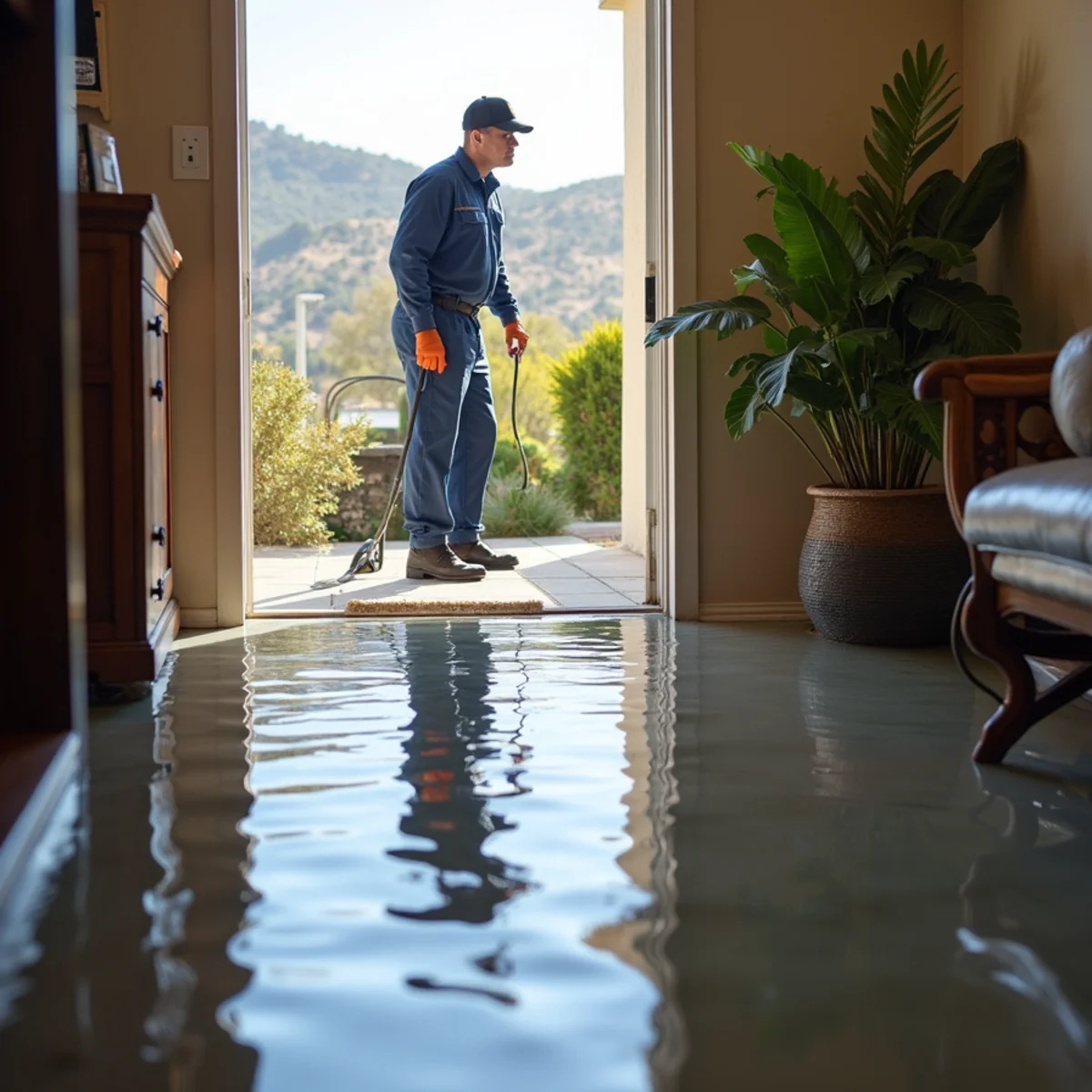
When there is water across your floor, the instinct is to start dealing with it. Before that, it is worth spending two minutes deciding whether being in the room is safe at all — because the three risks in a flooded house are not obvious by looking, and two of them are serious.
Work through these three questions in order.
Water damage happening right now?
We answer live 24 hours a day and commit to a 60-minute response across San Ramon.
+1 (201) 277-9344Question 1: Is It Electrically Safe?
This is the one that hurts people. Water conducts, and a flooded floor puts a conductive path between anything energized and anyone standing in it. Outlets sit fifteen inches off the floor in most homes, appliances plug in at floor level, and panels in garages are often mounted low.
The rule is straightforward: if standing water is touching or near any outlet, appliance, extension cord or electrical panel, do not enter it. If you can reach the breaker panel from a completely dry position, shut off the circuits serving the affected area — or the main breaker if you are unsure which they are. If you cannot reach the panel without walking through water, do not. Wait outside and tell the crew when they arrive.
- Never stand in water to reach a breaker panel.
- Do not unplug appliances that are sitting in water.
- Treat a submerged extension cord or power strip as live.
- If you smell burning or hear buzzing, leave the building and call the fire department.
Question 2: What Kind of Water Is It?
The source determines the health risk, and clean-looking water is not the same as clean water. Restoration practice classifies water into three categories, and the category drives everything about how the cleanup is handled.
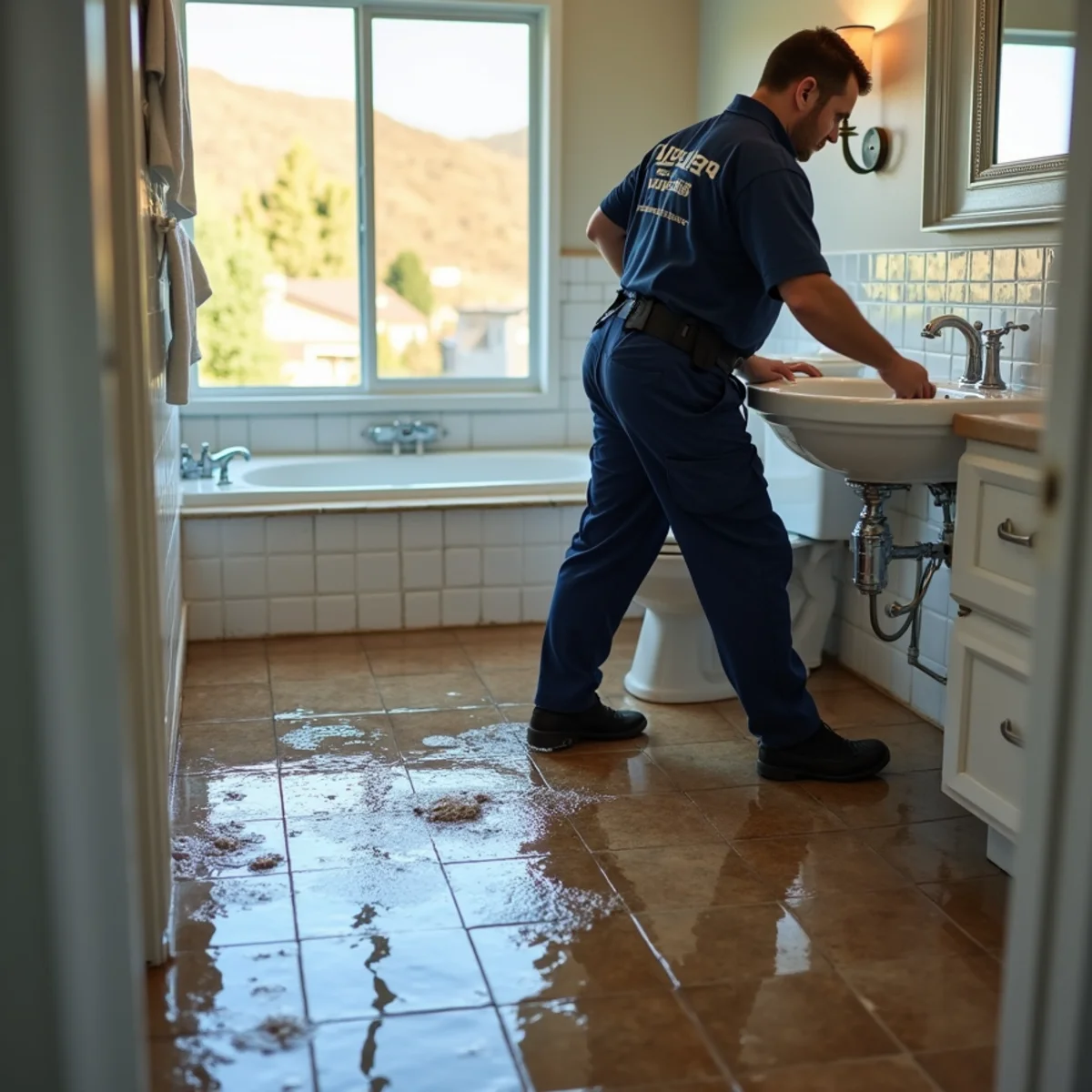
- Category 1 — clean water from a sanitary source: a supply line, a water heater inlet, a tub overflow. Low immediate health risk, and staying in unaffected parts of the house is usually fine.
- Category 2 — grey water with meaningful contamination: dishwasher or washing machine discharge, a toilet overflow without solids, aquarium water. Avoid contact, keep children and pets out.
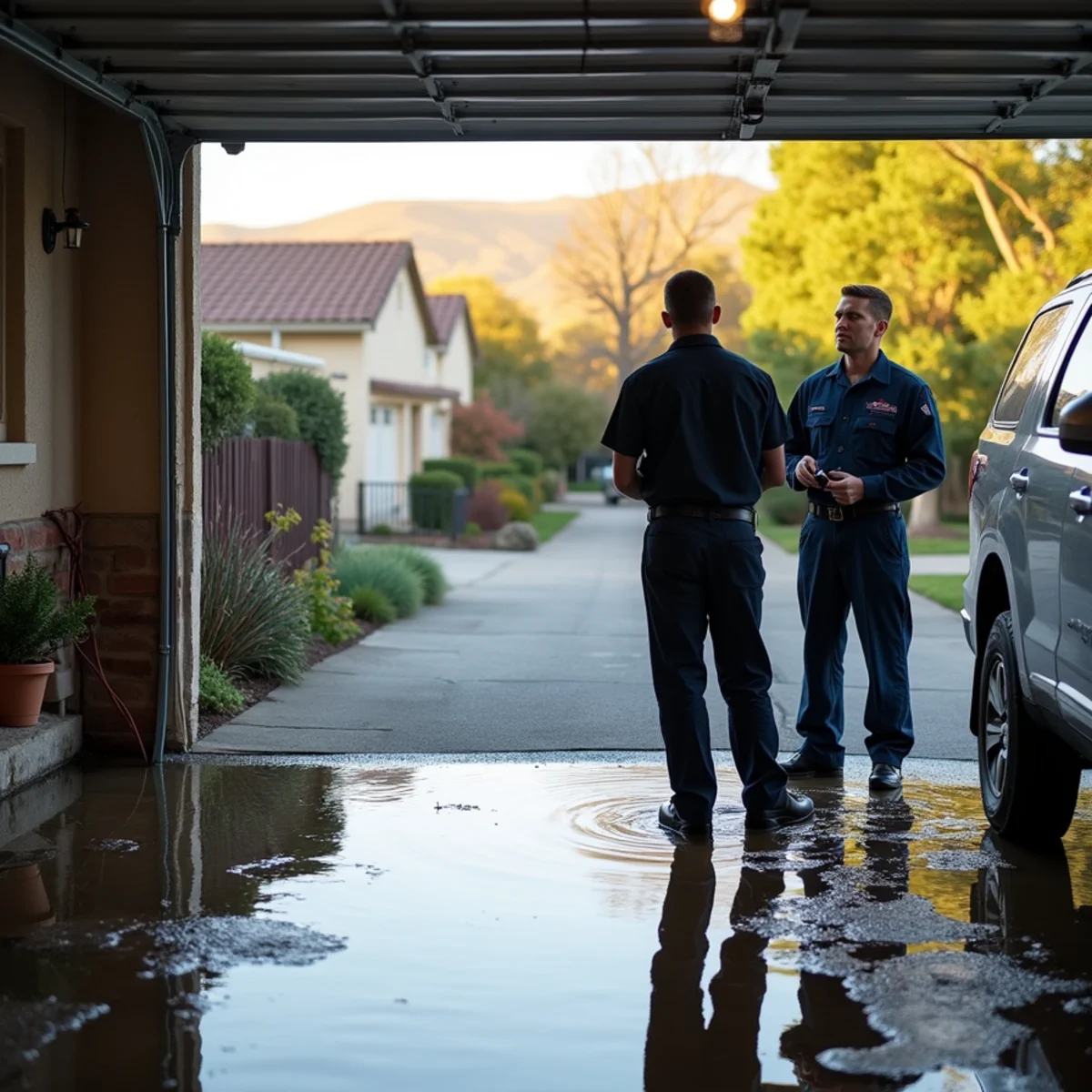
- Category 3 — black water, grossly contaminated: any sewage, anything from a sewer lateral, and any storm or creek water that has crossed the ground. Evacuate the affected area entirely and do not attempt cleanup.
- Time matters too: Category 1 water degrades toward Category 2 within roughly 48 hours in a warm structure as it picks up contamination from building materials.
Question 3: Is the Structure Sound?
Mostly this comes down to ceilings. If water came from an upper floor or the roof, look at the ceiling below for sagging, bulging or a heavy-looking area. Drywall holds a great deal of water before it fails and then releases it all at once as a full sheet. Stay out from under anything that looks loaded.
Also worth noting: saturated floors can feel soft, particularly over a crawl space where subfloor and joists have been wet. And doors that suddenly stick or refuse to latch can indicate the structure has moved — worth mentioning to the crew rather than forcing.
So — Can You Stay?
For most losses the honest answer is yes, with conditions. A contained Category 1 loss in one part of a house, with power isolated to that area and no ceiling loading, does not require you to leave. You avoid the wet area, the crew contains it, and life continues in the rest of the house.
You should plan to relocate when: the water is Category 3, the kitchen and your only bathrooms are affected, drying equipment has to run in every bedroom, or there is any question about electrical safety that has not been resolved.
One thing worth knowing early: most homeowners policies include Additional Living Expense coverage that pays for temporary accommodation during a covered loss. A surprising number of households do not realize they have it, and it is much easier to arrange at 4pm than at 11pm.
Who to Call, In What Order
 1
1Emergency services — only if there is a genuine hazard
Fire department for electrical arcing, a burning smell, or a gas odor. Do not call 911 for water alone.
 2
2A restoration company
Call before you call anyone else about the water itself. Extraction on site in the first couple of hours is what determines how much of the house survives, and a good crew will also tell you honestly whether you should stay.
 3
3A plumber, if the source is plumbing and still running
Many restoration companies coordinate this — we do — which saves you making the call twice.
 4
4Your insurance carrier
Report the claim, but do not wait for authorization before starting mitigation. Your policy almost certainly obligates you to prevent further damage.
 5
5EBMUD
Only if the problem is on the utility side — a meter box issue, or a main break in the street.
The Risks People Underestimate
Most people assessing a flooded house worry about the obvious things and miss the ones that actually cause harm. Standing water is not primarily a slip hazard; the real risks are electrical, biological and structural, in roughly that order.
- Energised outlets below the water line. Water reaching wall sockets or extension leads makes the floor itself a hazard, and a residual-current device does not guarantee protection in standing water.
- Gas appliances that got wet. A water heater or furnace that has been standing in water needs inspection before it is operated again, regardless of whether it appears to work.
- Contamination you cannot see. Category 3 water looks identical to Category 1. A supply-line break is clean; anything that crossed the ground or came up a drain is not, and the difference decides whether it is safe to be in the room.
- Saturated ceilings above where you are standing. Drywall holds a great deal of water before it fails, and when it lets go it comes down as a full sheet rather than a drip.
- Air quality rather than water level. Growth begins in the 24 to 48 hour range under the right conditions, and a sealed, warm, humid house is exactly the right condition.
- Anyone with asthma, a compromised immune system, an infant or an elderly relative in the household should be out early rather than at the point where it becomes obvious.
Frequently asked questions
Only after you have confirmed the electrical risk is handled and you know what the water is. Never enter water that is near outlets, appliances or a panel unless power to that area has been shut off from a dry position. Any water from a sewer line or from outdoors should be treated as contaminated and avoided entirely.
Usually not, for a contained clean-water loss in one part of the house. Relocation makes sense for sewage events, when the kitchen or only bathrooms are affected, or when drying equipment must run in the bedrooms. Check your policy for Additional Living Expense coverage.
Materials start wicking immediately, microbial growth can begin within 24 to 48 hours, and clean Category 1 water degrades toward Category 2 in roughly the same window. There is no safe waiting period — extraction speed is the main lever on the final cost.
Do not restore power to any circuit serving the affected area until an electrician has cleared it, and do not run extension leads from a dry room into a wet one. If you cannot isolate the affected circuits at the panel individually, treat the whole area as unsafe. Bringing a generator indoors is never the answer — carbon monoxide kills far more people after flooding than the water does.
Many homeowners policies include additional living expenses when a covered loss makes a property uninhabitable, but the terms vary and the decision belongs to your carrier rather than to us. What helps is documentation: our assessment records why the property was not habitable and what the drying schedule required. Keep receipts from the start rather than reconstructing them afterwards.
The short version
Electrical safety, water category, structural loading — answer those three and you know whether to stay in the room, stay in the house, or wait outside.
We answer live 24 hours a day across San Ramon and will talk through your specific situation on the phone before we arrive, including an honest recommendation about whether staying makes sense.