Spike in Your EBMUD Water Bill? You Might Have a Hidden Leak
A hidden leak runs every hour of every day, which is why the bill notices before you do. Here is how to confirm it in fifteen minutes.
Written by the San Ramon Water Damage Pros crew — IICRC-certified technicians working to the ANSI/IICRC S500 standard on water losses across San Ramon and the Tri-Valley. Guidance here reflects how we actually run jobs, not general advice.
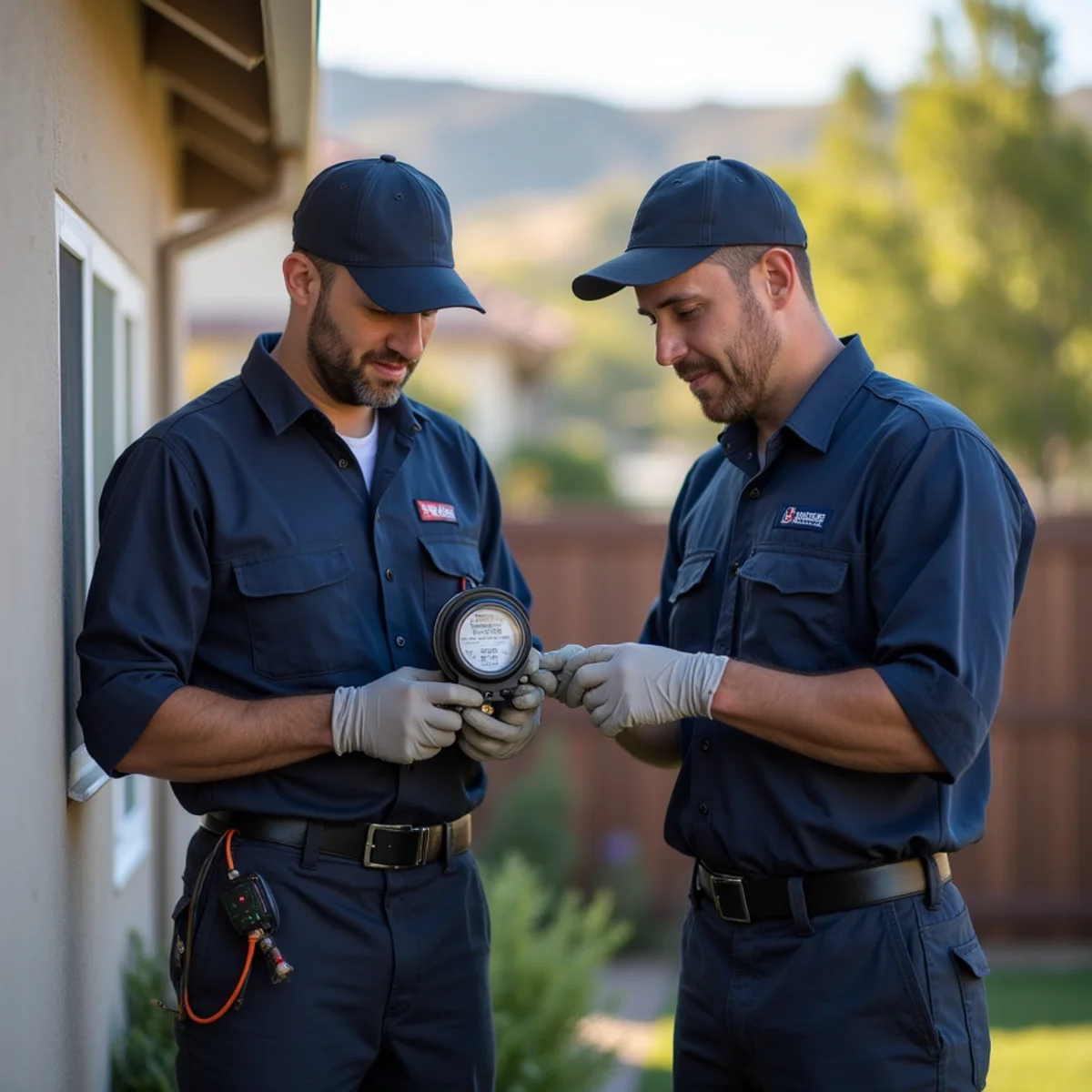
An unexplained jump in your EBMUD bill is the earliest hard evidence of a hidden leak most homeowners will get. It typically arrives a month or two before any physical symptom — before the warm floor spot, before the musty smell, before the stain.
It is worth taking seriously, and it is worth confirming rather than guessing. The confirmation takes fifteen minutes.
Water damage happening right now?
We answer live 24 hours a day and commit to a 60-minute response across San Ramon.
+1 (201) 277-9344First, Rule Out the Boring Explanations
- Seasonal irrigation. The single most common explanation — summer landscape watering can be a large share of household use, and the controller may have changed schedule.
- Guests, a returning student, or a change in household size.
- A new appliance, or filling a pool or spa.
- A rate change or a billing period covering more days than usual — check the number of days on the bill.
- A running toilet, which is silent enough to miss. Put a few drops of food colouring in the tank and wait twenty minutes without flushing; colour in the bowl means the flapper is leaking.
- An estimated rather than actual read on a previous bill, which makes the corrected one look like a spike.
The Meter Test
 1
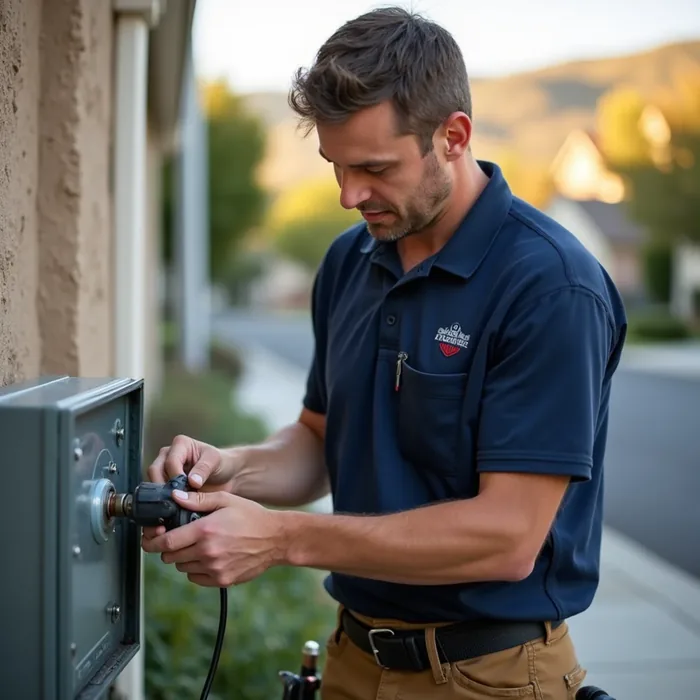
1Shut off everything that uses water
Every tap, the dishwasher, the washing machine, the ice maker, the irrigation controller. Isolate a pool auto-fill if you have one. Tell the household not to use water.
 2
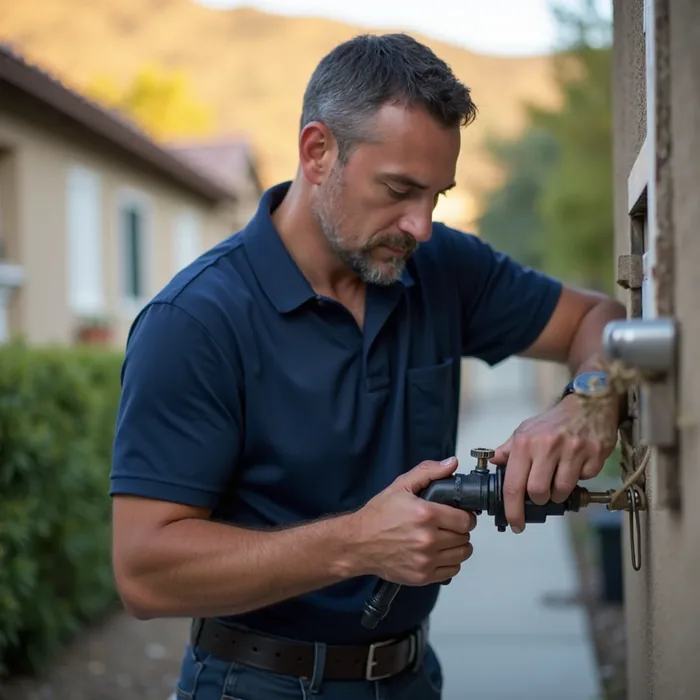
2Open the meter box
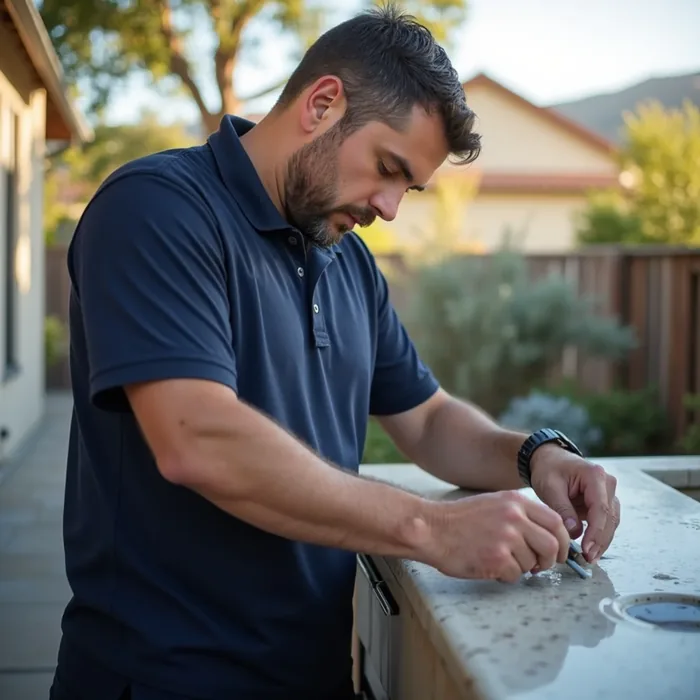
Covered box near the street at the property line. You may need a screwdriver or a meter key for the lid.
 3
3Find the low-flow indicator
Most meters have a small triangular or star-shaped dial that spins with even minimal flow. Note its position, or write down the full reading.
 4
4Wait fifteen minutes
Do not use any water during this period. Then look again.
 5
5Interpret
Any movement means water is leaving your system with everything closed. That is a leak, and the test is essentially conclusive.
 6
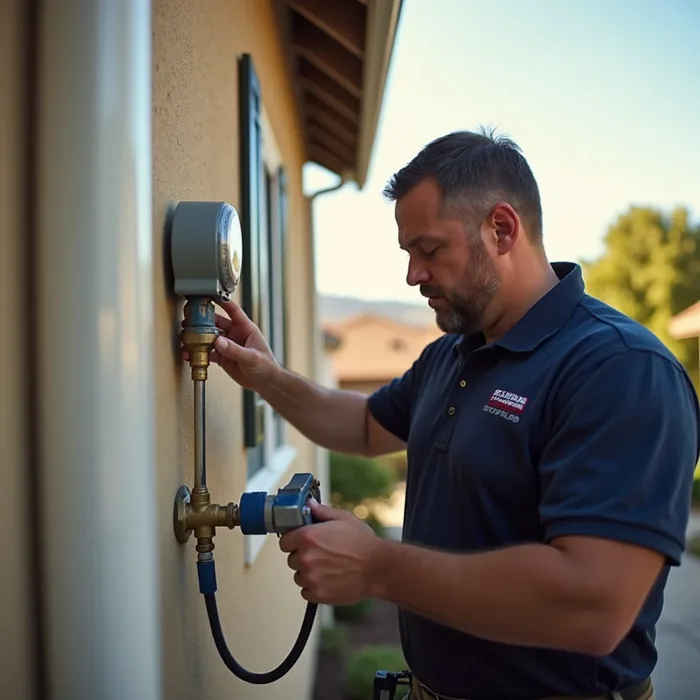
6Narrow it down
Close the main shutoff at the house and repeat. Still moving means the leak is between the meter and the house — the service line. Stopped means it is inside. Isolate the irrigation separately the same way.
What It Costs to Ignore
Two costs, and the second is much larger. The first is the water itself, running continuously at whatever rate the leak flows, month after month.
The second is the damage. A slab leak saturating sub-slab soil for weeks wicks moisture into wall bottom plates and flooring, and microbial growth can begin within 24 to 48 hours of materials becoming wet. By the time the physical symptoms are obvious, a meaningful share of these jobs require mold remediation alongside the drying — and remediation was avoidable when the bill first jumped.
An irrigation leak saturating soil against a foundation raises crawl space humidity, feeds moisture into the living space above, and on expansive clay contributes to differential movement. Again, all avoidable at the bill stage.
What to Do Next
- Run the meter test. It converts a suspicion into a fact.
- Isolate systems one at a time — irrigation, service line, interior — to narrow the location before anyone arrives.
- Call EBMUD if the meter itself looks damaged or if there is water pooling in the meter box, which may be a utility-side issue.
- Get professional detection for anything that is not obvious. Acoustic and thermal location means one small opening in the right place rather than exploratory demolition.
- Do not ignore it because the bill is only modestly higher. Small continuous leaks cause the same cumulative damage as large ones; they just take longer to declare themselves.
What a Leak Costs While You Are Deciding
People routinely wait a billing cycle to see whether a spike repeats. That is understandable and it is expensive, because the loss is continuous and the water is the smaller half of it.
- A leak large enough to move a monthly bill noticeably is running continuously — every hour of deliberation is another few gallons.
- The water charge is usually the least of it. What costs money is what the water is doing to the structure it is escaping into.
- A slab leak wets soil and concrete continuously, and on expansive clay that concentrated wetting drives localised movement in the foundation.
- Continuous moisture in an enclosed space reaches the conditions for growth within days, which converts a plumbing repair into a remediation job.
- An irrigation leak saturating soil against the foundation does the same thing outdoors, with no interior symptom until it is well advanced.
- Insurers distinguish sudden events from long-term seepage. A leak that has demonstrably run for months is the harder claim, and the meter history is part of the record.
- The repair does not get cheaper with time. The associated damage is the part that grows.
Frequently asked questions
Run the meter test. Shut off every fixture, appliance and the irrigation controller, then watch the low-flow indicator on the EBMUD meter for fifteen minutes. Any movement means water is leaving the system with everything closed — that is a leak, and the test is conclusive.
Very often, especially in the established neighborhoods where buried irrigation lines and valve assemblies are decades old. Test it directly by shutting the irrigation controller off for a full billing cycle and comparing. A patch of lawn that stays damp between waterings is the other reliable sign.
Utilities commonly have some form of leak adjustment policy for documented repairs, though terms and eligibility vary. It is worth contacting EBMUD directly once you have found and fixed the leak, and keeping the repair invoice as documentation.
Run the meter test — it takes fifteen minutes and it settles the question. A single spike with normal months either side is often a reading estimate, a filled pool, a period of heavy irrigation or a toilet flapper that stuck and then reseated. What the test tells you is whether water is escaping now, which is the only thing that actually matters for deciding what to do next.
In most arrangements the utility is responsible up to the meter and the property owner beyond it, which puts the service line from the meter to the house on the owner. That is worth establishing early because it is a different repair — usually excavation across a driveway or garden rather than anything inside — and because some insurance policies offer a service line endorsement that covers exactly this. Confirm the boundary with EBMUD rather than assuming.
The short version
The bill notices before you do, because a hidden leak runs 24 hours a day. Fifteen minutes at the meter tells you whether it is real.
If it is, we locate it precisely with acoustic and thermal equipment and handle everything downstream — drying, remediation and repair.