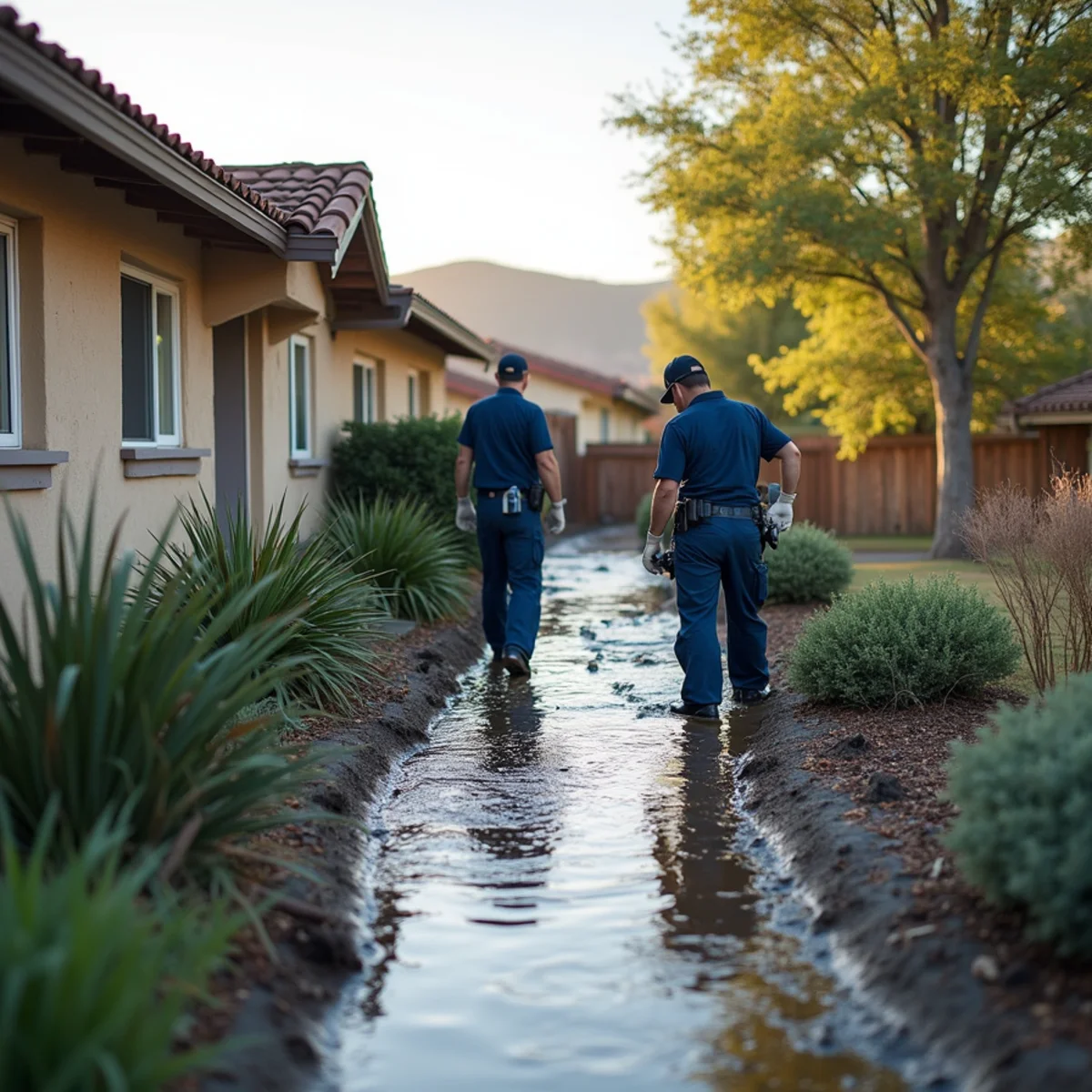
Do Pipes Really Freeze in San Ramon? Foothill Freeze Nights in Bollinger Hills and San Ramon Hills
Rarely, but not never — and the pipes that burst are always the ones nobody protected, because nobody expects freezing in the Bay Area.
Written by the San Ramon Water Damage Pros crew — IICRC-certified technicians working to the ANSI/IICRC S500 standard on water losses across San Ramon and the Tri-Valley. Guidance here reflects how we actually run jobs, not general advice.
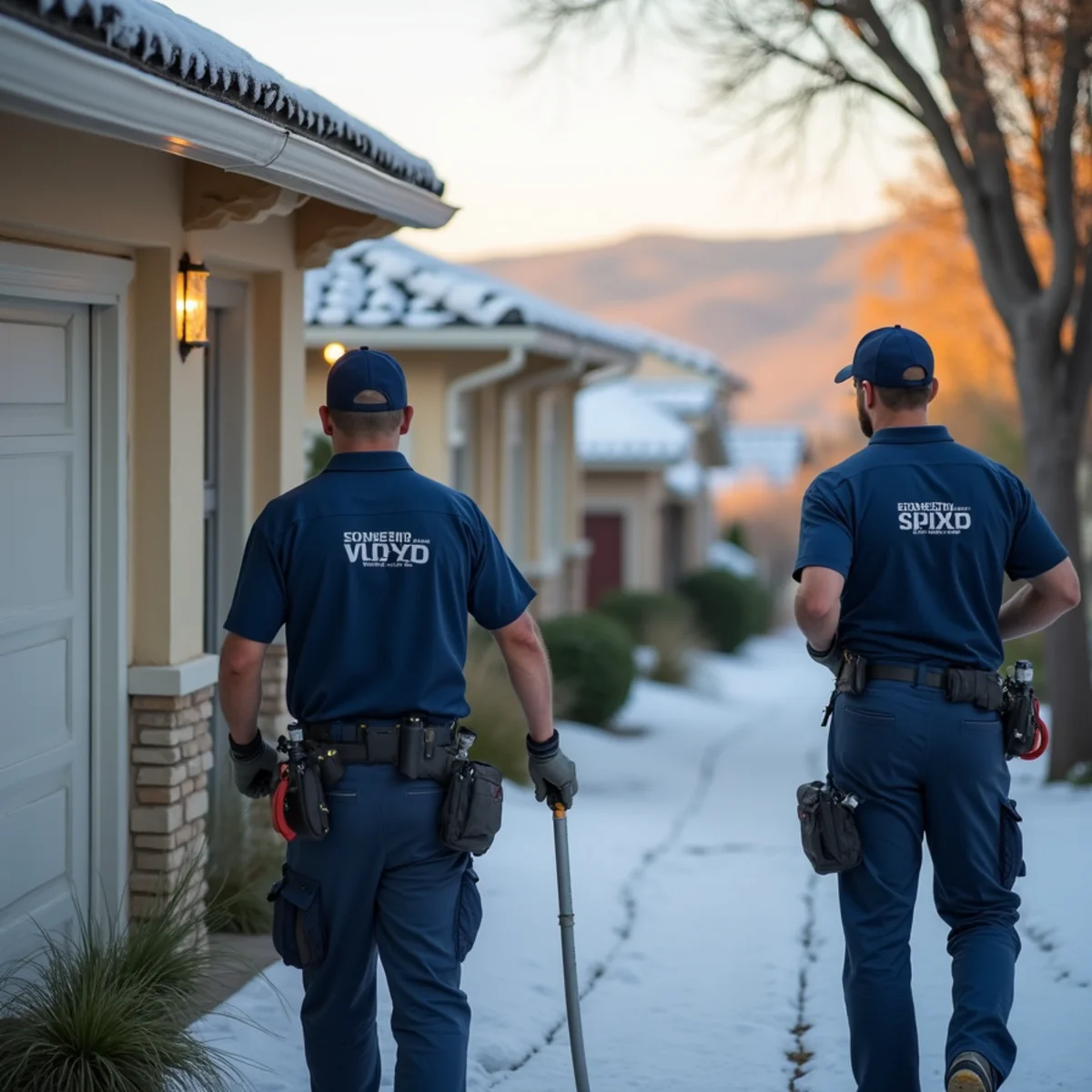
The honest answer is: rarely, but it happens, and when it does it is concentrated in predictable places. San Ramon’s record lows sit in the 18 to 22°F range, and on a clear, still winter night the hillside neighborhoods run several degrees colder than the valley floor because cold air drains and radiative cooling is more effective at elevation.
What makes the rare freeze events damaging is the lack of preparation. In a cold climate, every vulnerable line is insulated as a matter of course. Here, almost nothing is — so when temperatures do drop, the failures happen on lines that have never been protected in forty years.
Water damage happening right now?
We answer live 24 hours a day and commit to a 60-minute response across San Ramon.
+1 (201) 277-9344Where It Actually Happens
- Exterior hose bibs without frost-proof valves or insulated covers — by far the most common single failure.
- Uninsulated lines running through an unconditioned garage.
- Plumbing in a vented crawl space, where outside air circulates freely.
- Pipes in exterior walls, particularly on the north elevation with no sun exposure.
- Lines running through an unheated attic space.
- Irrigation backflow preventers and above-ground valve assemblies.
- Pool equipment and any exposed above-ground plumbing.
The Neighborhoods at Highest Risk
Elevation is the variable. Bollinger Hills and San Ramon Hills sit high enough on the western slopes to run measurably colder on clear, still nights than the valley floor. Sycamore Heights and Hidden Valley are similarly positioned, as are the equivalent foothill addresses along Diablo Road in Danville and around Round Hill in Alamo.
Homes with plumbing in unconditioned space — garages, crawl spaces, attics — are the ones that produce failures in those neighborhoods. A well-insulated home with all plumbing in conditioned interior walls is at very low risk regardless of elevation.
Why Frozen Pipes Burst
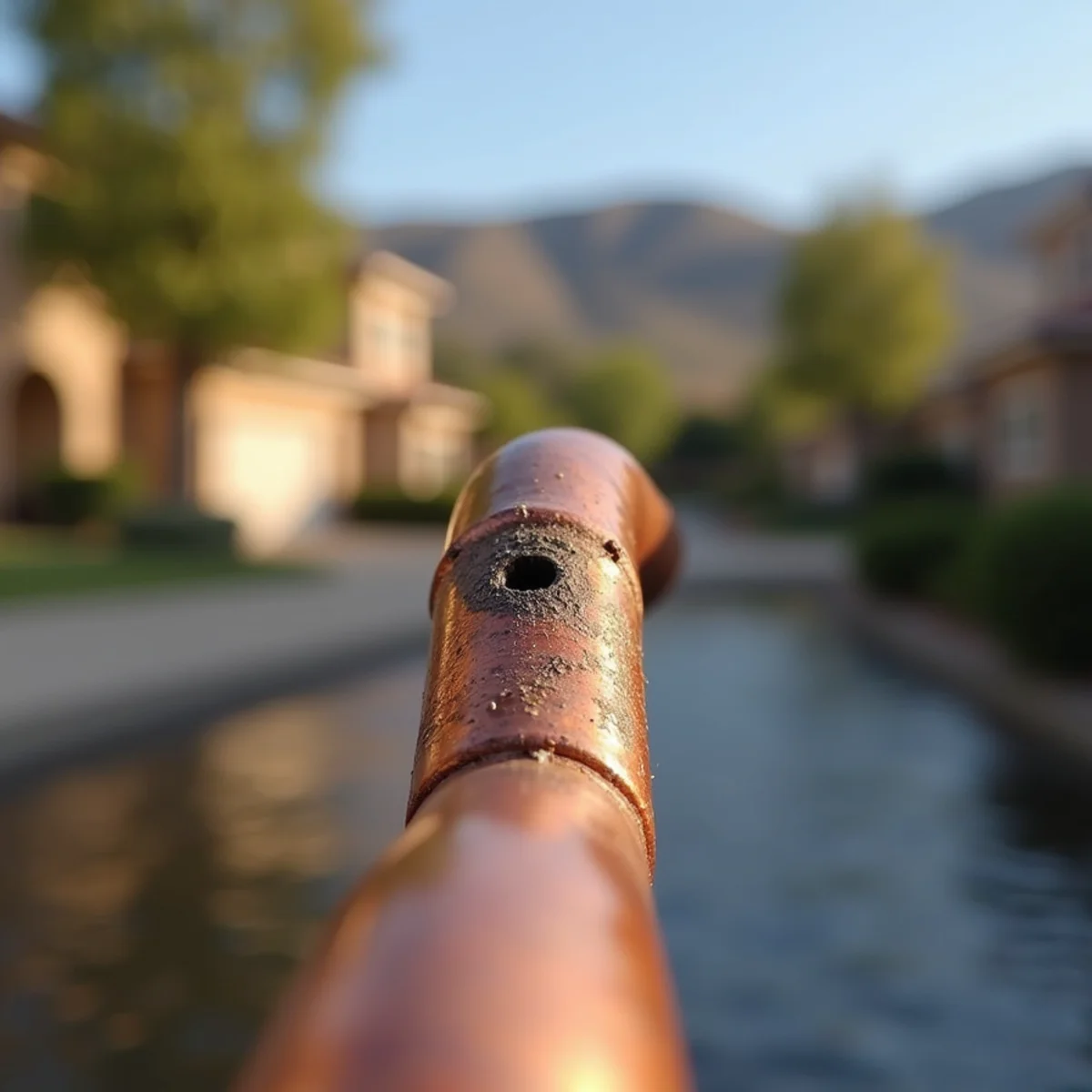
The intuitive explanation — ice expanding and splitting the pipe — is only half right. What actually happens is that an ice plug forms somewhere in the line, then continued freezing downstream of the plug builds pressure between the plug and the closed fixture. The pipe fails at whatever point is weakest, which is frequently some distance from the ice itself.
The practical consequence is important: the burst often does not reveal itself until the ice thaws and water starts flowing through the failure. So the damage from a Tuesday night freeze may appear on Thursday afternoon when temperatures recover — and by then nobody is thinking about the cold snap.
What to Do Before a Cold Snap
- Fit insulated covers on exterior hose bibs. They cost a few dollars each and prevent the most common failure.
- Disconnect garden hoses. A hose left connected traps water in the bib and defeats a frost-proof valve entirely.
- Insulate exposed lines in the garage and crawl space with foam pipe sleeve.
- Close crawl space vents during a hard freeze, and remember to reopen them afterward for moisture control.
- Open cabinet doors under sinks on exterior walls so household heat reaches the pipes.
- Let a faucet drip on the coldest nights — moving water is far harder to freeze, and the trickle relieves pressure.
- Know where your main shutoff is and confirm it turns.
If You Suspect a Frozen Pipe
- A faucet producing no water on a cold morning while others work normally is the signal.
- Open that faucet. It gives melting water somewhere to go and relieves pressure.
- Warm the suspected section gently — a hair dryer or a space heater at a distance. Never a torch, never an open flame.
- Work from the faucet end back toward the frozen section, so melt water can escape.
- Watch closely as it thaws. If a pipe failed while frozen, water will start flowing the moment the plug clears — be ready to close the main.
- If you cannot locate it or reach it, close the main and call.
The Half-Hour of Preparation That Covers a Whole Winter
Freeze risk here is real but brief — a handful of nights a year, mostly at elevation. That makes preparation cheap, because you are protecting against a short exposure rather than a sustained one. All of this is one afternoon with materials from a hardware shop.
- Foam sleeves on any accessible pipe in the garage, crawl space, attic or an exterior wall. They cost very little and slide on without tools.
- Disconnect and drain garden hoses. A hose left attached holds water in the bib and the pipe behind it, and the bib is the single most common freeze failure on a house.
- Insulated covers on outdoor bibs. A few dollars each and they take seconds to fit.
- Close crawl space vents on the cold nights and reopen them afterwards — leaving them shut all winter causes a humidity problem instead.
- Know which cabinet doors to open. Sinks on exterior walls benefit from cabinet doors left open so room heat reaches the pipes underneath.
- Identify the furthest fixture from the meter now, so you know which one to trickle on a cold night.
- Confirm the main shutoff turns. A split pipe discovered on the thaw is a small event if the water can be stopped in ten seconds and a large one if it cannot.
Frequently asked questions
Sustained temperatures in the low twenties are the practical threshold for unprotected pipe in unconditioned space. San Ramon’s record lows reach 18 to 22°F, and the hillside neighborhoods run several degrees colder than the valley floor on clear, still nights.
On the coldest nights, yes — particularly if you have plumbing in unconditioned space. Moving water is much harder to freeze, and the open faucet relieves the pressure that actually causes bursts. A slow drip is enough; you do not need a stream.
Because the failure happened while frozen, but water could not flow through it until the ice plug cleared. That is why damage frequently appears a day or two after a cold snap, when nobody is thinking about the cold any more.
For most San Ramon homes, no — foam insulation and a trickle on the coldest nights are proportionate to a handful of freeze nights a year. Heat tape earns its place on a specific vulnerable run that has frozen before, typically an exposed pipe in an unheated crawl space or along an exterior wall at elevation. If you use it, buy a thermostatically controlled product and follow the instructions exactly; poorly installed heat tape is a fire risk.
Close the main immediately, before looking for the damage — a split that has thawed is discharging at full pressure. Then kill power to the affected area at the panel if water is anywhere near outlets or fittings. Do not apply a naked flame to any pipe. Call us and your plumber, and photograph everything before anything is moved or cleaned.
The short version
It is rare here, which is exactly why the vulnerable pipes are unprotected. Hose bib covers, a bit of foam sleeve in the garage and a dripping faucet on the coldest nights cover most of the risk.
If one does burst, we answer 24 hours a day and will talk you to the shutoff while a truck is moving.