California's Water Heater Strapping Law (HSC §19211): The Earthquake Leak Risk Hiding in Your Garage
Two straps and two flexible connectors. It is a legal requirement, it takes an afternoon, and it prevents the most common post-earthquake water loss there is.
Written by the San Ramon Water Damage Pros crew — IICRC-certified technicians working to the ANSI/IICRC S500 standard on water losses across San Ramon and the Tri-Valley. Guidance here reflects how we actually run jobs, not general advice.
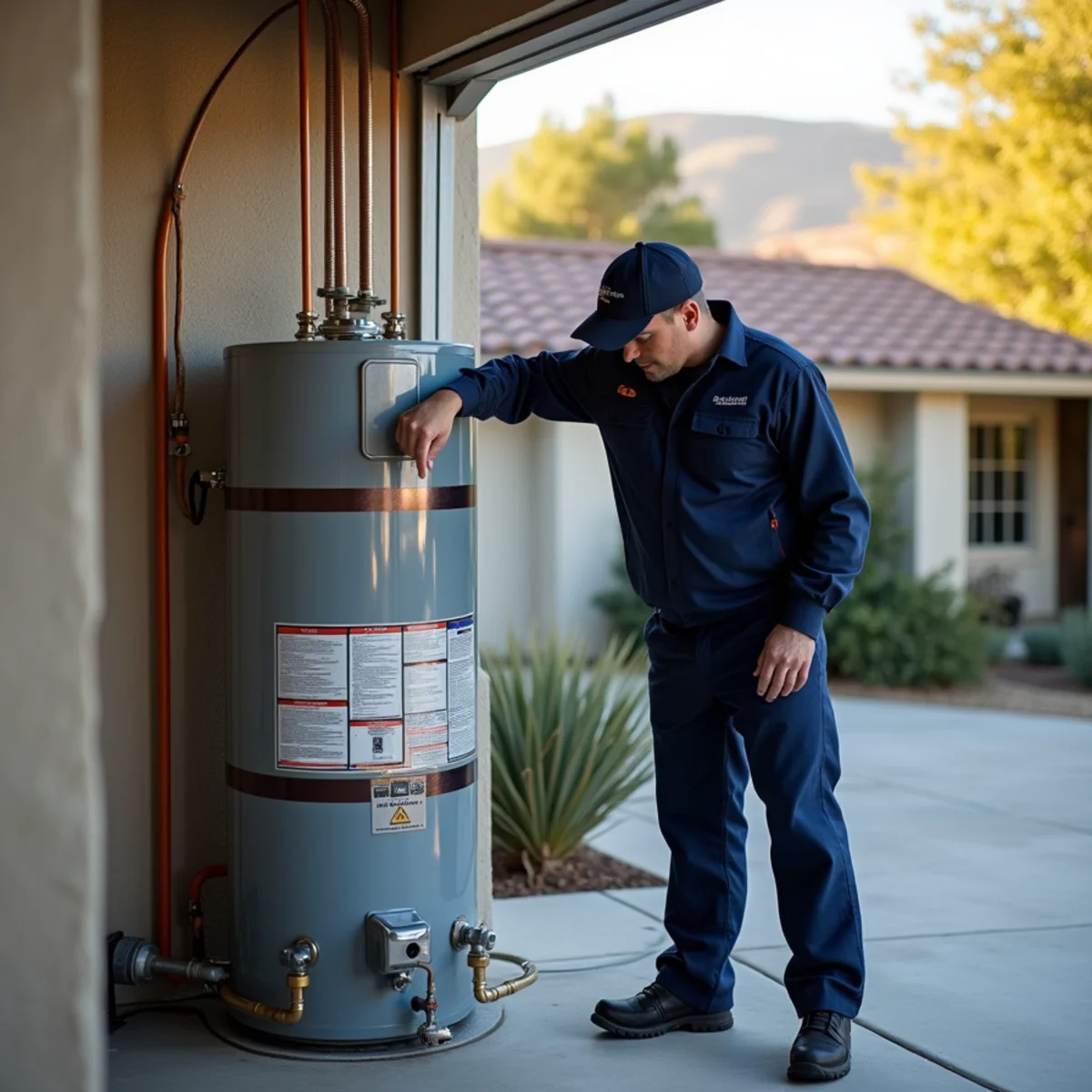
California Health & Safety Code §19211 requires water heaters to be braced, anchored or strapped to resist horizontal displacement from earthquake motion. It applies on sale of a property and on replacement of a unit, and it is enforced through those transactions rather than by inspection.
Which means a great many water heaters in homes that have not changed hands in twenty years are either unstrapped or strapped inadequately — and in the San Ramon Valley, sitting on the Calaveras Fault system, that is a live problem rather than a paperwork one.
Water damage happening right now?
We answer live 24 hours a day and commit to a 60-minute response across San Ramon.
+1 (201) 277-9344The Failure Mode
A full 50-gallon tank weighs somewhere in the region of 500 pounds. It is tall, narrow and top-heavy, standing on a flat base with nothing holding it laterally. During shaking it rocks, walks or tips.
The tank itself is rarely what fails. What fails is what is attached to the top of it — the rigid gas supply line and the water connections. Those have very little tolerance for the tank moving even a few inches.
A sheared gas line is the serious outcome: a fire and asphyxiation hazard in an enclosed garage. A broken water connection is the common one: an uncontrolled flood that keeps running because the supply is still open. In a garage that means a slab flood and drywall wicking into the house. In the Dougherty Valley, Gale Ranch and Windemere homes where the tank sits on an upper-floor platform, it means water down through the ceilings.
What Compliance Actually Requires
- Two straps, not one. One in the upper third of the tank and one in the lower third.
- The lower strap positioned at least four inches above the controls.
- Straps anchored into structure — wall studs or masonry — not into drywall alone. A screw into drywall provides essentially nothing under load.
- Heavy-gauge metal strapping or approved seismic strap kits. Plumber’s tape and rope do not comply and do not work.
- Blocking behind the tank where there is a gap to the wall, so the tank cannot rock backward before the straps engage.
- Flexible connectors at both the water and gas lines. Not strictly part of the strapping requirement, but this is what actually prevents the shear failure.
How to Check Yours in Two Minutes
 1
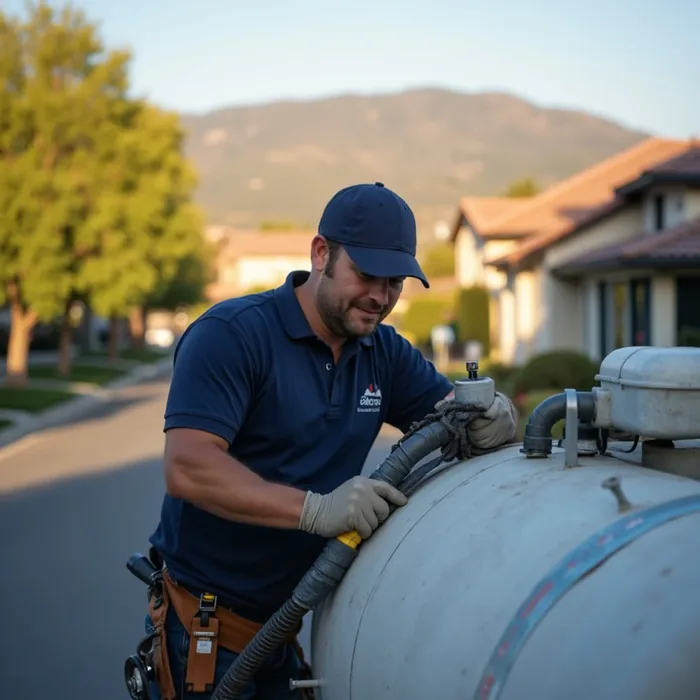
1Count the straps
There should be two. One strap only, or none, is non-compliant and functionally inadequate.
 2
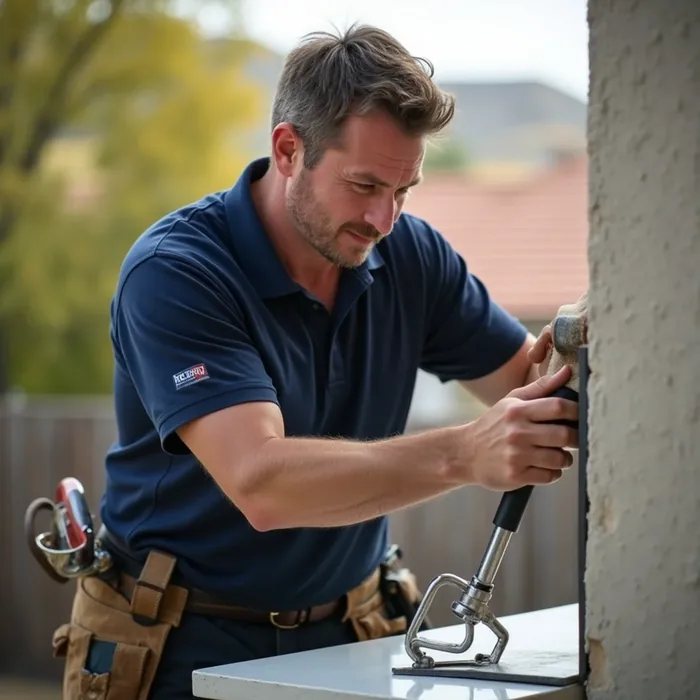
2Check the positions
Upper third and lower third of the tank height. Both straps bunched in the middle does not restrain tipping.
 3
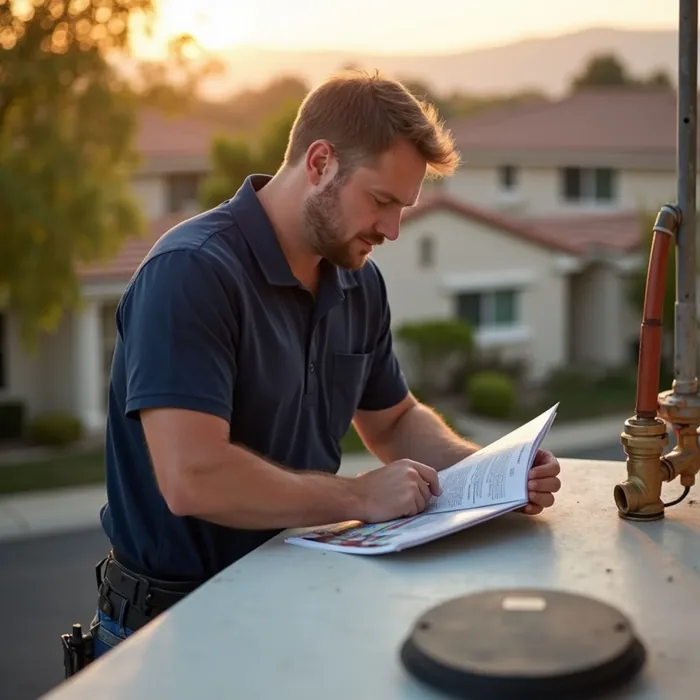
3Check what they are anchored into
Push firmly on the tank. If the strap anchors flex or the drywall moves, they are not in structure. Look for screws landing on studs.
 4
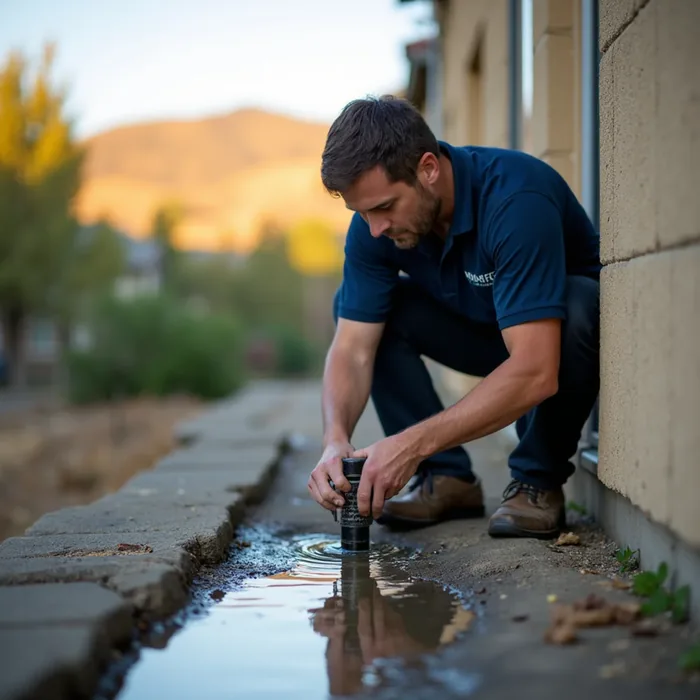
4Look at the connections
Rigid copper or steel going straight into the top of the tank is the vulnerable configuration. Corrugated flexible connectors at both water and gas are what you want.
 5
5Check for a pan and drain
Not a seismic requirement, but a drip pan plumbed to an actual drain turns any tank failure — seismic or otherwise — from a flood into an inconvenience.
After Any Earthquake You Feel
- Check for gas first. If you smell gas or hear hissing, leave and call from outside without switching anything.
- Look at the tank base for movement — scrape marks, a shifted position, or a gap that was not there.
- Check the straps for tension and for anchors that have pulled.
- Look for water at the base and at the top connections.
- Run the meter test: shut every fixture and watch the low-flow indicator for fifteen minutes.
- Keep watching for two weeks. Progressive failures in already-marginal pipe take time to declare themselves.
Worth Doing at the Same Time
If you are already looking at the water heater, three other things take almost no additional effort and materially reduce your exposure.
First, find out how old it is — the manufacturing date is encoded in the serial number on the label. On Tri-Valley water at 16 to 18 grains per gallon, plan on eight to twelve years rather than the longer figures quoted nationally, because heavy scale on the tank floor accelerates corrosion.
Second, add a leak sensor in the drip pan. They cost very little and catch the slow failures as well as the sudden ones.
Third, if the tank is upstairs or in an interior closet, consider an automatic shutoff valve that closes the supply when the sensor triggers. It is the only intervention on this list that helps while you are at work.
The Rest of the Heater Worth Checking While You Are There
If you are already looking at the straps, five more minutes covers everything else that commonly fails on a water heater. Most of these are visible without tools and each of them is a genuine failure mode we attend.
- The date on the label. Anything past ten to twelve years in this water is running on borrowed time, and knowing the number is worth more than any inspection.
- The temperature and pressure relief valve and its discharge pipe. The pipe must run downward and terminate near the floor — if it points up, is capped, or is missing, that is a safety issue rather than a maintenance one.
- Corrosion or moisture at the base of the tank. Rust staining or a dried mineral trail means it has already been weeping, and tanks do not recover from that.
- The flexible connectors at the top. Corroded or kinked connectors fail independently of the tank and are inexpensive to replace.
- A drain pan underneath, and whether its line actually discharges somewhere. Pans plumbed to nothing are common and achieve nothing.
- The anode rod, if the heater is accessible and mid-life. Replacing a spent anode is the single most effective way to extend a tank's life in hard water.
- Clearance around the unit. Stored boxes and paint tins against a gas heater are both a fire risk and the reason nobody notices a slow leak.
Frequently asked questions
Yes. Health & Safety Code §19211 requires water heaters to be braced, anchored or strapped against horizontal earthquake displacement. Compliance is checked at sale and on replacement, which means long-held homes often have inadequate or missing strapping.
No. The requirement is two — one in the upper third of the tank and one in the lower third, anchored into structure rather than drywall. A single strap in the middle does not restrain a tall, top-heavy tank from tipping.
A great deal. Strapping keeps the tank from moving; flexible connectors mean that if it does move slightly, the gas and water lines flex instead of shearing. Since shearing at the top connections is the actual failure mode, connectors are arguably the highest-value part of the upgrade.
Not necessarily — strapping kits are widely available and the work is within reach of a competent homeowner. What matters is that both straps anchor into structural framing rather than just into drywall, and that they sit in the upper and lower third of the tank. If you are unsure about finding studs or about the anchoring, have it done properly; a strap fixed to plasterboard provides essentially no restraint.
Water heater bracing is commonly included in the compliance items reviewed at point of sale in California, and inspectors do look at it. Beyond any transaction requirement, it is the cheapest earthquake mitigation available on a house and the failure it prevents — a toppled tank tearing out its water and gas connections — is one of the worst outcomes in an ordinary home.
The short version
Two straps into structure, flexible connectors at both lines, a pan plumbed to a drain and a leak sensor. An afternoon of work and a modest cost against the most common post-earthquake water loss there is.
When we replace or coordinate a water heater we install it to that standard as a matter of course.