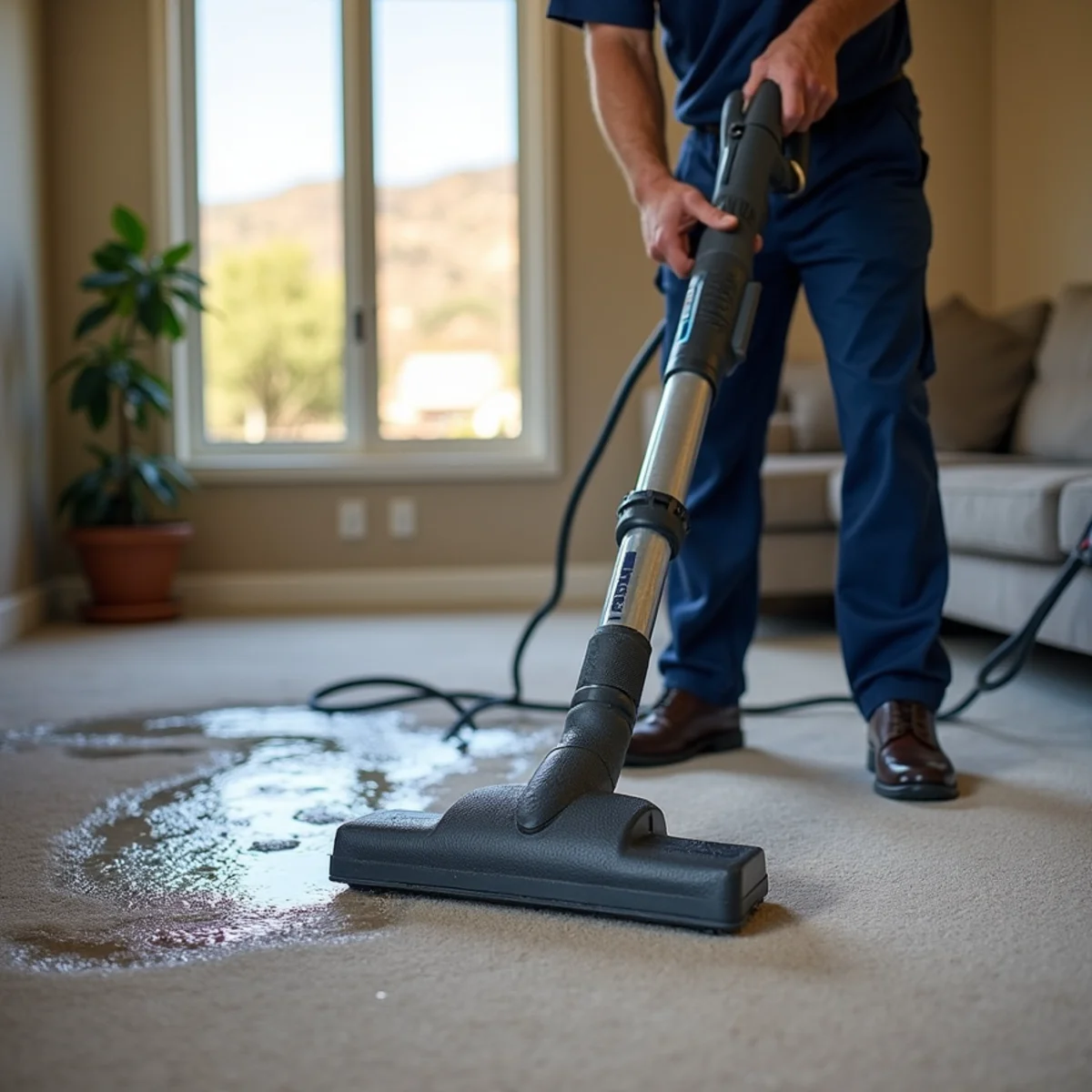
Wet Drywall: When It Can Be Saved and When It Has to Come Out
Three questions decide it: how contaminated the water was, how long it sat, and whether there is insulation behind it.
Written by the San Ramon Water Damage Pros crew — IICRC-certified technicians working to the ANSI/IICRC S500 standard on water losses across San Ramon and the Tri-Valley. Guidance here reflects how we actually run jobs, not general advice.
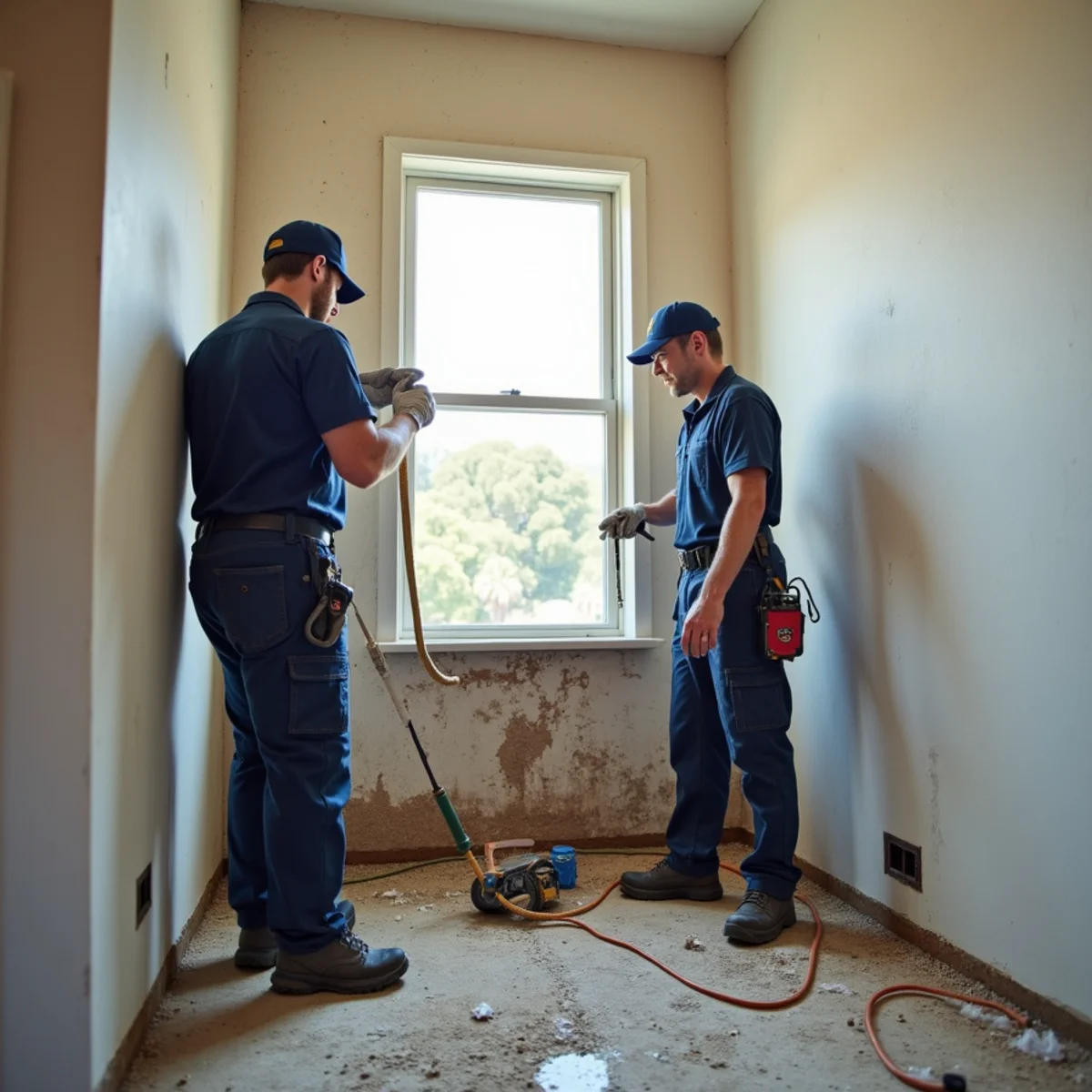
Drywall is gypsum sandwiched between paper. Both absorb water readily, and the paper facing is organic — food for microbial growth as soon as it is wet and warm. That is why drywall is the material most often removed after a water loss, and also why much of it can be saved.
Whether yours can be saved comes down to three questions, and a competent crew should be able to answer all three for your specific wall before anything is cut.
Water damage happening right now?
We answer live 24 hours a day and commit to a 60-minute response across San Ramon.
+1 (201) 277-9344Question 1: What Category Was the Water?
- Category 1 (clean supply water): drywall is frequently dried in place. This is the best case and it is common.
- Category 2 (grey — dishwasher, washer, toilet overflow without solids): sometimes salvageable, depending on duration and whether insulation is behind it. Often cut back as a precaution.
- Category 3 (sewage, storm or ground water): removed, always. Contaminated water wicks upward inside the gypsum well above the visible line, and there is no way to verify decontamination inside an absorbent material.
Question 2: How Long Was It Wet?
Time is the variable that most often converts a saveable wall into a removed one. Drywall wicks moisture upward at roughly an inch an hour, so a wall standing in an inch of clean water for two hours has a couple of inches of wet material; the same wall after twelve hours has considerably more.
The 24 to 48 hour window matters here too. Growth on the paper facing can begin inside it, and once there is growth the material comes out regardless of category or how dry it subsequently gets.
Question 3: What Is Behind It?
This is the question homeowners rarely think about and it frequently decides the outcome. Drywall on an interior wall with an empty cavity can often be dried in place by directing airflow into the cavity through small openings behind the baseboard.
Drywall over insulation is different. Wet fiberglass batt or blown insulation loses most of its R-value permanently, holds moisture against the framing and the back of the drywall, and cannot be dried effectively inside a closed cavity. If insulation behind the wall got wet, the drywall is coming off to get the insulation out — even if the drywall itself might have dried.
What a Flood Cut Is
When drywall has to be removed, it is not torn out arbitrarily. A flood cut is a straight horizontal cut a set distance above the highest point of moisture — commonly at 12, 24 or 48 inches depending on how far the water wicked.
Two reasons for that. First, cutting above the wet line ensures nothing damp is left in the wall. Second, cutting at a standard height means the replacement is a clean, straight patch using a standard sheet dimension, rather than an irregular repair that will always be visible.
A good flood cut is level, straight, and stops at a stud so there is something to fasten the new sheet to. If you are watching a crew cut ragged holes at random heights, that is a signal about the rest of the work.
Drying Drywall in Place — How It Actually Works
When the wall is being saved, drying it is not a matter of pointing a fan at the room. The moisture is inside the assembly, so airflow has to reach it.
Typically that means removing the baseboard and drilling a row of small holes low on the wall — behind where the baseboard will go back, so they are never visible — then injecting air into the cavity. Sometimes a specialist injection drying system is used. Moisture content is measured daily in the drywall, the framing and the bottom plate, and the equipment stays until all of them hit the dry standard.
The finished result is a wall with no visible sign anything happened, at less cost and disruption than replacement. It is worth asking whether it is an option before agreeing to demolition.
Special Cases in San Ramon Homes
- Textured ceilings in pre-1980s homes — much of Central San Ramon, Broadmoor, Old Ranch and Crow Canyon — may contain asbestos and must be tested before any cutting or scraping.
- Lath-and-plaster in older Pleasanton and Martinez buildings is not drywall and needs slower, gentler drying to avoid cracking. It also holds moisture far longer.
- Garage drywall wicks quickly from a slab-level flood and is usually cut back, because the garage wall assembly connects directly to the house.
- Ceiling drywall that is sagging is holding water and should be relieved deliberately rather than left to fail on its own.
How to Read the Wall Before Anyone Cuts It
There are visible signs that tell you which way a wall is going to go, and they are worth knowing before a contractor arrives — both so you understand the recommendation and so you can question it if it does not match what you are looking at.
- Softness under gentle pressure means the gypsum core has lost its integrity. That wall is coming out; drying cannot restore structure that has already failed.
- A visible bulge or sag means the board has deformed and separated from the framing. Same answer, regardless of how dry it later becomes.
- Tape lifting at a seam or a corner bead pulling away indicates the board has moved. Repairing the tape over a compromised board buys a season at most.
- Paint blistering or bubbling shows moisture is still moving through the assembly from behind rather than having dried out from the face.
- A clean, sharp water line with firm board above and below is the best case, and often dries in place.
- A stain with no softness, no deformation and a dry meter reading is usually cosmetic — that wall needs sealing and painting, not replacement.
- Any growth visible on the surface means more is behind it, and the decision moves from drying to remediation.
Frequently asked questions
Above the highest point where moisture is detected, at a standard height — commonly 12, 24 or 48 inches — so the replacement is a clean patch. The height comes from moisture readings, not from where the water line is visible, because drywall wicks well above the mark you can see.
Surfaces will appear dry while the core and the cavity behind stay wet, which is exactly the condition growth needs. Drying drywall properly means directing airflow into the cavity and verifying moisture content daily until it matches a dry standard — not waiting and hoping.
Not if it is done properly. A straight flood cut at a standard height, a clean patch fastened to a stud, tape and finish, texture matched to the existing wall, and paint taken corner to corner rather than spot-patched. Texture matching is the skill that separates an invisible repair from an obvious one.
Rarely, and this is what usually decides the wall. Fibreglass batts that have taken water lose loft and hold moisture against the framing; blown cellulose compacts and does not recover. Even where the drywall itself could have been dried, saturated insulation behind it means opening the wall — which is why the honest answer to whether a wall can be saved depends on what is behind it as much as on the board.
Sometimes, and a good contractor will say so. Cavity drying takes days of equipment and monitoring; a flood cut and replacement is a known quantity. Where the wall is unpainted garage drywall or a simple uninsulated partition, removal is often the sensible choice. Where it is a finished wall with wallpaper, panelling or a specialist finish, the drying days are cheaper than reproducing what was there.
The short version
Clean water, caught fast, empty cavity: your drywall probably dries in place. Contaminated water, days of exposure, or wet insulation behind it: it is coming out, and a straight flood cut is the right way to do that.
We measure before we cut, and we tell you which situation you are in rather than defaulting to demolition.