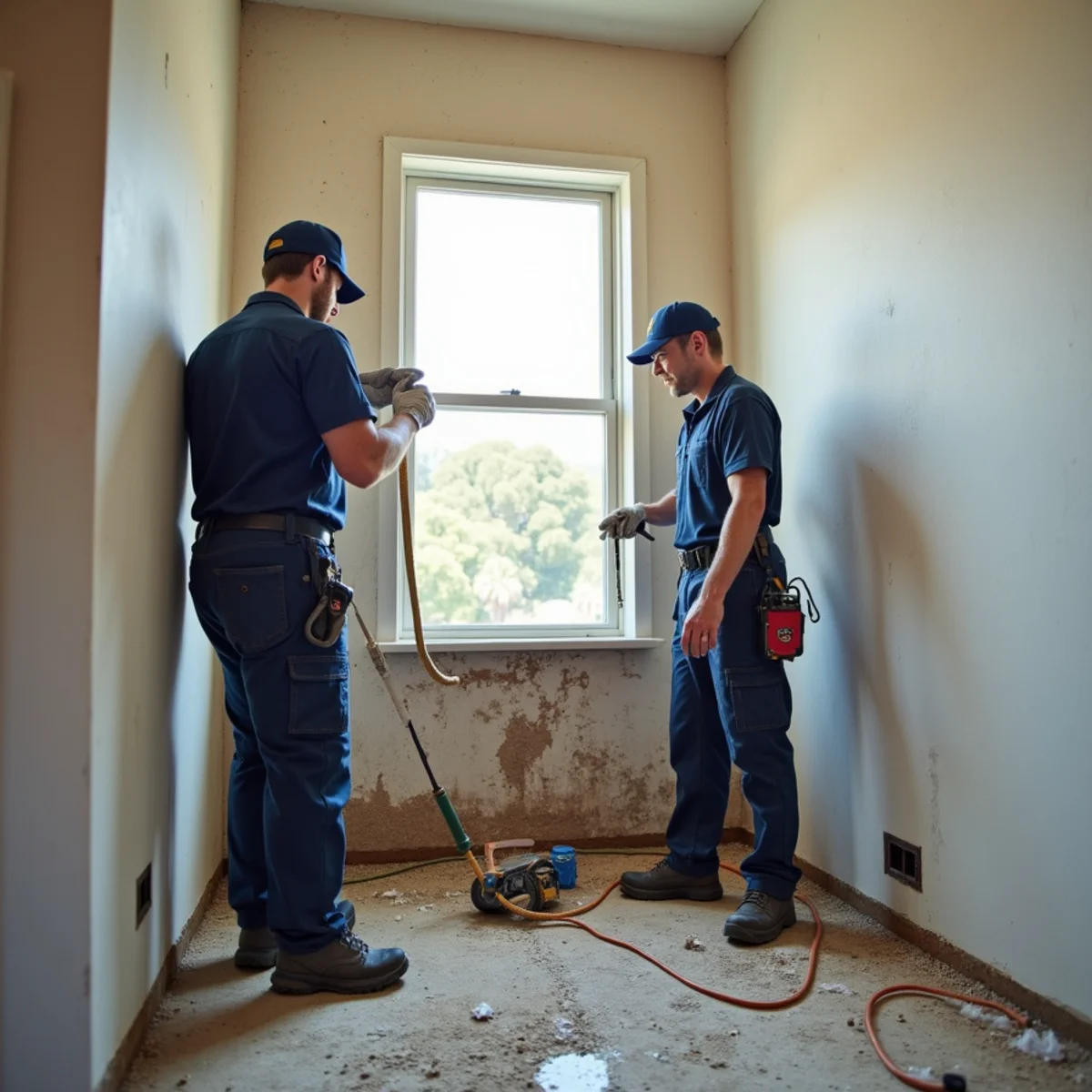
Hidden Leak Symptoms: Warm Floor Spots, High Water Bills, and the Sound of Running Water
A hidden leak runs 24 hours a day. Here are the symptoms, and a fifteen-minute test that tells you definitively whether you have one.
Written by the San Ramon Water Damage Pros crew — IICRC-certified technicians working to the ANSI/IICRC S500 standard on water losses across San Ramon and the Tri-Valley. Guidance here reflects how we actually run jobs, not general advice.
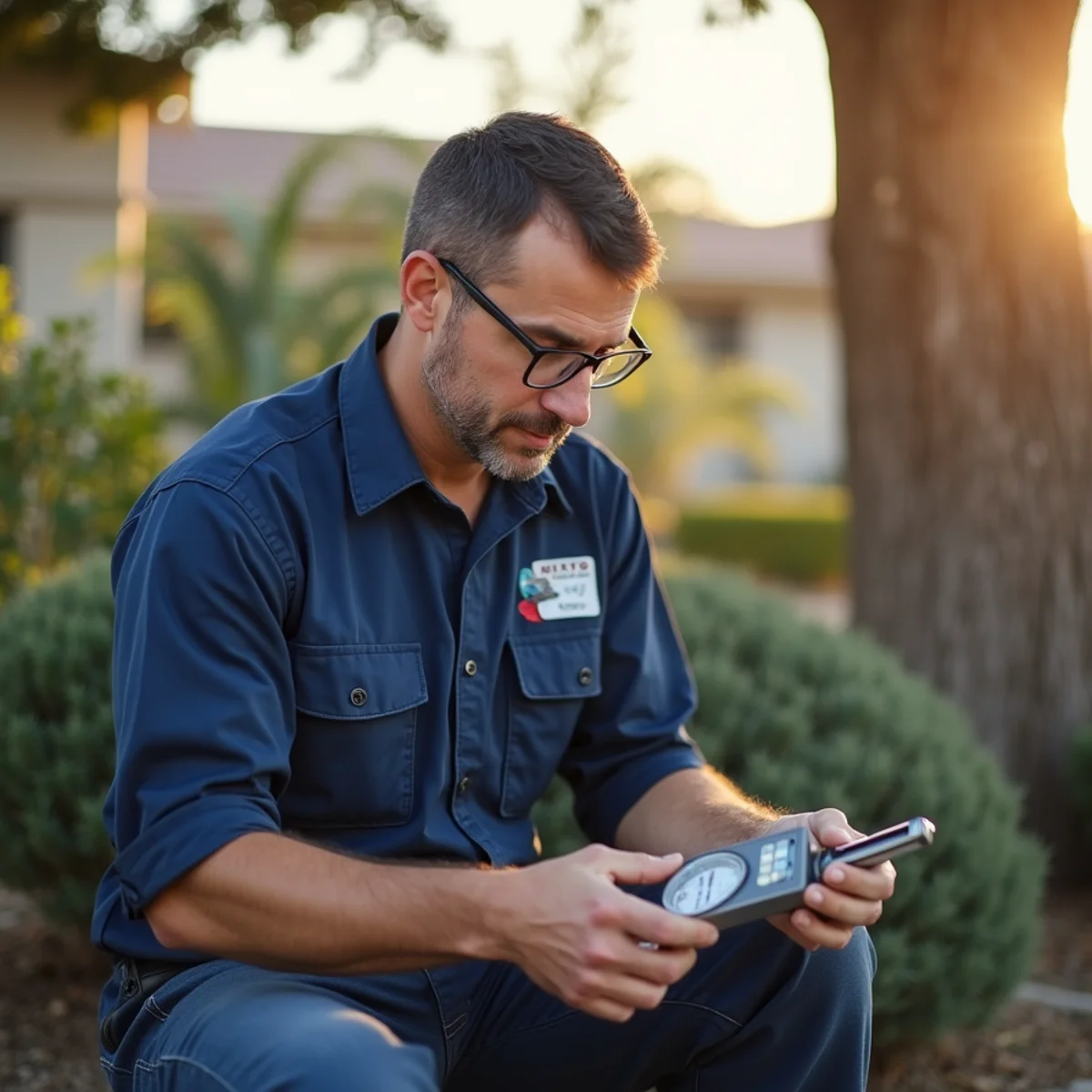
Hidden leaks are expensive precisely because they are undramatic. There is no burst, no flood, no obvious moment. Water escapes continuously into a wall cavity, under a slab or into the soil, and the first evidence is usually indirect — a bill, a smell, a warm patch underfoot.
Below are the symptoms worth acting on, and then a test you can run yourself in fifteen minutes that answers the question definitively.
Water damage happening right now?
We answer live 24 hours a day and commit to a 60-minute response across San Ramon.
+1 (201) 277-9344The Fifteen-Minute Test That Settles It
 1
1Turn off everything that uses water
Every tap, the dishwasher, the washing machine, the ice maker, the irrigation controller. If you have a pool with an auto-fill, isolate that too. Ask everyone in the house not to use water.
 2
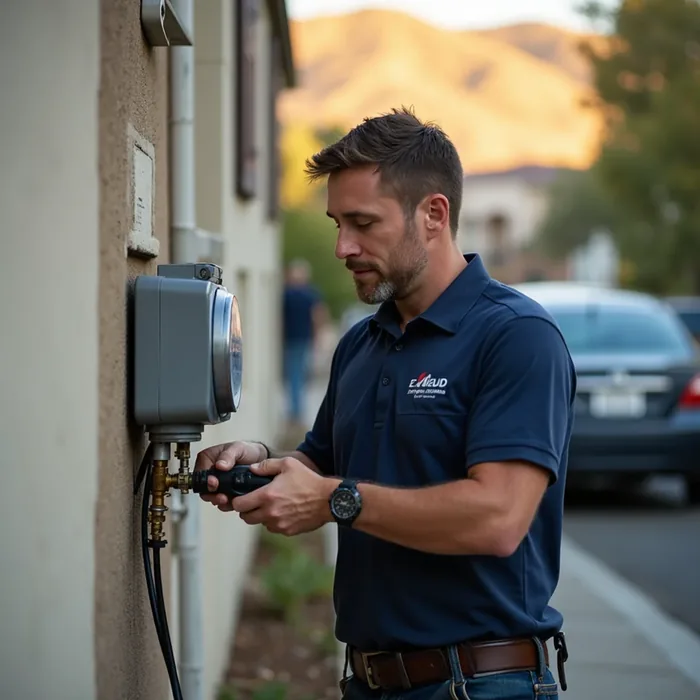
2Find your EBMUD meter
It is in a covered box near the street, usually at the property line. You may need a screwdriver or a meter key to lift the lid.
 3
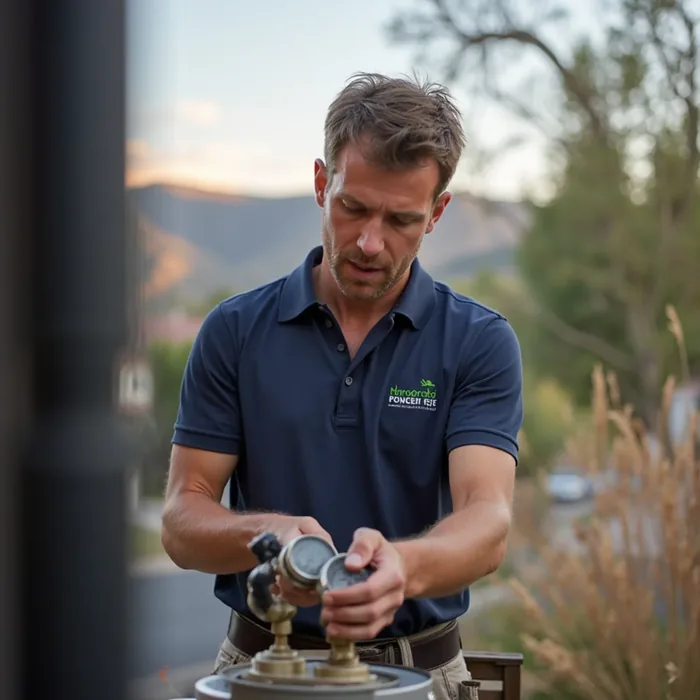
3Look at the low-flow indicator
Most meters have a small triangular or star-shaped dial that spins with even a tiny flow. Note its position, or note the exact reading on the dials.
 4
4Wait fifteen minutes and look again
If the indicator has moved at all, or the reading has changed, water is leaving your system somewhere with every fixture closed. That is a leak, and the test is essentially conclusive.
 5
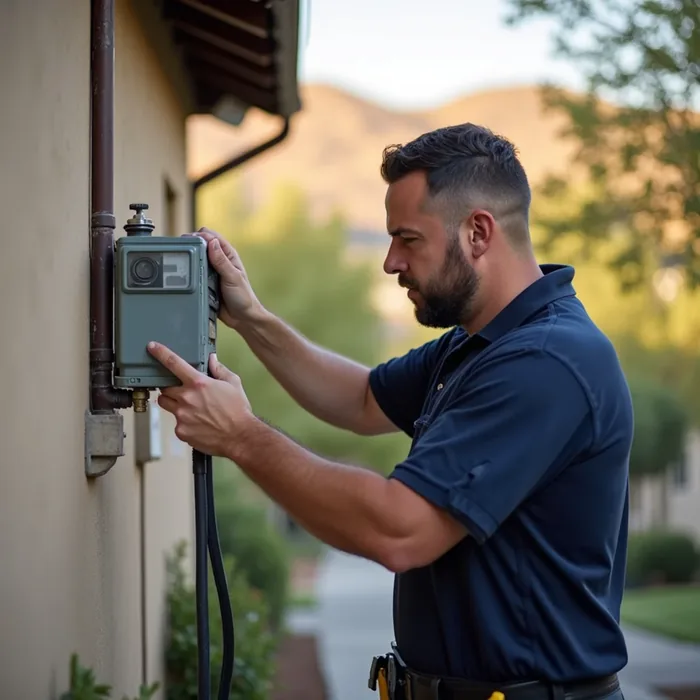
5Narrow it down
Close the main shutoff at the house and repeat. If the meter still moves, the leak is between the meter and the house — the service line. If it stops, the leak is inside. Isolate the irrigation separately the same way.
Symptom: A Warm Spot on the Floor
This is the most specific single symptom in the whole list. A hot-water line leaking under a slab heats the concrete above it, producing a localized warm patch you can find with bare feet.
It is essentially diagnostic of a hot-side slab leak. If you have it, particularly alongside an unexplained bill increase, you can be fairly confident what you are dealing with before anyone arrives.
This matters a great deal in San Ramon, where 1970s and early-80s slab-on-grade housing across Central San Ramon, Broadmoor, Old Ranch, West San Ramon and Ponderosa is at peak slab-leak age.
Symptom: The Sound of Running Water
Stand in the quietest part of the house at the quietest time of day, with every fixture and appliance off. A faint hiss, trickle or rushing sound coming from a wall or the floor is pressurized water escaping.
Put an ear to the floor or against a wall in different rooms to narrow the location. This is genuinely useful — it is the same principle the acoustic equipment we use is based on, just with less sensitivity.
The Other Symptoms Worth Acting On
- A water bill that jumped with no change in usage. A continuous leak runs 24 hours a day, so it shows on the bill before it shows anywhere else.
- Water pressure that dropped gradually enough that the household adapted to it without noticing.
- Cracks appearing in tile grout, flooring seams or wall corners — water softening soil beneath a slab causes differential movement, and San Ramon’s expansive clay amplifies it.
- A musty smell near the floor or along a baseboard, indicating growth in carpet pad or a wall bottom plate.
- Peeling paint, bubbling drywall tape or rust bleeding through at nail heads.
- A persistently damp or unusually green patch in the yard, or one that stays wet between waterings.
- Damp or discoloured patches on a slab floor, sometimes with white efflorescence at the edge.
Narrowing It Down Before You Call Anyone
Once the meter test confirms water is escaping, a few minutes of further work will often tell you roughly where. This is worth doing because it shortens the diagnostic visit and it stops you paying to establish something you could have established yourself.
- Isolate the house from the irrigation — Close the irrigation shutoff and repeat the meter test. If the movement stops, the leak is in the landscape system rather than the house — a completely different and usually cheaper repair.
- Isolate the house from the supply — Close the main at the house while leaving the meter valve open. If the meter still moves, the leak is between the meter and the house, which points at the service line rather than anything indoors.
- Test the water heater separately — Close the cold inlet to the heater and repeat. Movement that stops here means the leak is downstream on the hot side, which immediately halves the search.
- Check the toilets — A silently running toilet flapper is the single most common cause of an unexplained bill and is frequently mistaken for a hidden leak. Put a few drops of food colouring in the cistern and wait twenty minutes without flushing — colour appearing in the bowl means the flapper is passing.
- Walk the floors barefoot — A warm patch on a slab floor points at a hot-side slab leak and gives you an approximate location. Do it early in the morning before the sun has had any effect on the floor.
- Listen at the quietest hour — Late at night with everything off, put an ear to the floor or a wall in several rooms. A hiss or a running sound is often audible without any equipment, and where you hear it loudest is genuinely useful information.
Frequently asked questions
Shut off every fixture and appliance that uses water, then watch the low-flow indicator on your EBMUD meter for fifteen minutes. Any movement means water is leaving the system. Then close the main at the house and repeat — if it still moves, the leak is in the service line outside.
Almost certainly a hot-side slab leak. A leaking hot-water line under the concrete heats the slab above it, producing a localized warm patch. It is the most specific symptom on the list and it is common in San Ramon’s 1970s and 80s slab-on-grade housing.
A great deal, because it runs continuously. Even a small pinhole flowing 24 hours a day adds up quickly on an EBMUD bill — which is why a bill spike with no change in usage is usually the first hard evidence, often a month or two before any physical symptom appears.
Take a photograph of the meter reading, use no water at all for two hours, and photograph it again. Any change means water is escaping somewhere. It is slower than the low-flow dial but exactly as conclusive, and photographing rather than writing it down avoids the transcription errors that make people doubt a genuine result.
It can, and it is worth checking your consumption history for a pattern before assuming the worst — a single anomalous month with normal months either side is more likely a reading problem than a leak. What points firmly at a leak is consumption that steps up and then stays up, especially where nothing about the household changed. The meter test settles it either way in fifteen minutes.
The short version
Run the meter test. It takes fifteen minutes and it turns a suspicion into a fact, which is the only basis for deciding what to do next.
If it confirms a leak, we locate it precisely with acoustic and thermal equipment so one small opening gets made in the right place — rather than three exploratory ones in the wrong places.