Water Damage in a Retail Space: A Response Plan for Bishop Ranch–Area Tenants and Managers
For most commercial tenants the restoration invoice is not the biggest number in the event. Lost trading days are. Plan accordingly.
Written by the San Ramon Water Damage Pros crew — IICRC-certified technicians working to the ANSI/IICRC S500 standard on water losses across San Ramon and the Tri-Valley. Guidance here reflects how we actually run jobs, not general advice.
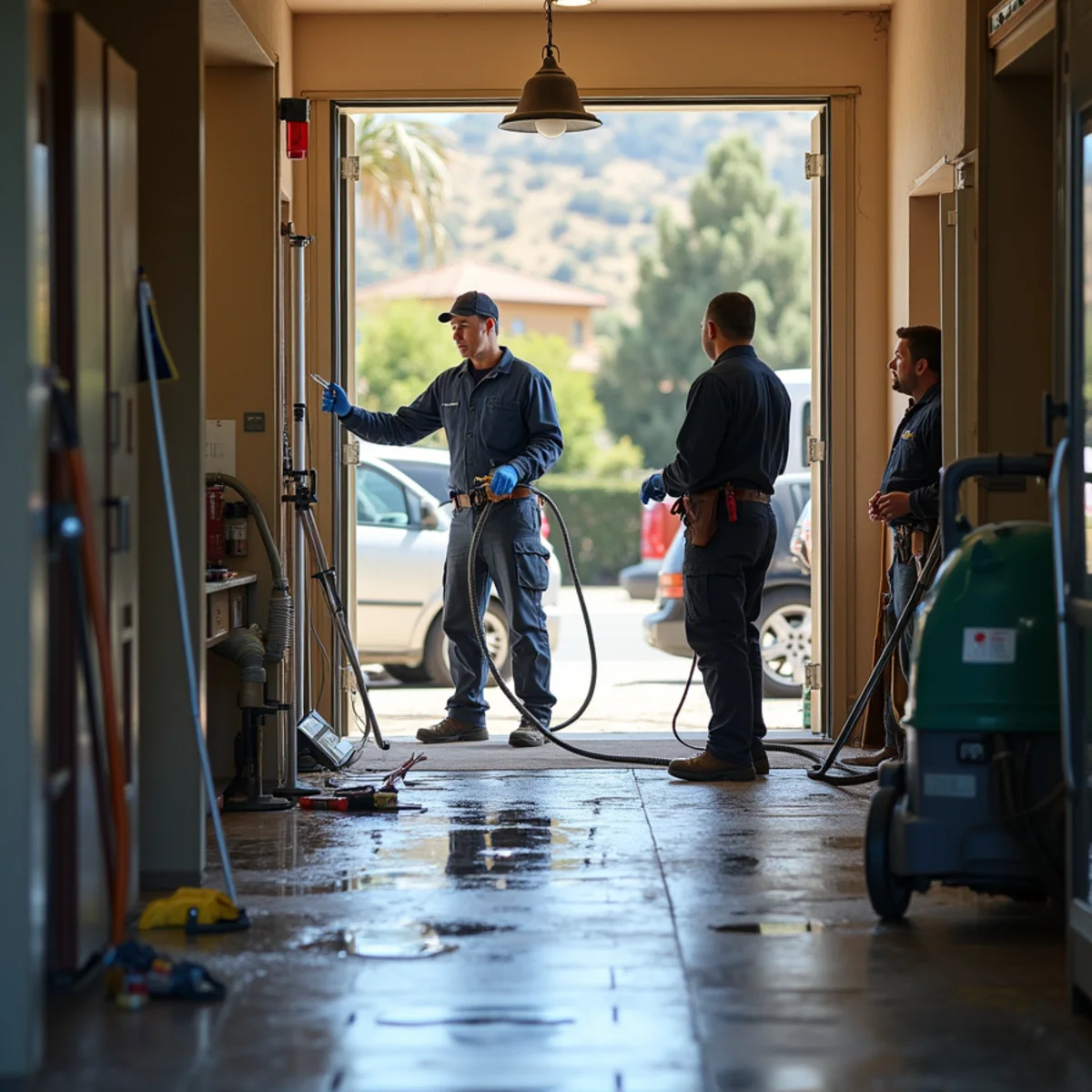
A commercial water loss is a business interruption problem that happens to involve water. The restoration is technically similar to residential work; the constraints are completely different. There are customers, staff, inventory, IT infrastructure, a landlord, and a lease that determines who is responsible for what.
San Ramon has a substantial commercial base — Bishop Ranch is one of the largest suburban office parks in the western United States, and the Crow Canyon and Camino Ramon corridors carry retail, medical and professional space alongside it. This is the plan worth having before you need it.
Water damage happening right now?
We answer live 24 hours a day and commit to a 60-minute response across San Ramon.
+1 (201) 277-9344The First Hour
 1
1Make it safe
Evacuate the affected area, isolate power to it if you can do so safely, and keep customers out. Standing water plus retail electrical at floor level is a genuine hazard.
 2
2Stop the source
Know where your suite shutoff is before this happens. In multi-tenant buildings it is often not obvious and may require building engineering to access.
 3
3Call building management immediately
They need to know for the building’s sake, and depending on the source it may be their responsibility. They also control access, after-hours entry and any shared systems.
 4
4Call a restoration company
Before you start moving stock. Every hour of delay grows the scope, and in a commercial space that translates directly into closed days.
 5
5Protect inventory, records and equipment
Get stock off the floor and away from the affected area. Wet paper records are time-critical and often recoverable if handled quickly. Protect or relocate IT equipment before drying starts.
 6
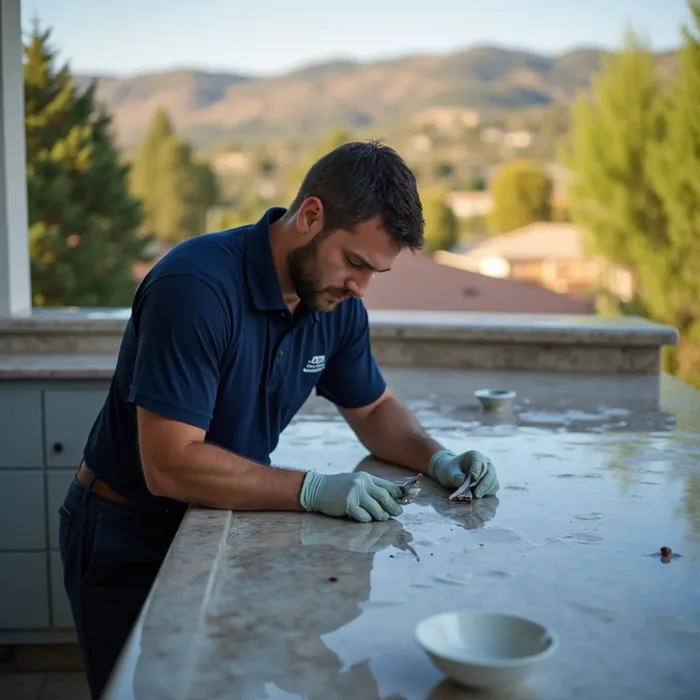
6Document everything
Video and photograph before anything moves — the water, the source, affected stock, fixtures and finishes. Multiple parties will be reading this record.
 7
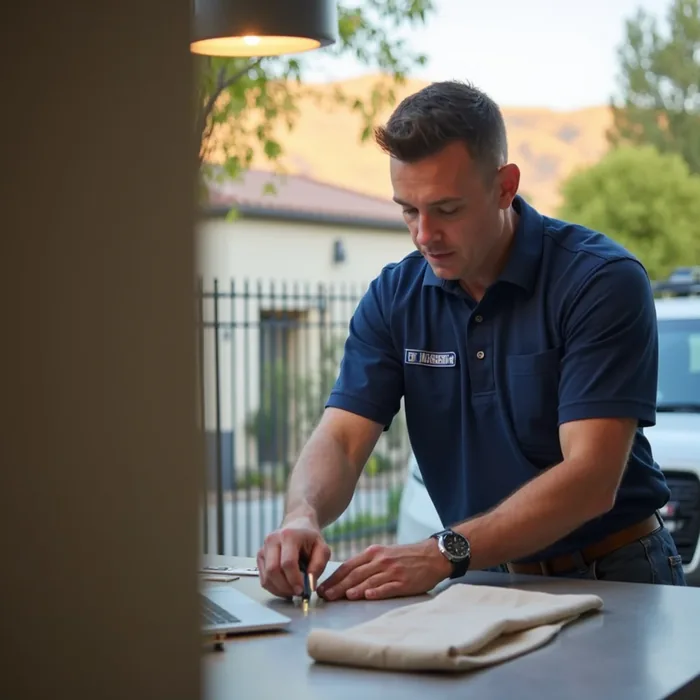
7Notify your insurer, and check business interruption cover
Report the property claim and ask specifically about business interruption, which is a separate line and frequently underclaimed.
What Fails in Commercial Buildings
- Fire sprinkler discharge — accidental activation or a damaged head releases a very large volume at high pressure, often discovered hours later over a weekend.
- Rooftop HVAC condensate lines and rusted drain pans dripping into the ceiling plenum.
- Flat and low-slope roof membranes failing at seams and flashing during sustained rain.
- Multi-story plumbing, where an upper-floor failure travels down through several tenancies.
- Restroom supply failures, typically on the far side of the building from anyone who would notice.
- Loading dock and grade-level doors taking storm surface water.
- Water heaters and mechanical rooms, which in commercial buildings hold far more volume than residential units.
Minimizing Closed Days
This is where the money is. For most retail and service businesses, lost revenue during closure exceeds the restoration invoice, often substantially — so the right question is not "what does the work cost" but "how do we keep trading."
- Schedule extraction and demolition overnight or before opening, with contained drying continuing during trading hours.
- Use phased containment so the affected area is isolated and the rest of the floor stays open.
- Sequence the work so revenue-generating space returns first.
- For large open volumes, desiccant dehumidification dries faster than refrigerant units at commercial scale.
- Get a written timeline you can share with staff, customers and the landlord without editing.
- Handle document and records recovery as its own workstream rather than as an afterthought.
Lease Responsibility, Briefly
Most California commercial leases allocate the building shell and structure to the landlord and the tenant improvements, trade fixtures, inventory and business personal property to the tenant, with each carrying insurance for their own side. A triple-net lease may shift considerably more onto the tenant than a full-service one.
The practical risk is delay while responsibility is debated. Nearly every commercial lease also obligates the tenant to mitigate promptly, so waiting is usually a breach as well as a bad idea — and the loss grows the whole time.
Start mitigation immediately, document scope precisely, and sort responsibility afterward with a clean record. We work with landlords, tenants, property managers and multiple carriers on the same loss regularly, and documentation is what keeps that from becoming a dispute.
Worth Doing Before It Happens
- Find and label your suite water shutoff, and confirm who can access it after hours.
- Know your building engineering contact and the after-hours procedure.
- Confirm you carry business interruption coverage and understand the waiting period.
- Keep critical records off the floor and, ideally, digitized.
- Know which fixtures and finishes are tenant improvements versus landlord property — it determines whose claim they sit on.
- Save a restoration company’s number where staff can find it, not just in the manager’s phone.
What to Have Agreed Before Anything Happens
Commercial losses go badly when basic questions have to be answered at two in the morning by someone who does not have the authority to answer them. Every item below can be settled on an ordinary afternoon.
- Who can authorise emergency work, and what happens if that person cannot be reached. Name a deputy.
- Where the water shutoffs are for your suite specifically, not just the building main, and whether you can reach them out of hours.
- Whether building management must be notified before a contractor enters, and how to reach them at night.
- What your lease says about who is responsible for what. Find out now rather than during a dispute.
- Where the critical assets are — servers, records, stock — and what the order of rescue is if a decision has to be made quickly.
- Whether after-hours access is possible for you and for contractors, and who holds the keys or codes.
- Your insurer's claim line and policy number, held somewhere other than in the building.
- A photographic record of the suite as it normally looks, which is the baseline nobody ever has.
Frequently asked questions
Yes, and for most commercial clients that is the right approach. We schedule extraction and demolition overnight or on weekends and run contained drying during business hours. Downtime typically costs a business considerably more than the restoration itself.
It depends on your lease. Most California commercial leases put shell and structure with the landlord and tenant improvements, fixtures and contents with the tenant, each insuring their own side. What matters immediately is that mitigation starts — most leases obligate the tenant to mitigate promptly regardless.
Minutes. Our base on San Ramon Valley Blvd is very close to the park and the Crow Canyon corridor, comfortably inside our 60-minute commitment. We are also familiar with the after-hours access and security escort requirements in the larger buildings.
Far less than most tenants assume, if the response is planned. Extraction and any demolition can usually be scheduled overnight or at a weekend, and drying can run behind containment while the rest of the space trades. Full closure is typically necessary only where the affected area is the trading floor itself or where contamination requires it. We scope for continuity first and tell you honestly when it is not achievable.
Many commercial policies include it, and it typically depends on demonstrating both the loss and its duration. That makes documentation directly financial rather than administrative — dated records of when the space became unusable, what was affected and when it was returned to service are what a business interruption claim is assessed on. Start that record at the first phone call rather than reconstructing it later.
The short version
Make it safe, stop the source, call management and a restoration company, protect records and stock, document everything, and start mitigation without waiting for the responsibility conversation.
We run commercial response across San Ramon 24 hours a day and schedule around your operations rather than ours.